Advertisements
Advertisements
प्रश्न
Distinguish between a legal offence and a moral offence on the basis of the given text.
| Legal offence | Moral offence |
| Burglary | Rude behaviour |
Advertisements
उत्तर
| Legal offence | Moral offence |
| Burglary | Rude behaviour |
| Assault and battery | Laceration of feelings |
| Violence | Morose temper |
| Box | Being insolent |
| Kick on the shins | Bad manners |
APPEARS IN
संबंधित प्रश्न
- List the words used in the text that are related to legal procedures.
For example: deposition - List other words that you know that fall into this category.
Form groups and explain the following word with an example. You can take the help of your teacher.
Humility
- He committed the crime in broad daylight (not bright daylight or narrow darkness).
- I had a cup of strong tea (not rich tea).
- The fast train is coming (not quick train).
Such words or group of words which habitually occur together and thereby convey meaning by association are called collocations. A collocation is a combination of words in a language that often go together.
Learning collocations is essential for making your English sound fluent and natural. Make collocations and use in your own sentences.

Choose appropriate phrases/expressions from the extract given in the options and fill in the blank appropriately.
I was on diet for some days but today I am going to eat _______.
Choose appropriate phrases/expressions from the extract given in the options and fill in the blank appropriately.
Every mother scolds her children _______ for the overuse of the mobile phone.
The verbs in bold letters are made up of a verb and a small adverb.
(Adverb particles are not the same as prepositions.)
For example, shake (verb) + up (adverb). These are called ‘phrasal verbs.’ The meaning of a phrasal verb may be idiomaticdifferent from the meanings of the two separate words.
Read carefully the following sentence from the text and underline the phrasal verb.
But there is, for the traveller at least, the sense that learning about home and.......
Fill in the blank selecting the correct phrase from the alternatives given.
[be completely stumped, be broken, feel out of place, speak at length, feel at home, sea of knowledge, broaden one’s horizon, one’s second innings, touch the hearts, keep one going]
By the end of the week she was beginning ________ home in her new job.
Fill in the blank selecting the correct phrase from the alternatives given.
[be completely stumped, be broken, feel out of place, speak at length, feel at home, a sea of knowledge, broaden one’s horizon, one’s second innings, touch the hearts, keep one going]
After my retirement, I started ________ as a social worker
Fill in the blank selecting the correct phrase from the alternatives given.
[be completely stumped, be broken, feel out of place, speak at length, feel at home, a sea of knowledge, broaden one’s horizon, one’s second innings, touch the hearts, keep one going]
The teacher _______ explaining the concept.
Fill in the blank selecting the correct phrase from the alternatives given.
[be completely stumped, be broken, feel out of place, speak at length, feel at home, a sea of knowledge, broaden one’s horizon, one’s second innings, touch the hearts, keep one going]
The speaker was ________ by the intelligent questions asked by the audience.
Read the text again and find out all the words related to the game of cricket. List two meanings of each. One is done for you.
| Words related to the game of cricket | Meanings | |
| 1. Second innings | General | the second phase of the life of an individual where he/she starts/pursues a new or different career or the post-retirement life |
| Cricket | when a team comes to bat for the second time in a test match | |
| 2. | ||
| 3. | ||
| 4. | ||
Go through the text to find the antonyms of the words given in the grid and fill the boxes. One is done for you.

(1) unlucky (2) solution
(3) trust (4) confident
(5) advanced (6) blockhead
The road in the poem does not mean only the road to travel. The poet wants to suggest the road of life. Explain the metaphor with the help of the poem.
Pick out the rhyming words from the poem.
Write an appreciation of the poem 'Indian Weavers' by Sarojini Naidu.
- About the poem/poet and the title
- The theme
- Poetic style
- The language/poetic devices used in the poem
- Special features
- Message, values, morals in the poem
- Your opinion about the poem
Compose four lines on ‘Importance of clothes.’
Some words in the poem are related to different parts of a ship or a mariner’s life. Given below is the meaning of those terms. Identify the word.
Helps in steering the ship
Some words in the poem are related to different parts of a ship or a mariner’s life. Given below is the meaning of those terms. Identify the word.
Sinking sound
Write information about Ballad.
Match the words given in column A with their meaning in column B.
| Column A | Column B |
| 1. Cheerful | a. With feeling of disappointment |
| 2. Selfish | b. Lack of satisfaction |
| 3. Sorely | c. Happy |
| 4. Discontent | d. Concerned with one’s own pleasure |
The poet has used different poetic devices like Alliteration and Interrogation in the poem. Identify them and pick out the lines.
| Poetic Device | Lines |
| (a) Alliteration | |
| (b) Interrogation |
A contraction is a shortened version of the written and spoken forms of the word, syllable or word groups created by omission of internal letters and sounds. Find out the instances of contractions from the poem.
Find out from the poem example of Simile.
Find out from the poem example of Alliteration.
Find out from the poem example of Personification.
Read the expression ‘a sad wreath of tuberoses’. ‘Is the wreath sad?’ Explain the figure of speech.
Enrich your vocabulary. Match the job terms with their meanings.
| (1) to be your own boss | (a) work that requires manual activity |
| (2) a dead-end job | (b) an important powerful job |
| (3) a good team player | (c) to be unhappy in an office job |
| (4) a heavy workload | (d) a normal job having a duty of 8 hours |
| (5) a high-powered job | (e) to be in a boring job that is hard to leave |
| (6) job satisfaction | (f) a job with no promotional opportunities |
| (7) manual work | (g) to have your own business |
| (8) to be stuck in a rut | (h) to have a lot of work to do |
| (9) to be stuck behind a desk | (i) enjoying your job |
| (10) a nine-to-five job | (j) someone who can work well with other people |
Find from the text the collocation for the following.
.......... dog
Find from the text the collocation for the following.
.......... slowly
From the story, find the collocation of the following.
............. intently
From the story, find the collocation of the following.
......... blood
From the story, find the collocation of the following.
.......... asleep
From the lesson, pick out one word for the following.
echoed loudly
The writer has used the phrase ‘Thudding Heart’ which means pounding, or beating of the heart. Do you know ‘Thud’ is an onomatopoeic word which means a heavy sound made by an object falling to the ground? Discuss with your partner and make a list of Onomatopoeic words that you find in the text.
- ________________________
- ________________________
- ________________________
Find more such idioms using the following key word.
name of animals
Find more such idioms using the following key word.
colours
Read the following word carefully and make a meaningful sentence of your own, and write in your notebook.
Monstrous
Read the following word carefully and make a meaningful sentence of your own, and write in your notebook.
Curveting
Read the following word carefully and make a meaningful sentence of your own, and write in your notebook.
Whet
Read the following words carefully and fill in the blank by choosing the appropriate word given in brackets.
(afraid, plunged, appeared, shrilly, skimmed, devoured, cowardice)
The violin played very ______.
Read the following words carefully and fill in the blank by choosing the appropriate word given in brackets.
(afraid, plunged, appeared, shrilly, skimmed, devoured, cowardice)
Ravi said, “Are you really ______ of the dark?”
Read the following words carefully and fill in the blank by choosing the appropriate word given in brackets.
(afraid, plunged, appeared, shrilly, skimmed, devoured, cowardice)
The lions ______ their prey, hungrily.
Read the following words carefully and fill in the blank by choosing the appropriate word given in brackets.
(afraid, plunged, appeared, shrilly, skimmed, devoured, cowardice)
One by one, the stars ______ in the sky.
Explain how the underlined Homographs differ in meaning.
- The aeroplane will land at 9.00 pm. sharp.
- He owns 10 acres of land.
Use the following word/phrase in your own sentence.
quirk of fate
Use the following word/phrase in your own sentence.
exaggeration
Use the following word/phrase in your own sentence.
an epitome of
Identify the new words and phrases which seem to be important, in the review. Try to guess their meaning from the context. You can use a dictionary to confirm it. Fill up the table.
| Word | Meaning conveyed | One Synonym/Antonym | Word Class | Other forms | Translation in Mother tongue | |
| 1. | mischievous | naughty but innocent | Synonym - naughty, troublesome Antonym - good and well-behaved | Adjective | mischief mischievously | शरारती (Hindi) खोडकर (Marathi) |
| 2. | ||||||
| 3. | ||||||
| 4. | ||||||
| 5. |
Find antonym of the following word from the story.
optimistic × .............
Insert the proper word from the bracket to form collocation.
[(a) afford (b) time (c) defeat (d) clothes (e) owners (f) necessary (g) role (h) interview (i) morning (j) cold]
absolutely .............
Choose the correct option and write in front of the given word.
extremist: ..................
Make meaningful sentences by using the following phrase.
in the pursuit of
Make a meaningful sentence by using the following phrase.
to be afraid of
Find antonym of the following word from the story.
new × ............
Find antonym of the following word from the story.
ugly × .............
Find antonym of the following word from the story.
frowned × ...........
Find antonym of the following word from the story.
disrespect × .............
Find synonym from the story for the following word.
Humiliate
Find a synonym from the story for the following word.
Attracted
Find the antonym of the following word from the text.
Finally × ...............
Find the antonym of the following word from the text.
Disqualify × ...............
Find a synonym from the story for the following word.
Contentment
Find the antonym of the following word from the text.
Diffident × .................
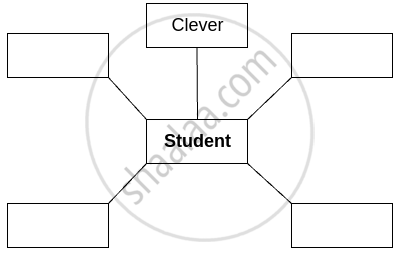
Write the related words as shown in the example:
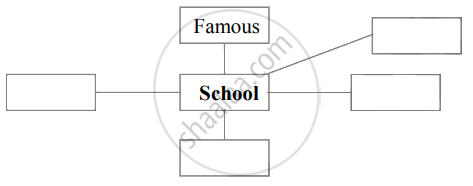
Write the related words as shown in the example: