मराठी
तामिळनाडू बोर्ड ऑफ सेकेंडरी एज्युकेशनएचएससी विज्ञान इयत्ता १२

Attempt a description of the following process, in about 100 word each, either using the imperative or the passive. Sending a letter by courier service

Advertisements
Advertisements

प्रश्न

Attempt a description of the following process, in about 100 word each, either using the imperative or the passive.

Sending a letter by courier service

टीपा लिहा
Advertisements

उत्तर

Go to a nearby courier service to post your letter. Weigh the cover that contains the letter. It should be 25kg. The size of the cover should not exceed the prescribed form. Write your detail and the recipient’s detail and then pay the money. Now your letter is ready to be sent by the courier service.

shaalaa.com
Writing Skills
  या प्रश्नात किंवा उत्तरात काही त्रुटी आहे का?
पाठ 6.1: On the Rule of the Road - Writing [पृष्ठ १८९]

APPEARS IN

सामाचीर कलवी English Class 12 TN Board
पाठ 6.1 On the Rule of the Road
Writing | Q 3 3. | पृष्ठ १८९

संबंधित प्रश्‍न

In the following items, sentence A is complete, while sentence B is not. Complete sentence B, making it as similar as possible to sentence A.  Write sentence B.

(A) It is probable that the ship will reach the shore.
(B) In all ................................................................................. 


Fill in the blank with the suitable word. 

She turned _____________ the offer to work at the factory. 


Fill in the blank with the suitable word. 

He agreed to carry _____________ the manager’s orders. 


How does Sarojini Naidu allude to the patriarchal system of her times? Discuss.


The caged bird sings with
A fearful trill of things unknown
But longed for still and his
Tune is heard on the distant hill
For the caged bird sings of freedom.

Read the above lines and answer the question that follow.

What parallel can be drawn to the poet’s feelings and that of the caged bird?


Do you think the title of the poem is justified? How?


Write a composition (350 - 400 words) on the following:

Study the picture given below. Write a story or a description or an account of what it suggests to you. Your composition may be about the subject of the picture or you may take suggestions from it; however, there must be a clear connection between the picture and your composition.
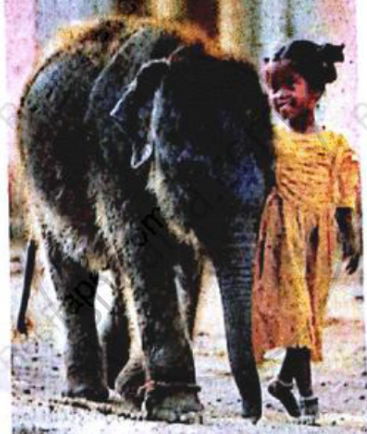

Write a composition (350 - 400 words) on the following:

Write an original short story that begins with the words : “The day started off well enough, whoever thought it would ……….”


Read the extract given below and answer the questions that follow:
Inspector: [Sharply] Are you sure there was nobody in the room already?
De Levis: [Taken aback] I don’t know. I never thought. I didn’t look under the bed if you mean that.
Inspector: [Jotting I Did not look under bed. Did you look under it after the theft?
De Levis: No. I didn’t.
Inspector: Ah! Now, what did you do after you came back from your bath? Just give us that precisely.

(i) What reply did De Levis give to the inspector’s last question in the extract? 
(ii) What made De Levis check the contents of his pocketbook? What did he find there?
Whom did he go to upon discovering the theft? 
(iii) Who was Robert? Where was Robert’s room? At what time did he take De Levis’ clothes and boots? 
(iv) What is the Inspector’s final theory of the theft? 
(v) Whom did De Levis accuse of stealing his money? What were his reasons for making this accusation? 


Read the extract given below and answer the questions that follow:
The woods are lovely, dark and deep.
But I have promises to keep,
And miles to go before I sleep.
(Stopping by Woods on a Snowy Evening: Robert Frosty)

(i) Who is ‘I’ referred to in the extract? Which season of the year is it? What evidence is there in the poem to support your answer? 

(ii) Who has made him aware of his mistake? How does it make the speaker aware of his mistake? What does it seem to say? 

(iii) What are the three sounds heard? 

(iv) What has been said earlier by the poet about the owner of the woods? 

(v) What does lovely, dark and deep suggest? What is the underlying significance in the repetition of the last two lines of the extract? Mention the moral tag that the poet attaches to the poem. 


The following words used in the text as ship terminology are also commonly used in another sense. In what contexts would you use the other meaning?

Knot stern boom hatch anchor

Chako's firmness in dealing with the irrational behaviour of his father.


Are friends different from neighbors? Are you friends with your neighbors? Give examples and write.


Match the following.

Sr. No A B
1. Constitution a. It is the freedom to go where you want, do what you want, etc.
2. Liberty b. It is the state of being equal, especially in status, rights, or opportunities.
3. Equality c. It is a sense of common brotherhood.
4. Fraternity d. It is an aggregate of fundamental principles or established precedents that constitute the legal basis of a polity, organization, or other types of entity and commonly determine how that entity is to be governed.

Imagine that you are the fellow pilgrim and you wish to share your experience of the incident in the poem.
Write a short article about it for a magazine/journal. Also, convey what change it has brought in your life.


Discuss with your partner and describe the atmosphere in the woods when Peter Crouch was heading towards Mrs. Adis’s House. It was -

  1. a dark moonless night.
  2. _________________________
  3. _________________________

Imagine your friend/younger brother or sister has committed a grave mistake that has resulted in a great loss to the college property or to your family. He/she seeks your advice to come out of the situation/problem. Write a dialogue between you and your friend/brother/sister who describes the entire situation and seeks help from you. Take the help of the following points.

  • Introduction
  • Confessing the mistake
  • Seeking help
  • Your advice/suggestion
  • Concluding part

Imagine your friend is a table tennis champion who has won the semi-final in the inter-collegiate championship. Due to overconfidence, she neither practices nor does she take her opponent seriously. This may result in her losing the final. Suggest some ways to make her aware of the importance of hard work and regular practice.


‘Live as if you were to die tomorrow. Learn as if you were to live forever.’ Mahatma Gandhi

Collect some more quotes on education by famous thinkers.


Given in a mixed order below are some good human attributes of the family. Pick out from the box and write it against the line that reflects it.

He believed, his daughter was still alive, after three years.


Write what you think about the following thoughts and actions of Mathilde :

Mathilde did not tell her friend about the loss and replacement.


Write in your own words:-

Which two facts show that the poet is confident of overcoming his irrational feeling?


Fill in the template given for limerick.

There once was a ______(8 syllable)

______(8 syllable)

______(5 syllable)

______ (5 syllable)

______(8 syllable)


Bio - Poem

A Bio - Poem is an essay about oneself in the form of poetry.

Line 1: Your name.

Line 2: Four adjectives that describe you.

Line 3: Son of / daughter of … brother of / sister of…

Line 4: Lover of three people, things or idea.

Line 5: Who feels (three sensations or emotion)

Line 6: Who needs (three things)

Line 7: Who gives (three things)

Line 8: Who fears (three things)

Line 9: Who would like to see (three persons or places)

Line 10: Who lives …

Line 11: Your last name.

Anne

Friendly, kind, smart and obedient

Daughter of Sam and Diana, sister of

Jack Lover of pets, sports and reading

Who feels cheerful, comfortable and excited

Who needs education, peace and friends

Who gives smiles, support and courage

Who fears spiders, the dark and stray dogs

Who would like to see Mt. Everest

Lives in Cape

Sara

Work in small groups. Pick out the adjectives and nouns that suit you using a dictionary. Read the steps given. Arrange adjectives and nouns like the given sample to construct your Bio-Poem. Present in the class.


How do you cook rice in your house?

Fill in the gaps in this recipe for cooking rice. Use the words in the box

boil

water

heat

keep

rice

lid

low

water

more

ready

What you'll need 

  • 1 cup uncooked white rice 
  • 2 cups water 
  • pinch of salt

How to make it

  1. ______the rice until the ______runs clear. 
  2. Drain the water and ______ aside.
  3. In a medium sized pan, bring water to ______. 
  4. Add the salt, stir, and then add the rinsed and drained ______.
  5. Reduce the heat, cover the rice, and let it simmer on ______ heat for 20 minutes.
  6. Check after 15 minutes to see if all the ______ has evaporated. If it has, the rice is ______.
  7. If not, replace the ______ and let the rice simmer for 5 ______
  8. Remove from ______ and serve

Punctuate the following sentence.

she fed the baby washed the dishes put the lights off and went to sleep.


Write down at least two questions using ‘why’?

  1.  ______
  2. ______

Parents can never be friends with their children. Express your views either for or against this statement.


Write a composition (in approximately 400 – 450 words) on the following subject.

During the lunch break, a surprising sight unfolded as a monkey entered your school campus. Narrate your experience as you took charge and guided junior students to their classrooms ensuring their safety.


Read the passage given below and answer the questions (i), (ii) and (iii) that follow.

(1) “Can I see the Manager?” I said, and added solemnly, “Alone.” I don't know why I said “Alone.” “Certainly,” said the accountant and fetched him.  
(2) The Manager was a grave, calm man. I held my fifty-six dollars clutched in a crumpled ball in my pocket.
“Are you the Manager?” I asked. God knows I did not doubt it.
“Yes,” he said.
“Can I see you …. alone?” I asked.
5
(3) The Manager looked at me in some alarm. He felt that I had an awful secret to reveal.
“Come in here,” he said, and led the way to a private room. He turned the key in the lock.
“We are safe from interruption here,” he said; “Sit down.”
We both sat down and looked at each other. I found no voice to speak.
“You are one of Pinkerton’s men, I presume,” he said.
10


(4)

He had gathered from my mysterious manner that I was a detective. I knew what he was thinking, and it made me worse.
“No, not from Pinkerton’s,” I said, seeming to imply that I came from a rival agency. “To tell the truth,” I went on, as if I had been prompted to lie about it,
“I am not a detective at all. I have come to open an account. I intend to keep all my money in this bank.”
The Manager looked relieved but still serious; he concluded now that I was a son of Baron Rothschild or a young Gould.
“A large account, I suppose,” he said.
“Fairly large,” I whispered. “I propose to deposit fifty-six dollars now and fifty dollars a month regularly.”

15


20


25

(5) The Manager got up and opened the door. He called to the accountant.
“Mr. Montgomery,” he said unkindly loud, “this gentleman is opening an account, he will deposit fifty-six dollars. Good morning.”
I rose. A big iron door stood open at the side of the room.
“Good morning,” I said, and stepped into the safe. “Come out,” said the Manager coldly and showed me the other way.

30
(6) I went up to the accountant’s wicket and poked the ball of money at him with a quick convulsive movement as if I were doing a conjuring trick. My face was ghastly pale.
“Here,” I said, “deposit it.” The tone of the words seemed to mean, “Let us do this painful thing while the fit is on us.”
He took the money and gave it to another clerk.

35
(7) He made me write the sum on a slip and sign my name in a book. I no longer knew what I was doing. The bank swam before my eyes.
“Is it deposited?” I asked in a hollow, vibrating voice.
“It is,” said the accountant. “Then I want to draw a cheque.”
My idea was to draw out six dollars of it for present use. Someone gave me a chequebook through a wicket and someone else began telling me how to write it out. The people in the bank had the impression that I was an invalid millionaire. I wrote something on the cheque and thrust it in at the clerk. He looked at it.

40


45

(8) “What! Are you drawing it all out again?” he asked in surprise. Then I realised that I had written fifty-six instead of six. I was too far gone to reason now. I had a feeling that it was impossible to explain the thing. I had burned my boats. All the clerks had stopped writing to look at me. Reckless with misery, I made a plunge.
“Yes, the whole thing.”
“You withdraw all your money from the bank?” “Every cent of it.”
“Are you not going to deposit anymore?” said the clerk, astonished.
“Never.”


50


55

(9) An idiot hope struck me that they might think something had insulted me while I was writing the cheque and that I had changed my mind. I made a wretched attempt to look like a man with a fearfully quick temper.  
(10) The clerk prepared to pay the money.
“How will you have it?” he said. This question came as a bolt from the blue.
“What?”
“How will you have it?”
“Oh!”— I caught his meaning and answered without even trying to think— “in fifties.”
He gave me a fifty-dollar bill. “And the six?” he asked dryly.
“In sixes,” I said.
He gave it to me and I rushed out.
As the big door swung behind me. I caught the echo of a roar of laughter that went up to the ceiling of the bank. Since then, I bank no more. I keep my money in cash in my trousers pocket and my savings in silver dollars in a sock.

60


65


70

Adapted from: My Financial Career
By Stephen Leacock
 
    1. Find a single word from the passage that will exactly replace the underlined word or words in the following sentences.    [3]
      1. The kind stranger went and got back the ball from where it had rolled into the bush.
      2. I took offence at the expression on his face that was clearly meant to insinuate I was a liar.
      3. The firm experienced a financial loss when the contract went to a contender who had just entered the business.
    2. For each of the words given below, choose the correct sentence that uses the same word unchanged in spelling, but with a different meaning from that which it carries in the passage.   [3]
      1. alarm (line 8)
        1. The silence from the other end set off alarm bells in her head.
        2. The pallor of his skin alarmed those standing around.
        3. I set my alarm for six o’clock but slept through it.
        4. The sound of the approaching jets caused some alarm in the war room.
      2. wicket (line 44)
        1. The wicketkeeper was the true saviour of the day for that one match.
        2. The team wanted to bat while the wicket was still dry.
        3. The man at the window handed us our tickets through the wicket.
        4. The quick loss of wickets demoralised the team.
      3. reason (line 48)
        1. After the tragedy, his ability to reason is severely diminished.
        2. They reasoned they could get better seats if they arrived early.
        3. Recipients of funds were selected without rhyme or reason.
        4. We have every reason to celebrate.
  1. Answer the following questions as briefly as possible in your own words.
    1. With reference to the passage, explain the meaning of the expression of the ‘I had burned my boats?’   [2]
    2. Cite any two instances of the behaviour of the bank employees that indicate the insignificance of a deposit of fifty-six dollars.    [2]
    3. Why do you think the people in the bank thought of the narrator as an “invalid millionaire?”    [2]
  2. Summarise why the narrator decided ‘to bank no more’ (paragraphs 6 to 10). You are required to write the summary in the form of a connected passage in about 100 words. Failure to keep within the word limit will be penalised.    [8]

Share
Notifications

Englishहिंदीमराठी


      Forgot password?
Use app×