Topics
Number System
Integers
- Integers
- Multiplication and Division of Integers
- Properties of Operations on Integers
- Concept for Commutativity, Associativity, Existence of Identity
- Inverse and Distributivity
- Problem Solving Using Operations on Integers
- Statement Problems on Integers Using All Fundamental Operations.
Commercial Arithmetic
Rational Numbers
- Rational Numbers
- Word Problems on Rational Numbers (All Operations)
- Decimal Representation of Rational Numbers
- Concept for Problem Solving Using Operations on Rational Numbers
- The Decimal Number System
Algebra
Fractions (Including Problems)
Decimal Fractions (Decimals)
Geometry
Exponents (Including Laws of Exponents)
- Concept of Exponents
- Concept for Exponents Only Natural Numbers.
- Laws of Exponents (Through Observing Patterns to Arrive at Generalisation.)
- Concept for Application of Laws of Exponents in Simple Daily Life Problems
Data Handling (Statistics)
Set Concepts
Ratio and Proportion (Including Sharing in a Ratio)
Unitary Method (Including Time and Work)
Percent and Percentage
Profit, Loss and Discount
- Concept of Discount
- Concept for Application to Profit and Loss (Single Transaction Only)
Simple Interest
Speed, Distance and Time
Fundamental Concepts (Including Fundamental Operations)
- Fundamental Concepts
- Terms, Factors and Coefficients of Expression
- Algebraic Expressions
- Performs Operations (Addition and Subtraction) on Algebraic Expressions with Integral Coefficients Only.
Simple Linear Equations (Including Word Problems)
- Word Problems on Linear Equations
- Concept for Inequalities
- Concept for Solution of Simple Inequalities in One Variable
Inequalities
Lines and Angles (Including Construction of Angles)
- Introduction to Lines and Angles
- Concept of Pairs of Angles
- Parallel Lines
- Construction of a Line Parallel to a Given Line from a Point Outside It .
Triangles
- Basic Concepts of Triangles
- Concept for Angle Sum Property
- Concept for Exterior Angle Property
- Concept for Construction of Simple Triangles.
Pythagoras Theorem
Symmetry (Including Reflection and Rotation)
Recognition of Solids (Representing 3-d in 2-d)
- Concept of Recognition of Solids
- Faces, Edges and Vertices of Polyhedron
- Concept for Mapping the Space Around Approximately Through Visual Estimation.
Congruency: Congruent Triangles
- Congruence of Triangles
- Concept for Congruence Through Superimposition
- Extend Congruence to Simple Geometrical Shapes E.G. Triangles, Circles.
- Criteria for Congruence of Triangles
Constructions
Mensuration
- Basic Concepts in Mensuration
- Concept of Perimeter
- Circumference of a Circle
- Concept of Area
- Concept of Measurement Using a Basic Unit Area of a Square, Rectangle, Triangle, Parallelogram and Circle, Rings and Combined Figures.
Data Handling
Probability
- Concept of Probability
- Concept for Feel of Probability Using Data Through Experiments.
- Concept for Notion of Chance
- Concept for Tabulating and Counting Occurrences
- Comparing the Observation with that for a Coin. Observing Strings of Throws, Notion of Randomness.
- Introduction
- Reflection Symmetry
- Key Characteristics
- Shapes with Reflection Symmetry
- Real-Life Applications
Introduction
Have you ever looked in a mirror and noticed something interesting? Your reflection looks exactly like you—but reversed! The left side of your face appears on the right side of the mirror, and vice versa. This is reflection symmetry in action!
Reflection Symmetry
Reflection Symmetry (also called Mirror Symmetry) happens when:
-
A shape can be divided into two halves.
-
Both halves are exact mirror images of each other.
-
One half is a perfect copy of the other, just flipped.
- The dividing line where the mirror image appears is called the line of symmetry or mirror line.
Key Characteristics
| Property | What It Means |
|---|---|
| Perpendicular Distance | Points on opposite sides of the mirror line are equal distance away (measured straight across). |
| Mirror Image | One side is an exact flip of the other side. |
| Perfect Match | If you fold or flip along the line, both parts match exactly. |
| Can Be Any Angle | The mirror line can be vertical, horizontal, or diagona. |
Shapes with Reflection Symmetry
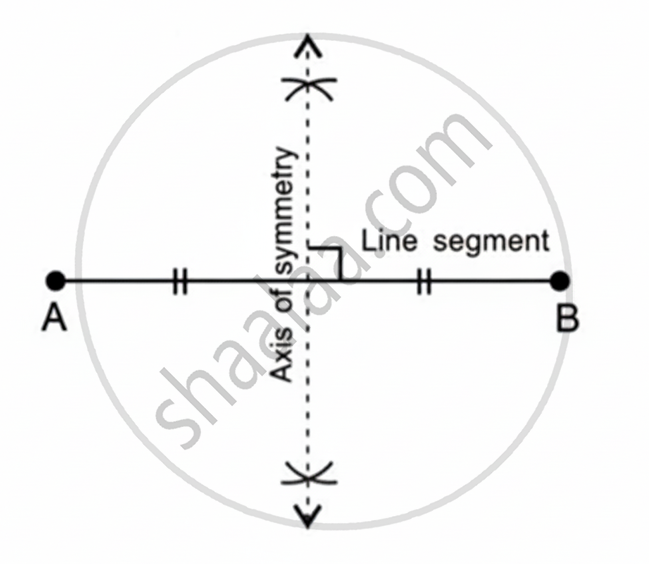
1. Line Segment:
A line segment is symmetrical about its perpendicular bisector.
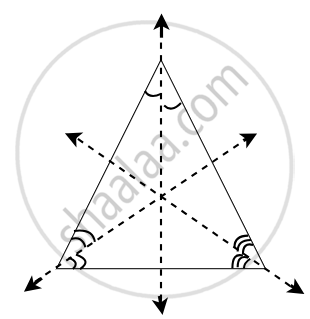
2. Equilateral Triangle:
Has three lines of symmetry, each bisecting one of the angles.
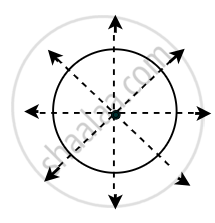
3. Circle:
Has an infinite number of lines of symmetry.
Every line passing through the circle’s centre acts as a line of symmetry.
Real-Life Applications
Alphabet Letters
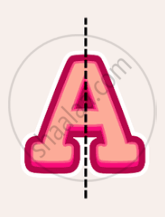
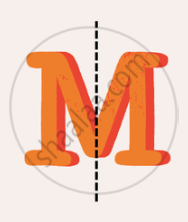
- Uppercase A, H, I, M, O, T, U, V, W, X, Y have reflection symmetry.
Human Face and Body
-
Both eyes, ears, and sides are mirror images
Nature's Patterns
-
Leaves: Most leaves have a vertical line of symmetry