Advertisements
Chapters
1: World Geography: Some Glimpses
Theme B - Tapestry of the Past
2: India’s Long Road to Independence
Theme C - Our Cultural Heritage and Knowledge Traditions
▶ 3: A Journey Through Indian Architecture
Theme D - Governance and Democracy
4: The Role of the Judiciary in Our Society
5: Citizenship: Rights and Duties
Theme E - Economic Life Around Us
6: Dynamics of Population
7: India’s Urban Landscape
8: Cultural Currents: 13th to 17th Centuries
![NCERT solutions for सोशल साइंस एक्सपलोरींग सोसाइटी इंडिया एण्ड बिऑन्ड पार्ट २ [अंग्रेजी] कक्षा ८ chapter 3 - A Journey Through Indian Architecture - Shaalaa.com](/images/social-science-exploring-society-india-and-beyond-part-2-english-class-8_6:d01fdcd1fdf244fc869f361ef89f5af3.png "NCERT solutions for सोशल साइंस एक्सपलोरींग सोसाइटी इंडिया एण्ड बिऑन्ड पार्ट २ [अंग्रेजी] कक्षा ८ chapter 3 - A Journey Through Indian Architecture")
Advertisements
Solutions for Chapter 3: A Journey Through Indian Architecture
Below listed, you can find solutions for Chapter 3 of CBSE NCERT for सोशल साइंस एक्सपलोरींग सोसाइटी इंडिया एण्ड बिऑन्ड पार्ट २ [अंग्रेजी] कक्षा ८.
NCERT solutions for सोशल साइंस एक्सपलोरींग सोसाइटी इंडिया एण्ड बिऑन्ड पार्ट २ [अंग्रेजी] कक्षा ८ 3 A Journey Through Indian Architecture Intext Questions [Pages 85 - 118]
The Big Questions
What role has architecture played in the Indian civilisation?
What are some of the key concepts behind Indian architecture?
What are some of the key developments behind Indian architecture?
How is the heritage of Indian architecture of relevance today?
LET’S EXPLORE
Form groups in the class to discuss the following: Imagine you have only hammers and iron chisels. How will you plan the carving of such a huge cave? What challenges might the hillside offer? And once you reach the nave, how will you manage to carve arched beams into its ceiling?
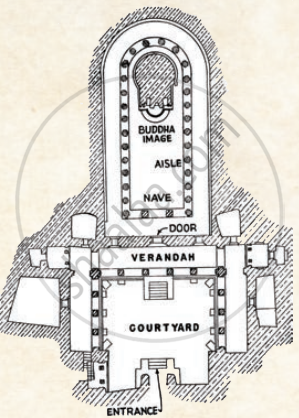
In classical temples, what Indian words would we use instead of ‘nave’?
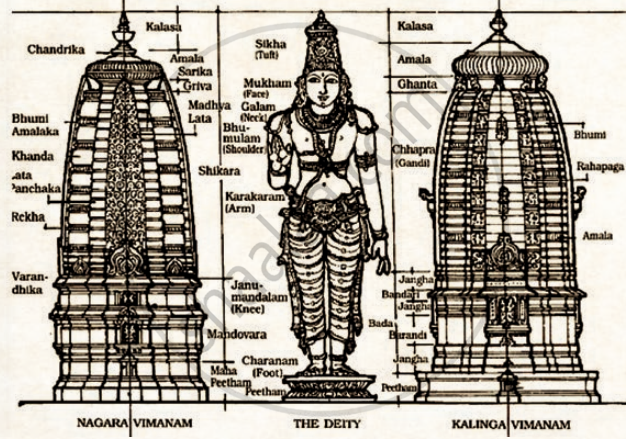
Looking at Fig., can you work out the horizontal equivalence between a temple and the cosmic being?
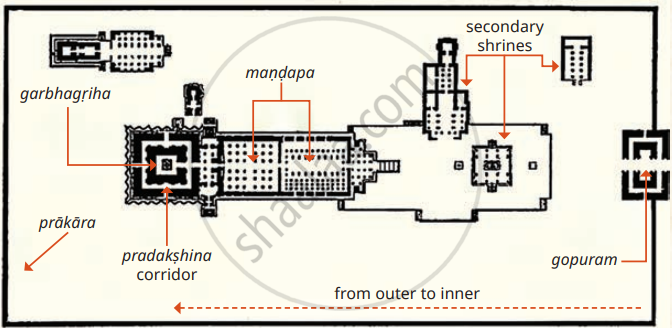
India’s classical temples come in distinct regional styles. For instance, note the pyramidal shape of Bṛihadīśhvara Temple’s vimāna and compare with the shapes in Fig. Revisit the pictures of the Angkor Wat and Kandāriyā Mahādeva Temples and note the chief differences you can observe.
Make a list of all the materials we have encountered so far in the carving or construction of structures; make a list of pros and cons for each of them. Did you notice that none of the structures discussed so far use any cement mortar?
Observe the pictures of the four temples featured here. What common features and what differences can you notice?
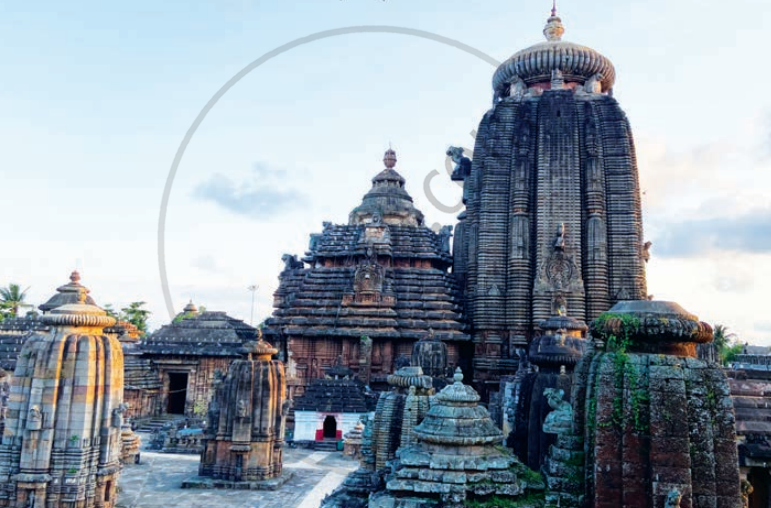 |
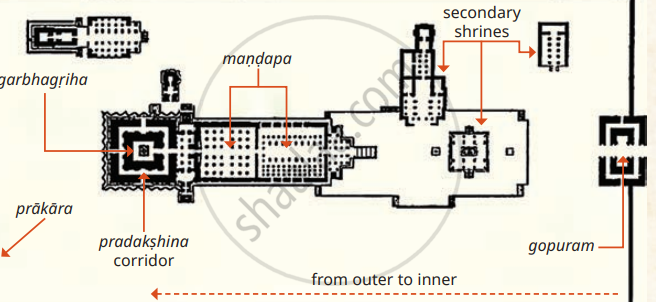 |
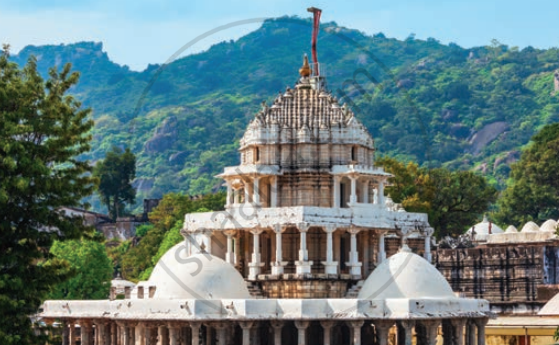 |
|
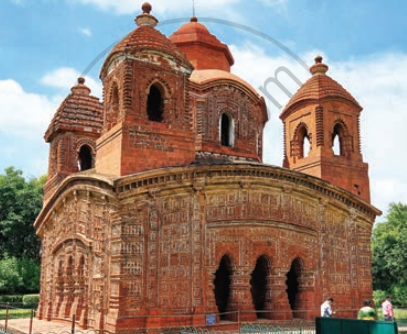
Identify a temple in your location. Based on what you have read here, what architectural details can you make out?
LET’S REMEMBER
Try to remember where earlier textbooks showed pictures of the forts of Jaisalmer, Kumbhalgarh, Raigad, and Sindhudurg. Can you point to their approximate locations on India’s map?
DON’T MISS OUT
In the 1970s, the effect of air pollution on the monument began to be noticed. It was caused by local industries using coal and other fossil fuels, which left a yellowish tinge on the marble. Following the recommendations of an expert committee and a PIL in the Supreme Court, a ban was imposed in the mid-1990s
LET’S EXPLORE
What could be the advantages of the above design? (Hint: Think in terms of privacy, convenience, rainfall and cooling.)
NCERT solutions for सोशल साइंस एक्सपलोरींग सोसाइटी इंडिया एण्ड बिऑन्ड पार्ट २ [अंग्रेजी] कक्षा ८ 3 A Journey Through Indian Architecture Questions and activities [Page 124]
In Figure, calculate the full width of the house; compare with the length of your classroom. How many staircases can you make out? If the house owners lived upstairs, what might the rooms downstairs be used for?
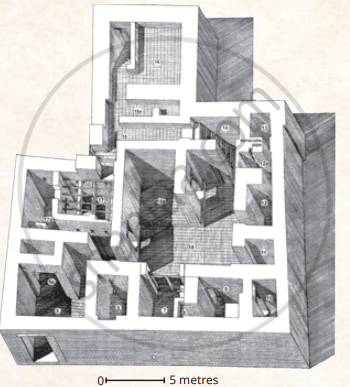
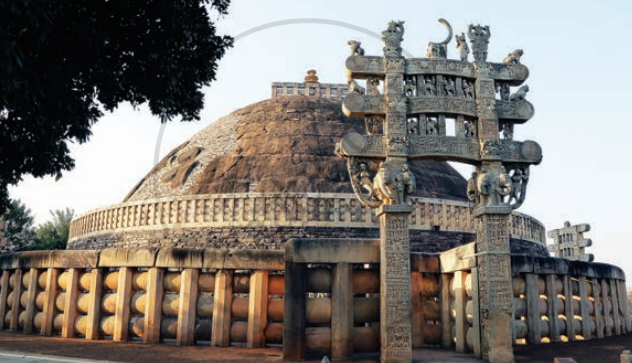
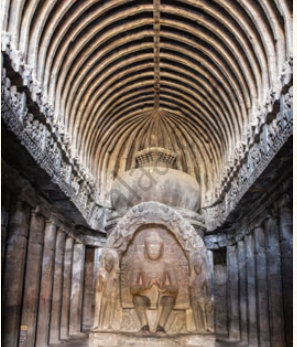
Form groups of four or five students and imagine you are artisans with just simple tools. Looking at Fig., how would you go about building a dome of bricks? Looking at Fig., how would you carve such a ceiling? Discuss and compare the different groups’ conclusions.
Why should there be so many stairways in fig. (Shringaverpur tanks) and in Fig. (Pushkarini at Vijayanagara)?
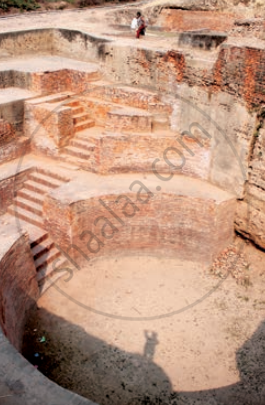 |
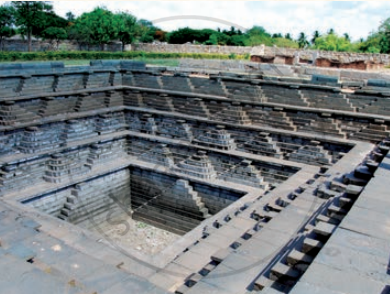 |
Which pillars are easier to sculpt in your opinion, those in Fig. (Dilwara Temple) or Fig. (Terracotta Temple)? Justify your answer.
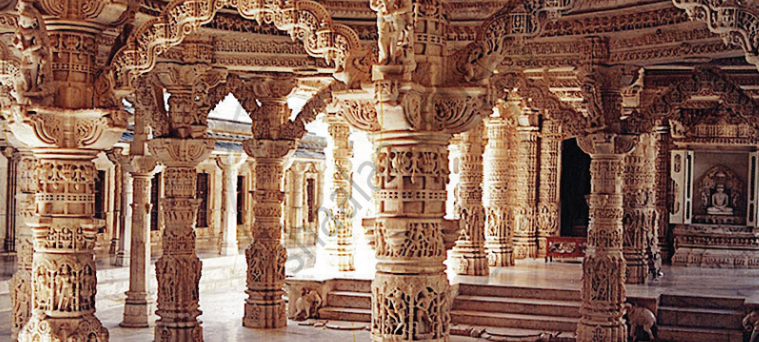 |
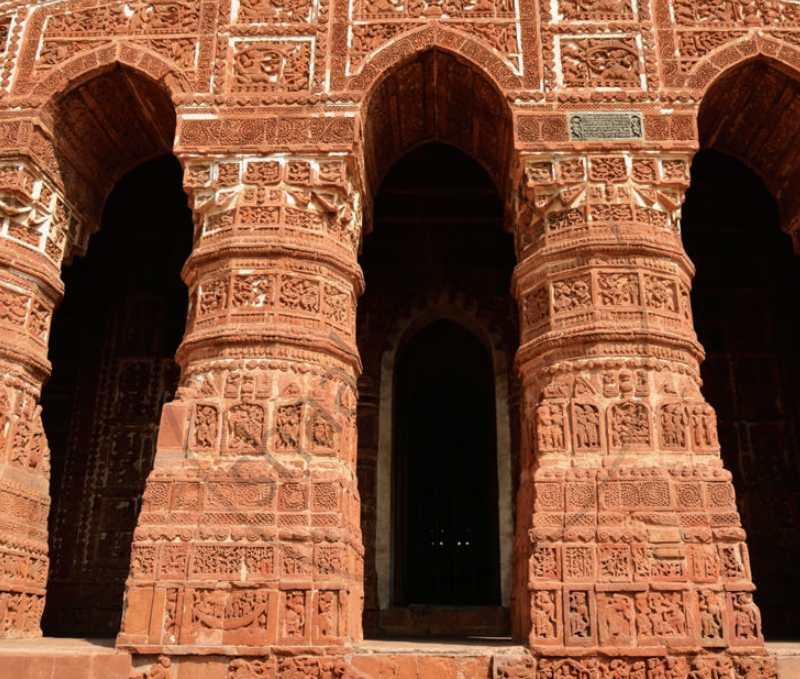 |
What are some common features across the different types of temples you have visited in this chapter?
What are some differences across the different types of temples you have visited in this chapter?
In the houses shown in both figures, the central courtyard will receive a lot of water during rains. Will this not flood the house?
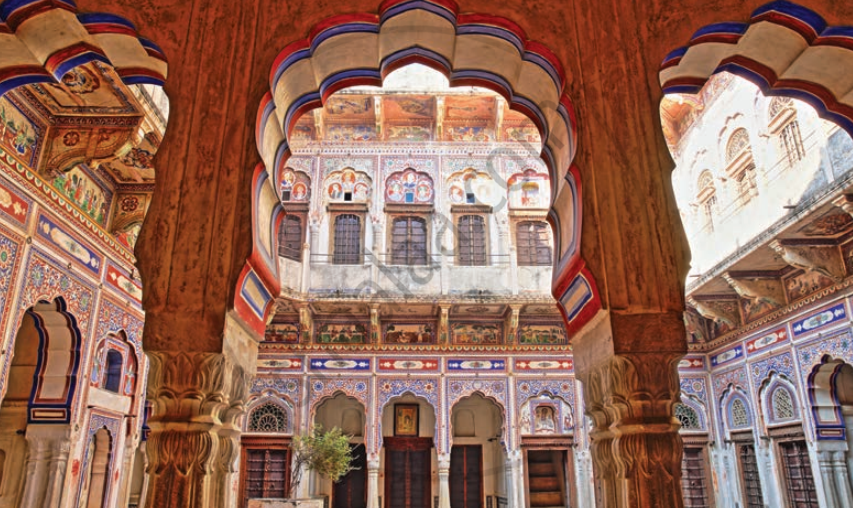 |
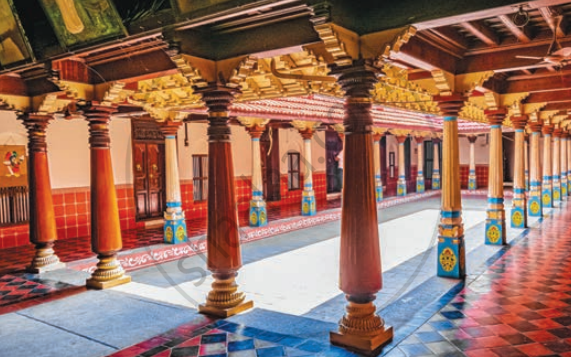 |
If you had to create a Pan-India Architecture Museum, which ten monuments would you select to represent India’s diversity and why?
Choose an ancient monument in your region. Identify what type of architecture it belongs to and the markers you used to classify it.
Different groups in the class take up examples of different types of architecture in your region. Prepare a small exhibition with brief descriptions. (Hints: Use different sources to get more information. Request your teacher to invite a scholar or expert from your region to interact with you.)
Highlight the biggest threats to our architectural heritage today and discuss how can we protect it.
Solutions for 3: A Journey Through Indian Architecture
NCERT solutions for सोशल साइंस एक्सपलोरींग सोसाइटी इंडिया एण्ड बिऑन्ड पार्ट २ [अंग्रेजी] कक्षा ८ chapter 3 - A Journey Through Indian Architecture
Shaalaa.com has the CBSE Mathematics सोशल साइंस एक्सपलोरींग सोसाइटी इंडिया एण्ड बिऑन्ड पार्ट २ [अंग्रेजी] कक्षा ८ CBSE solutions in a manner that help students grasp basic concepts better and faster. The detailed, step-by-step solutions will help you understand the concepts better and clarify any confusion. NCERT solutions for Mathematics सोशल साइंस एक्सपलोरींग सोसाइटी इंडिया एण्ड बिऑन्ड पार्ट २ [अंग्रेजी] कक्षा ८ CBSE 3 (A Journey Through Indian Architecture) include all questions with answers and detailed explanations. This will clear students' doubts about questions and improve their application skills while preparing for board exams.
Further, we at Shaalaa.com provide such solutions so students can prepare for written exams. NCERT textbook solutions can be a core help for self-study and provide excellent self-help guidance for students.
Concepts covered in सोशल साइंस एक्सपलोरींग सोसाइटी इंडिया एण्ड बिऑन्ड पार्ट २ [अंग्रेजी] कक्षा ८ chapter 3 A Journey Through Indian Architecture are .
Using NCERT सोशल साइंस एक्सपलोरींग सोसाइटी इंडिया एण्ड बिऑन्ड पार्ट २ [अंग्रेजी] कक्षा ८ solutions A Journey Through Indian Architecture exercise by students is an easy way to prepare for the exams, as they involve solutions arranged chapter-wise and also page-wise. The questions involved in NCERT Solutions are essential questions that can be asked in the final exam. Maximum CBSE सोशल साइंस एक्सपलोरींग सोसाइटी इंडिया एण्ड बिऑन्ड पार्ट २ [अंग्रेजी] कक्षा ८ students prefer NCERT Textbook Solutions to score more in exams.
Get the free view of Chapter 3, A Journey Through Indian Architecture सोशल साइंस एक्सपलोरींग सोसाइटी इंडिया एण्ड बिऑन्ड पार्ट २ [अंग्रेजी] कक्षा ८ additional questions for Mathematics सोशल साइंस एक्सपलोरींग सोसाइटी इंडिया एण्ड बिऑन्ड पार्ट २ [अंग्रेजी] कक्षा ८ CBSE, and you can use Shaalaa.com to keep it handy for your exam preparation.
