Advertisements
Chapters
1: Earth as a Planet
2: Geographic Grid: Latitudes and Longitudes
3: Rotation and Revolution
UNIT 2 - Structure of the Earth
4: Earth’s Structure
5: Landforms of the Earth
6: Rocks
7: Volcanoes
8: Earthquakes
9: Weathering
10: Denudation
UNIT 3 - Hydrosphere
11: Hydrosphere
UNIT 4 - Atmosphere
12: Composition and Structure of the Atmosphere
13: Insolation
14: Atmospheric Pressure and Winds
15: Humidity
UNIT 5 - Pollution
▶ 16: Pollution
17: Sources of Pollution
18: Effects of Pollution
19: Preventive Measures
UNIT 6 - Natural Regions of the World
20: Natural Regions of the World
![Morning Star solutions for टोटल जियोग्राफी [अंग्रेजी] कक्षा ९ आईसीएसई chapter 16 - Pollution - Shaalaa.com](/images/total-geography-english-class-9-icse_6:383837e303f247e39353ecf0a3404fb4.jpg "Morning Star solutions for टोटल जियोग्राफी [अंग्रेजी] कक्षा ९ आईसीएसई chapter 16 - Pollution")
Advertisements
Solutions for Chapter 16: Pollution
Below listed, you can find solutions for Chapter 16 of CISCE Morning Star for टोटल जियोग्राफी [अंग्रेजी] कक्षा ९ आईसीएसई.
Morning Star solutions for टोटल जियोग्राफी [अंग्रेजी] कक्षा ९ आईसीएसई 16 Pollution EXERCISES [Pages 149 - 150]
Choose the correct option:
Any change in the natural quality of the environment brought about by chemical, physical, or biological factors:
Pollution
Dust
Humidity
Pollutants
The products which are released into the biosphere in large quantities and which affect the normal functioning of ecosystems:
Pollution
Dust
Humidity
Pollutants
Unfavourable alteration of our surroundings, wholly or largely as a by-product of man’s actions:
Pollution
Environmental Pollution
Humidity
Pollutants
The alteration in characteristics of water, making it unsuitable for designated use in its natural state:
Air Pollution
Water Pollution
Soil Pollution
Radioactive Pollution
The pollutants which are formed from the chemical reaction of primary pollutants in the environment:
Biodegradable pollutants
Secondary pollutants
Quantitative pollutants
Non-Biodegradable pollutants
The excessive concentration of foreign matter in the air which adversely affects the well-being of human beings, animals, plants and their environment:
Air Pollution
Pollution
Soil Pollution
Radioactive Pollution
The pollutants which are not degraded by microbes or degrade at a very slow rate:
Biodegradable pollutants
Primary pollutants
Quantitative pollutants
Non-Biodegradable pollutants
Unwanted sound that is an irritant and source of stress:
Air pollution
Radioactive pollution
Noise pollution
Soil pollution
Which of the following is an example of soil pollution?
Disposal of solid waste in the open
Dumping sewage in the open
Overuse of fertilizers
All of the above
Nuclear fuels produce pollution by ______.
heat
end products
wastes in coolants
All of the above
Assertion (A): Eighty per cent of marine pollution comes from land.
Reason (R): Mining for materials such as copper and gold is a major source of contamination in the ocean.
Both A and R are true, and R is one of the reasons for A.
Both A and Rare true, but R does not explain A.
A is true, but R is false.
A is false, but R is true.
Classification of Pollutants
Given below is a picture of a pollutant; classify it on the basis of degradation.
Given below is a picture of a pollutant; classify it on the basis of degradation.

Given below is a picture of a pollutant; classify it on the basis of degradation.

Given below is a picture of a pollutant; classify it on the basis of degradation.

Given below is a picture of a pollutant; classify it on the basis of degradation.
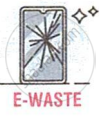
Given below is a picture of a pollutant; classify it on the basis of degradation.

Short Answer Questions
What is environmental pollution?
What is a pollutant?
Give the difference between natural and man-made pollutants.
What is air pollution?
Give a source of air pollution.
Define water pollution.
What is soil pollution?
Why should we avoid soil pollution?
What is radioactive pollution?
What is meant by noise pollution?
Structured Questions
What are man-made causes of radioactive pollution?
Why is radioactive pollution more harmful than other types of pollution?
How is noise a source of pollution?
Why do we need to look at the problem of noise pollution seriously?
Give a geographical reason for the following:
Music is relaxing, but playing it loud is a source of pollution.
Give a geographical reason for the following:
Secondary pollutants are toxic.
Give a geographical reason for the following:
Pesticides are qualitative pollutants.
List the main sources of pollution of ocean waters.
Thinking Skills
Which type/types of pollution is/are more prominent in the city where you live? List the causes and possible remedies?
Environmental pollution is an incurable disease which can only be prevented. Justify this statement, giving examples.
Practical Work
Write down five harmful effects of using non-biodegradable products like plastic bags. Suggest measures that can help to replace plastic bags with eco-friendly products.
Solutions for 16: Pollution
Morning Star solutions for टोटल जियोग्राफी [अंग्रेजी] कक्षा ९ आईसीएसई chapter 16 - Pollution
Shaalaa.com has the CISCE Mathematics टोटल जियोग्राफी [अंग्रेजी] कक्षा ९ आईसीएसई CISCE solutions in a manner that help students grasp basic concepts better and faster. The detailed, step-by-step solutions will help you understand the concepts better and clarify any confusion. Morning Star solutions for Mathematics टोटल जियोग्राफी [अंग्रेजी] कक्षा ९ आईसीएसई CISCE 16 (Pollution) include all questions with answers and detailed explanations. This will clear students' doubts about questions and improve their application skills while preparing for board exams.
Further, we at Shaalaa.com provide such solutions so students can prepare for written exams. Morning Star textbook solutions can be a core help for self-study and provide excellent self-help guidance for students.
Concepts covered in टोटल जियोग्राफी [अंग्रेजी] कक्षा ९ आईसीएसई chapter 16 Pollution are .
Using Morning Star टोटल जियोग्राफी [अंग्रेजी] कक्षा ९ आईसीएसई solutions Pollution exercise by students is an easy way to prepare for the exams, as they involve solutions arranged chapter-wise and also page-wise. The questions involved in Morning Star Solutions are essential questions that can be asked in the final exam. Maximum CISCE टोटल जियोग्राफी [अंग्रेजी] कक्षा ९ आईसीएसई students prefer Morning Star Textbook Solutions to score more in exams.
Get the free view of Chapter 16, Pollution टोटल जियोग्राफी [अंग्रेजी] कक्षा ९ आईसीएसई additional questions for Mathematics टोटल जियोग्राफी [अंग्रेजी] कक्षा ९ आईसीएसई CISCE, and you can use Shaalaa.com to keep it handy for your exam preparation.
