C. B. Gupta solutions for बिजनस स्टडीज [अंग्रेजी] कक्षा १२ आईसीएसई chapter 5 - Staff Training [Latest edition]
Chapters
2: Job Analysis and Manpower Planning
3: Staff Recruitment
4: Staff Selection
▶ 5: Staff Training
6: Staff Morale
7: Staff Motivation
8: Staff Remuneration
9: Staff Leadership
10: Staff Appraisal
11: Staff Promotion and Transfer
12: Staff Separation
13: Emerging Trends in Human Resources
14: Business Communication
15: Business Correspondence
16: Reports and Report Writing
17: Various Business Entities
18: Sources of Business Finance
19: Globalisation
20: E-Business
21: Outsourcing
22: Business Regulators and Intermediaries
Advertisements
Advertisements
Solutions for Chapter 5: Staff Training
Below listed, you can find solutions for Chapter 5 of CISCE C. B. Gupta for बिजनस स्टडीज [अंग्रेजी] कक्षा १२ आईसीएसई.
Advertisements
C. B. Gupta solutions for बिजनस स्टडीज [अंग्रेजी] कक्षा १२ आईसीएसई 5 Staff Training EXERCISES [Pages 75 - 81]
Objective Type Questions MCQ's (Select the best Alternative)
Development of employees involves ______.
promotion
transfer
training
all of these
What is the purpose of off-the-job training?
To train employees at their workplace.
To train employees in a simulated work environment.
To train employees during work hours.
To train employees individually.
What is a potential drawback of on-the-job training?
Cost-effectiveness
Standardized training
Disruption of regular work
Efficient use of time
Which process involves gaining knowledge through structured academic institutions and leads to degrees or certifications?
Education
Development
Training
All of the above
Which process aims to provide job-specific skills and knowledge to individuals?
Education
Development
Training
All of the above
Employees training is ______.
necessary
unnecessary
compulsory
wastage of money
Methods of training are ______.
induction training
on the job training
apprenticeship training
all of these
Which of the following is hindrance of training?
Lack of management support
Shortage of funds required for training
Shortage of qualified trainer
All of these
Which of the following is not a type of training?
Remedial training
Job training
Safety training
Skill training
Which of the following is a benefit of training to employer?
Higher productivity
Increased cost
Higher employee turnover
All of these
Assertion (A): On-the-job training is a source of human capital formation.
Reason (R): After on-the-job training of employees, firms insist that the workers should work for a specific period of time.
Both (A) and (R) are true and (R) is the correct explanation of (A).
Both (A) and (R) are true, but (R) is not the correct explanation of (A).
(A) is true, but (R) is false.
(A) is false, but (R) is true.
Assertion (A): Training aids in encouraging and achieving self-confidence and self-development.
Reason (R): It helps a person handle stress, tension, frustration and conflict.
Both (A) and (R) are true and (R) is the correct explanation of (A).
Both A and (R) are true, but (R) is not the correct explanation of (A).
(A) is true, but (R) is false.
(A) is false, but (R) is true.
Assertion (A): Training is a necessary step in the staffing process.
Reason (R): Training enhances employee skills and improves performance.
Both (A) and (R) are true and (R) is the correct explanation of (A).
Both A and (R) are true, but (R) is not the correct explanation of (A).
(A) is true, but (R) is false.
(A) is false, but (R) is true.
The workers of Gaurang Ltd. are unable to use new computerized machines that the company imported to meet the rising demand. As a result, the workers are asking the supervisor for more direction, and the supervisor is already tired from their constant calls.
Suggest which type of training should the management adopt so that the work of the supervisor can be eased out.
Vestibule training
Classroom training
Internship
Apprenticeship
In ______, theoretical instructions and practical learning are provided to trainees in training institutes classroom lectures are followed by practical works.
Internship
Classroom training
Apprenticeship
Vestibule training
On the Job Training: ______ :: Off the job training: Vestibule training.
Case studies
Lectures
Internship
Group discussions
Which technique of training does the following image signify?

On the Job Training
Off the Job Training
Education
Training
Which training does the following image represent?
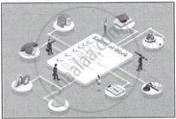
Remedial Training
Safety Training
Promotional Training
Refresher Training
Rahul Vice President (V.P.) of Governance, Risk and Compliance Cell at Speed Infotech Solutions, had organised a training session for his team to guide them about the amendments in the company's operating procedures. The training programme will enable his team members to be equipped with the changes and therefore be more vigilant while performing their office duties.
Identify the type of training provided to the subordinates in the above scenario.
Job Training
Remedial Training
Versatility Training
Refresher Training
In a reflection of the growing demand for skilled engineers in the tech industry, India has seen an increase in the number of undergraduate engineering students securing training with monthly stipends of ₹ 1 lakh or more from giant companies like Amazon, Google, Intuit India, Microsoft, Palo Alto, and Goldman Sachs.
Which 'off-the-job method' of training is discussed in the above scenario? (Application)
Vestibule Training
Internship Training
Classroom Training
Apprenticeship Training
Assertion (A): Regular participation in refresher training programs is essential for maintaining and improving employees’ skills and knowledge.
Reason (R): Refresher training provides opportunities to meet colleagues and share best practices, fostering a sense of camaraderie and teamwork within the organisation.
Both (A) and (R) are true and (R) is the correct explanation of (A).
Both A and (R) are true, but (R) is not the correct explanation of (A).
(A) is true, but (R) is false.
(A) is false, but (R) is true.
Which of the following statements is incorrect about staff training?
Vestibule Training involves duplication of actual job conditions.
Apprenticeship Training involves only practical on-the-job experience.
Classroom Training includes case studies as one of the instructional methods.
Internship Training provides a good balance between theory and practice.
Induction training is given to new employees in an organisation.
Choose the correct reason for providing Induction training.
It helps the employees to rectify their mistakes.
It is held only once in the lifetime of the employees.
It removes the initial nervousness of the employees.
It initiates learning of specific skills required for the job.
Fill in the blanks with suitable words given in brackets
Training is a ______ process.
Current
Regular
Continuous
There are mainly two methods of training (a) on-the-job training, and (b) ______.
Apprenticeship training
off-the job training
internship training
______ is an ongoing and broader process that involves enhancing a person's skills, competencies, and abilities for both current and future roles.
Education
Training
Development
______ is a training method that involves employees learning while performing tasks in their actual workplace.
On-the-job training
Off-the-job training
Education
______ training is suitable for carpenter, mechanics, weavers, etc.
Classroom
Apprenticeship
Internship
Internship training is given where ______ training requires practical applications.
Advanced theoretical
clerical
skill
When the old software becomes obsolete and the employees need to learn now use the new software, they need ______ training.
Promotional
Refresher
Remedial
______ training is given to employees, if the employer wants to correct their mistakes shortcomings in the work behaviour and job performance.
Promotional
Refresher
Remedial
True or False.
Expense on training is a waste.
True or False.
Safety training is designed to correct the mistakes and shortcomings in the work behaviour.
True or False.
Refresher training is provided to update the knowledge and skills of employees.
True or False.
Lectures, case studies, group discussions are used as tactics of Classroom training.
True or False.
A well trained workforce can lead to cost reductions in an organisation.
True or False.
Refresher training is a type of training where the existing employees are trained in the latest methods and techniques of doing their work.
Very Short Answer Type Questions
Name the method of training in which trainees learn on the equipment they will be using.
Name the method of training in which the trainee learns under the guidance of a master worker.
What is the purpose of training?
Why has the importance of employee training increased these days?
Expenses on training is an investment and not the wastage?
Is training a continuous process?
In which situation is vestibule training suitable?
Where is vestibule training given to employees?
Distinguish between on-the-job training and off-the-job training.
Out of training and development, whose scope is wider?
Which type of training is a joint programme of training in which educational institutions and business firm cooperate?
Why is it said that education is broader in scope than training?
What is the process of learning new skills called?
Distinguish between training and education.
Why the skill level in the given image is enhancing from minimum to maximum?
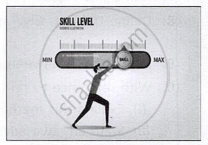
Cost of training is a major hindrance to a good training programme. State any two hindrances to Training other than the cost.
Briefly explain any two benefits of a training programme to the employer.
Short Answer Type Questions
Distinguish between training and development.
What is the purpose of induction or orientation training?
Explain one major hindrance to a good training programme.
“Training is an unavoidable cost.” Justify.
What is vestibule training?
What is vestibule training's purpose?
Explain one major hindrance to a good training programme.
State the significance of conducting refresher training.
Job Training is given to the new employees to familiarise them with the organisation. State whether the following statement is true or false with reason.
True
False
Briefly explain any two methods of off-the-job training.
Distinguish between Remedial Training and Refresher Training.
L & D leverages employee on boarding training programs to introduce new hires to the organization. The learning process will include standardized milestones that help new employees understand and learn about the company, co-workers, and their new role. Is L & D leverages doing right? Justify.
Distinguish between training and education.
Briefly explain the concept of Refresher training.
Distinguish between training and development.
Long Answer Type Questions
What is the significance of staff training?
Name and explain any four types of training.
Name and explain any four types of training.
What is meant by induction training?
Is induction training the same as on-the-job training?
What is off-the-job training?
Give four specific examples, where only off-the-job type of training will be used.
Explain in brief the advantages of on-the-job training.
What do you understand by ‘remedial training’?
What do you understand by ‘refresher training’?
Explain ‘Apprenticeship Programme’ as a method of training.
Give two advantages of apprenticeship training.
Give two disadvantages of apprenticeship training.
Name and explain any four types of training.
Define training.
Give any four benefits that an employee can get from training.
Differentiate between induction training and job training.
With reference to on-the-job training, answer the following:
Explain this method of training.
With reference to on-the-job training, answer the following:
State any two advantages of this method.
With reference to on-the-job training, answer the following:
State any two disadvantages of this method.
Distinguish between on-the-job training and off-the-job training.
Distinguish between training and education.
What is meant by induction training?
State any two objectives of induction training.
| Ms. Apurva needs help in identifying that which training should be given to which employee. Mr. Jayprakash Singh is doing many mistakes while doing his work as there is some problem in the method he is using. Ms. Nisha Mishra, is using the traditional method of pen and paper for keeping the records because she is not able to use computer's latest software. Mr. Dhaiya Khatri is a new employer who needs to acquaint with the new work environment. |
Please help her in identifying and explain which type of training is to be given to her employees.
| The streaming giant Netflix runs the 12-week Pathways Bootcamp, a part-time training program that equips employees with the necessary development skills. After completion, employees gain access to post-course training materials and online tutorials to help them face common programming challenges the streaming industry faces. Employees can also engage in mentoring opportunities with Netflix professionals to help with their career development. |
Which technique of the training does Netflix use? Evaluate the effectiveness of this technique of training programs.
Observe the image shown below and answer the questions that follow:
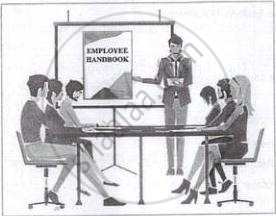
- Identify the type of training indicated in the image shown above.
- How often is this type of training conducted for employees?
- State any two reasons for conducting this type of training.
C. B. Gupta solutions for बिजनस स्टडीज [अंग्रेजी] कक्षा १२ आईसीएसई 5 Staff Training QUESTION BANK [Pages 81 - 88]
“Training is time bound while development is life long.” Explain.
Give four specific examples where only on-the-job training will be used.
Give four specific examples, where only off-the-job type of training will be used.
“In cost reduction efforts training is the first casualty.” Why?
Distinguish between on-the-job training and off-the-job training.
Give any two methods used for on-the-job training.
What are the characteristics of training?
Explain ‘Apprenticeship Programme’ as a method of training.
What are the advantages of training to the organisation?
State any three benefits of training to employees.
Distinguish between training and education.
Distinguish between training and development.
List two main objectives of orientation training.
What are the activities included in the induction training programme?
| Blue Heavens Ltd. purchased new machinery from Germany for manufacturing some auto components. It was a cost-effective and quality production machine but during the production process, the manager observed that the quality of the production was not as per standards. On investigation, it was found that there was a lack of knowledge of using these hi-tech machines. So, frequent visits by engineers were required from Germany but this resulted in high overhead charges. |
Suggest what can be done to develop the skills and abilities of employees for producing quality products by using these hi-tech machines. Also state how the employees or the organisation will be benefited by your suggestion.
| Anuroop runs a law firm in Hyderabad. His firm offers valuable financial and legal consultancy services to the clients. Whenever the firm hires any new employees, on the first day of their joining, they are welcomed to the organisation and are given details about hours of work, holiday requests, sickness procedure, dress code, lunch arrangements, introduced to the daily operations and key people in the workplace, etc. They are also familiarised with the organisation's policies and procedures, including complaints and dispute resolution, sexual harassment, emergency exits and evacuation procedure. |
In the context of the above case:
- Name the type of training which is being referred to in the above lines.
- Identify and explain the human needs of the new employees that are being fulfilled by Anuroop through this training.
| The employees of 'Food Darbar,' a restaurant, are trained through a structured programme that provides training in each area within the restaurant. The trainees learn the skills necessary for running each of the 12 workstations in the restaurant, from taking orders to the cooking area. This enables the employees to gain broader understanding of all parts of the business and how the restaurant functions as a whole. The trainee gets fully involved in the department's operations and also gets a chance to test her own aptitude and ability. When employees are trained by this method, the organisation finds it easier at the time of promotions, replacements or transfers. |
In context of the above case:
- Name the type of training which ‘Food Darbar’ provides to its employees.
- Distinguish between training and development on the basis of meaning, purpose and scopе.
Identify the type of training involved and also categorize whether it is 'on the job' training or ‘off the job training’:
In a shoe manufacturing company a group of new recruits are being trained. They are trained under an experienced trainer Mr. Arun. He is training them skills which will require at least six months of dedication under real work environment.
Identify the type of training involved and also categorize whether it is 'on the job' training or ‘off the job training’:
A student of ABC MBA College is having a combined training analysis where he is having two mentors. One mentor is from the college and the other is from the company. The idea is to give real knowledge about corporate functioning.
Identify the type of training involved and also categorize whether it is 'on the job' training or ‘off the job training’:
In a steel plant training is given to the new employees on sophisticated machines which are not being operated at the workplace. These machines are kept away. Actual work environment is created inside the classroom and the trainees are guided properly there itself.
| In a shoe manufacturing company a group of new recruits are being trained. They are put under the guidance of a master worker Mr. Arun. Mr. Arun is guiding them to acquire a higher level of skills. The training programme for the workers is supposed to last for around four months. |
Identify the training method discussed in the above para.
Identify the type of training mentioned in the following case:
| Navin is a newly recruited candidate in a company. Being new to the organisation he is taken around the office premises by the HR Manager to familiarise him with the work environment and the other members of the organisation. The basic idea behind is to outline the basic overview of the business and its functioning and Navin's role in the environment. |
| Ravi who has three years of work experience in the shipping industry has recently joined a new company. The new job is challenging and requires him to go through a training programme offered by the company. The fourteen-day programme will help him gain practical knowledge and skills related to his job. |
Identify the type of training highlighted above.
| Amazon runs multiple employee training programs under the Amazon Technical Academy to prepare nontechnical employees to move into software engineering careers. These training programs will help employees feel confident and take on different roles at Amazon and also in other industries. One such program is Associate2Tech, where they will train front-line employees to move into technical roles, even if they have no previous IT experience. |
Name & explain:
- the type of training given in Associate2Tech program.
- the method of training used by Amazon.
The following table shows the number of employees who participated in different types of training programmes in a company during the year 2023:
| Type of training | Number of Employees Trained |
|---|---|
| Induction training | 20 |
| Apprenticeship training | 35 |
| Vestibule training | 25 |
| Refresher training | 40 |
On the basis of the above data, answer the following questions:
- Which training type had the least number of employees? What might this suggest about recruitment?
- What does the difference in the participation between Refresher training and vestibule training indicate about the company priorities?
- Do you think the company is more focused on new employees? Justify your answer with the help of data.
- Give an overview opinion on the data provided above.
The following table depicts the comparison of two training programs:
| Features | Training Program A | Training Program B |
|---|---|---|
| Location of training | Factory | Training Institute/Classroom |
| Trainer type | Experienced Supervisor | Professional Trainer |
| Learning by doing | Yes | No |
| Cost incurred | Low | High |
| Employee Productivity During training | Moderate | Zero |
Questions:
- Identify which training method is On-the Job training and which is Off-the-Job Training.
- State two advantages of the method used in Training Program A.
- Explain why employee productivity is zero in Training Program B.
- Compare and contrast On-the-Job Training and Off-the Job training.
The following graph provides the details about the cost of training per employee as per the training method:
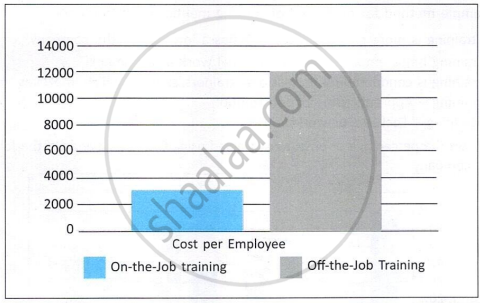
Questions:
- Which training method involves a higher investment per employee? What does this suggest about the nature of that training?
- Based on the cost pattern, which training method seems more suitable for large scale employee training? Give a reason.
- Why do you think Off-the Job training has a significantly higher cost compared to On-the-Job training?
- If a company has budget constraints, which method should they prefer? Justify your answer with reference to the data.
Study the table given below and answer the following questions:
| Aspect | On-the-Job training | Off-the-Job Training |
|---|---|---|
| Learning Environment | Actual workplace | Classroom or training institute |
| Cost to Company | Low | High |
| Trainer | Senior employees/Supervisors | Professional Trainers/experts |
| Disruption to Work | Minimal disruption | Work may be interrupted |
| Example Method | Apprenticeship, Job Rotation | Lectures, Workshops, Vestibule training |
- From the table, identify which method of training is more cost-effective for the company.
- Which type of training helps employees learn in a real work environment?
- State one advantage of Off-the-Job training based on the trainer mentioned in the table.
- Give one example method for each type of training mentioned in the table.
A graph below shows the percentage of employees trained using On-the-Job and Off-the-Job methods in the four departments of a company:
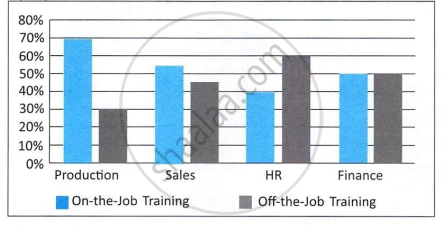
Questions:
- Which department relies the most on On-the-Job training? What does this indicate?
- Identify the department where both training methods are used equally. What could be the possible reason?
- In which department is Off-the-Job training more preferred, and why might this be suitable for that department?
- Looking at the Production and HR departments, explain how the nature of work influences the choice of training method.
Solutions for 5: Staff Training
C. B. Gupta solutions for बिजनस स्टडीज [अंग्रेजी] कक्षा १२ आईसीएसई chapter 5 - Staff Training
Shaalaa.com has the CISCE Mathematics बिजनस स्टडीज [अंग्रेजी] कक्षा १२ आईसीएसई CISCE solutions in a manner that help students grasp basic concepts better and faster. The detailed, step-by-step solutions will help you understand the concepts better and clarify any confusion. C. B. Gupta solutions for Mathematics बिजनस स्टडीज [अंग्रेजी] कक्षा १२ आईसीएसई CISCE 5 (Staff Training) include all questions with answers and detailed explanations. This will clear students' doubts about questions and improve their application skills while preparing for board exams.
Further, we at Shaalaa.com provide such solutions so students can prepare for written exams. C. B. Gupta textbook solutions can be a core help for self-study and provide excellent self-help guidance for students.
Concepts covered in बिजनस स्टडीज [अंग्रेजी] कक्षा १२ आईसीएसई chapter 5 Staff Training are Overview of Staff Training, Comparative Overview of Training, Education, and Development, Importance of Training, Types of Training, Preparation of Training Programme, Methods and Techniques of Training: On-the-Job Training, Methods and Techniques of Training: Off-the-Job Training, Types of Employee Training: Key Distinctions, Hindrances to Training, Benefits of Training to Employer and Employee, Training.
Using C. B. Gupta बिजनस स्टडीज [अंग्रेजी] कक्षा १२ आईसीएसई solutions Staff Training exercise by students is an easy way to prepare for the exams, as they involve solutions arranged chapter-wise and also page-wise. The questions involved in C. B. Gupta Solutions are essential questions that can be asked in the final exam. Maximum CISCE बिजनस स्टडीज [अंग्रेजी] कक्षा १२ आईसीएसई students prefer C. B. Gupta Textbook Solutions to score more in exams.
Get the free view of Chapter 5, Staff Training बिजनस स्टडीज [अंग्रेजी] कक्षा १२ आईसीएसई additional questions for Mathematics बिजनस स्टडीज [अंग्रेजी] कक्षा १२ आईसीएसई CISCE, and you can use Shaalaa.com to keep it handy for your exam preparation.
