The following graph provides the details about the cost of training per employee as per the training method: Questions: (a) Which training method involves a higher investment per employee? What does
Advertisements
प्रश्न
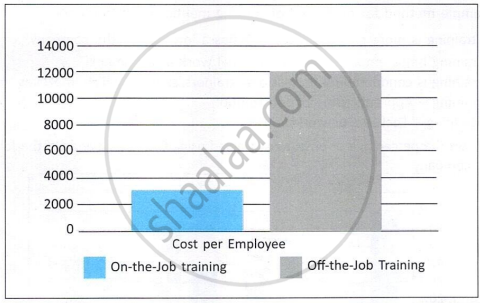
The following graph provides the details about the cost of training per employee as per the training method:
Questions:
- Which training method involves a higher investment per employee? What does this suggest about the nature of that training?
- Based on the cost pattern, which training method seems more suitable for large scale employee training? Give a reason.
- Why do you think Off-the Job training has a significantly higher cost compared to On-the-Job training?
- If a company has budget constraints, which method should they prefer? Justify your answer with reference to the data.
विस्तार में उत्तर
Advertisements
उत्तर
- This implies that Off-the-Job training depends on external facilities, professional trainers and formal training setups, making it more expensive and structured.
- On-the-job training is more suitable for large-scale employee training. This is because On-the Job training cost per employee is low, making it more economical when training a large workforce within the organization
- Off-the-Job training has a higher cost because it often involves specialized trainers, classroom infrastructure, training materials and time away from work, which adds to the overall training expense. It is usually more formal and professionally organized, which increase costs.
- The data shows that On-the-Job training has a lower cost per employee, making it more cost-effective while still allowing employees to learn practically during actual work. So, if a company has budget constraints, it should prefer the on-the-job training method.
shaalaa.com
क्या इस प्रश्न या उत्तर में कोई त्रुटि है?
