Advertisements
Advertisements
Which is the correct increasing order of boiling points of the following compounds?
1-Iodobutane, 1-Bromobutane, 1-Chlorobutane, Butane
Concept: undefined >> undefined
Which is the correct increasing order of boiling points of the following compounds?
1-Bromoethane, 1-Bromopropane, 1-Bromobutane, Bromobenzene
Concept: undefined >> undefined
Advertisements
Out of o-and p-dibromobenzene which one has higher melting point and why?
Concept: undefined >> undefined
Which of the following compounds will have the highest melting point and why?
| (I) |  |
|
(II) |
 |
| (III) | 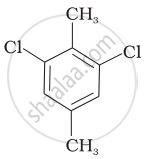 |
Concept: undefined >> undefined
Assertion: The boiling points of alkyl halides decrease in the order:
RI > RBr > RCl > RF
Reason: The boiling points of alkyl chlorides, bromides and iodides are considerably higher than that of the hydrocarbon of comparable molecular mass.
Concept: undefined >> undefined
The correct increasing order of basic strength for the following compounds is ______.
(I)

(II)

(III)

Concept: undefined >> undefined
The correct decreasing order of basic strength of the following species is ______.
\[\ce{H2O, NH3, OH-, NH^{-}2}\]
Concept: undefined >> undefined
Explain why \[\ce{MeNH2}\] is stronger base than \[\ce{MeOH}\]?
Concept: undefined >> undefined
Which of the following statements is not true about low-density polythene?
Concept: undefined >> undefined
Out of chain growth polymerisation and step growth polymerisation, in which type will you place the following.

Concept: undefined >> undefined
What is the role of benzoyl peroxide in addition polymerisation of alkenes? Explain its mode of action with the help of an example.
Concept: undefined >> undefined
Why should the monomers used in addition polymerisation through free radical pathway be very pure?
Concept: undefined >> undefined
Match the polymer of column I with correct monomer of column II.
| Column I | Column II |
| (i) High density polythene | (a) Isoprene |
| (ii) Neoprene | (b) Tetrafluoroethene |
| (iii) Natural rubber | (c) Chloroprene |
| (iv) Teflon | (d) Acrylonitrile |
| (v) Acrilan | (e) Ethene |
Concept: undefined >> undefined
Match the polymers given in Column I with their chemical names given in Column II.
| Column I | Column II |
| (i) Nylon 6 | (a) Polyvinyl chloride |
| (ii) PVC | (b) Polyacrylonitrile |
| (iii) Acrilan | (c) Polycaprolactum |
| (iv) Natural rubber | (d) Low-density polythene |
| (v) LDP | (e) cis-polyisoprene |
Concept: undefined >> undefined
Match the polymers given in Column I with the preferred mode of polymerisation followed by their monomers.
| Column I | Column II |
| (i) Nylon-6,6 | (a) Free radical polymerisation |
| (ii) PVC | (b) Ziegler-Natta polymerisation or coordination polymerisation |
| (iii) HDP | (c) Anionic polymerisation |
| (d) Condensation polymerisation |
Concept: undefined >> undefined
Assertion: Olefinic monomers undergo addition polymerisation.
Reason: Polymerisation of vinyl chloride is initiated by peroxides/ persulphates.
Concept: undefined >> undefined
Assertion: Polytetrafluoroethene is used in making non-stick cookwares.
Reason: Fluorine has highest electronegativity.
Concept: undefined >> undefined
Low density polythene and high density polythene, both are polymers of ethene but there is marked difference in their properties. Explain.
Concept: undefined >> undefined
Which of the following statements is not correct.
Concept: undefined >> undefined
A narrow spectrum antibiotic is active against ______.
Concept: undefined >> undefined
