Advertisements
Advertisements
प्रश्न
Which alkyl halide from the following pair would you expect to react more rapidly by an SN2 mechanism? Explain your answer.
\[\begin{array}{cc}\ce{CH3CHCH2CH2Br}\\|\phantom{.........}\\\ce{CH3}\phantom{......}\end{array}\] or \[\begin{array}{cc}\ce{CH3CH2CHCH2Br}\\\phantom{}|\\\phantom{...}\ce{CH3}\end{array}\]
Advertisements
उत्तर
The SN2 process involves a transition state with both an incoming nucleophile and a leaving group surrounding the carbon atom. Five atoms are simultaneously bonded together. A transition state requires minimal steric hindrance. Hence, 1° alkyl halides are the most reactive to SN2, followed by 2° and 3°.
1° RX > 2° RX > 3° RX
Based on the above order, \[\begin{array}{cc}\ce{CH3CHCH2CH2Br}\\|\phantom{.........}\\\ce{CH3}\phantom{......}\end{array}\] is more reactive.
Here, the proximity of the branched chain –CH3 that determines the reactivity. In \[\begin{array}{cc}\ce{CH3CH2CHCH2Br}\\\phantom{}|\\\phantom{...}\ce{CH3}\end{array}\] the methyl group is closer to the leaving group thereby hindering the transition state.
APPEARS IN
संबंधित प्रश्न
Which would undergo SN2 reaction faster in the following pair and why ?

Write the structures of A, B and C in the following:

Which compound in the following pair will react faster in SN2 reaction with OH−?
(CH3)3CCl or CH3Cl
Write the structure of the major organic product in the following reaction:
\[\ce{CH3CH(Br)CH2CH3 + NaOH ->[water]}\]
The stability order for carbocation is _______.
(A) 2° > 3° > 1°
(B) 3° > 2° > 1°
(C) 3° > 1° > 2°
(D) 1° > 3° > 2°
What is the action of the following on ethyl bromide
alcoholic solution of potassium hydroxide.
Halogenation of alkanes is ____________.
Which of the following reactions is an example of nucleophilic substitution reaction?
Which one is most reactive towards SN1 reaction?
Which of the following is a chiral compound?
The reaction of C6H5–CH=CH–CH3 with HBr produces:
Which of the following statements are correct about the kinetics of this reaction?

(i) The rate of reaction depends on the concentration of only (b).
(ii) The rate of reaction depends on concentration of both (a) and (b).
(iii) Molecularity of reaction is one.
(iv) Molecularity of reaction is two.
Elimination reactions (especially β-elimination) are as common as the nucleophilic substitution reaction in case of alkyl halides. Specify the reagents used in both cases.
Why are aryl halides less reactive towards nucleophilic substitution reactions than alkyl halides?
Which one is the correct order of nucleophilic strength (pKa) of following nucleophiles?
In SN1 reactions, the correct order of reactivity for the following compounds:
CH3Cl, CH3CH2Cl, (CH3)2CHCl and (CH3)3CCl is ______.
Inversion of configuration occurs in ______.
Complete the reaction with the main product formed:

Discuss SN2 mechanism of methyl bromide using aqueous KOH.
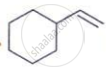 HCI, Major product ______.
