Advertisements
Advertisements
प्रश्न
What does ‘hillock’ refer to in the line ‘Every hillock has a summit to boast!’?
Advertisements
उत्तर
The hillock is a small hill. Everyone need not become Tenzing. Each one can achieve some ordinary pursuit and be proud of his achievements.
APPEARS IN
संबंधित प्रश्न
Interpret each of the following expression used in the poem, in one or two line.
like a fixed portrait smile
Read the line given below and answer the question that follow.
‘But now they only laugh with their teeth, While their ice-block-cold eyes…’
- Who are ‘they’?
- Explain: ice-block-cold eyes
- Identify the figure of speech used here.
Explain the following line with reference to the context.
I have learned to wear my faces Like dresses …
‘Face is the index of the mind.’ Does this adage concur with the views of the poet?
Why does the poet prefer to buy tickets worth their weight in radium? Bring out the significance of the metal referred to here.
The poet does not wish to exchange places with the athletes. How does he justify his view?
Underline the alliterated word in the following line.
They do not ever in their dealings…
Explain the following line with reference to the context in about four to five sentence each.
Have I not reason to lament
What Man has made of Man?
Write a letter to the Councillor of your Ward, explaining why a park is necessary in your locality.
A French proverb goes thus: ‘The dog may be wonderful prose, but only the cat is poetry.’ You may have observed that all animals possess a number of unique qualities. Fill in the columns with words and phrases associated with each of the following animals.
| DOG | CAT | WOLF | ELEPHANT |
What is Macavity’s nickname?
Which law does Macavity break?
What makes the fakir stare in wonder?
What are the mysterious ways in which Macavity acts?
Read the given lines and answer the question that follow.
‘It must have been Macavity!’ but he’s a mile away.
- What is Macavity blamed for?
- Where is he?
Give four instances where the poet has used alliteration in the poem.
What is the rhyme scheme used in the poem?
Identify the following personalities and their fields of achievement.
| Name | Field | |
 |
||
 |
||
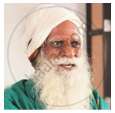 |
||
 |
||
 |
||
 |
||
 |
||
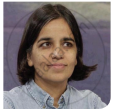 |
- Mention a remarkable achievement of any of these personalities.
- What quality do you admire the most in each of these achievers?
- What are the qualities that you may share with them?
- Name a few more popular personalities who have made our nation proud.
- ______.
- ______.
- ______.
- ______.
Which quality does the speaker wish to nourish? What is his mission?
What does the ladder symbolize?
Read the given line and answer the question that follow.
Our nature it is that whatever we try We do with devotion deep and true.
- Who does ‘we’ refer to?
- How should we carry out our duties?
Read the given line and answer the question that follow.
We are proud of the position we hold; humble as we are
- What is the speaker proud of?
- How is the speaker both humble and proud?
- Pick out the alliteration in these lines.
In what way is every hillock similar to Everest?
Working with your partner, discuss the following adages and share your views with the class. You may need to give your ideas and justify your point of view. Remember to take turns while making your presentation/short speech.
Uneasy lies the head that wears a crown
Read the poem once again carefully and identify the figure of speech that has been used in each of the following line from the poem:
“And yet not so – for what can we bequeath
Save our deposed bodies to the ground?”
Read the poem once again carefully and identify the figure of speech that has been used in each of the following line from the poem:
“Keeps Death his court, and there the antic sits,…”
Read the poem once again carefully and identify the figure of speech that has been used in each of the following line from the poem:
“Scoffing his state and grinning at his pomp,…”
Based on your reading of King Richard’s speech, answer the following questions in about 100 - 150 words each. You may add your own ideas if required to present and justify your point of view.
How are eternal truths and wisdom brought to the reader here?
