Advertisements
Advertisements
प्रश्न
The following table shows the electronic configuration of the elements W, X, Y, Z:
|
Element |
W |
X |
Y |
Z |
|
Electronic |
2,8,1 |
2,8,7 |
2,5 |
1 |
Answer the following questions based on the table above:
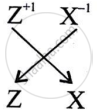
What is the formula of the compound formed between X and Z.
Advertisements
उत्तर
XZ is the formula of the compound formed between X and Z.

APPEARS IN
संबंधित प्रश्न
Match the atomic number 4, 8, 14, 15 and 19 with each of the following:
(a) A solid non-metal of valelncy 3.
(b) A gas of valency 2.
(c) A metal of valency 1.
(d) A non-metal of valency 4
(i) How many atoms of each kind are present in the following molecules: calcium oxide, chlorine, water, carbon tetrachloride?
(ii) How many electrons are required for their octet structure?
State differences between the properties of ionic compounds and covalent compounds.
What type of bond is formed between two atoms, when the electronegative difference between them is High ?
Complete the following table relating to the atomic structure of some elements.
|
Element Symbol |
Atomic Number |
Mass Number |
Numbers of neutrons |
Number of Electrons |
Number of Protons |
|
Li |
3 |
6 |
|
|
|
|
Cl |
17 |
|
20 |
|
|
|
Na |
|
|
12 |
|
11 |
|
Al |
|
27 |
|
|
13 |
|
S |
|
32 |
16 |
|
|
Draw orbit structure diagram of sodium chloride (NaCl).
Potassium (at No.19) and chlorine (at No.17) react to form a compound. Explain the formation of the compound on the basis of oxidizing agent.
Identify the following reaction as either oxidation or reduction:
Zn → Zn2+ + 2e-
Draw the geometric atomic structure of the three isotopes of hydrogen and the two isotopes of chlorine.
Elements A, B and C have atomic number 17, 19 and 10 respectively.
State which one is a metal.
