Advertisements
Advertisements
प्रश्न
Name the reagent used to bring about the following conversion.
Ethyl bromide to ethyl isocyanide
Advertisements
उत्तर
| Reactant | Reagent | Product |
| Ethyl bromide | \[\ce{->[Alcohol][AgCN]}\] | Ethyl isocyanide |
APPEARS IN
संबंधित प्रश्न
from the following pair would undergo SN2 faster from the other?
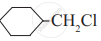

from the following pair would undergo SN2 faster from the other?
a. CH3CH2CH2I b. CH3CH2CH2Cl
Complete the following reaction giving major products.
\[\ce{CH3 - CH = CH2 ->[HBr][peroxide] A ->[alc. KOH] B}\]
Complete the following reaction giving major products.
\[\begin{array}{cc}\ce{CH3 - CH = CH3 ->[Red P/Br2] A ->[Ag2O/H2O]B}\\|\phantom{.........................}\\
\ce{OH\phantom{.......................}}\end{array}\]
Convert the following:
Benzyl alcohol to benzyl cyanide
Convert the following:
Ethanol to propane nitrile
Observe the following and answer the question given below.

Comment on the bond length of C–X bond in it.
Explain primary benzylic halide shows higher reactivity by SN1 mechanism than other primary alkyl halide.
Explain the factors affecting SN1 and SN2 mechanism.
Explain aqueous alkaline hydrolysis of tert. butyl bromide.
In alkaline hydrolysis of tertiary butyl bromide, ____________.
Nitroalkanes are obtained in laboratory from primary or secondary alkyl halides by the action of ______.
\[\ce{C6H5CH2Cl + KCN(alc) -> X + Y}\]
Compounds X and Y are ____________.
Which of the following is FALSE regarding SN2 reaction mechanism?
What is the major product obtained in the sulphonation of chlorobenzene with concentrated sulphuric acid?
The major product formed when 2-bromobutane is treated with alcoholic KOH is ______.
The order of reactivities of the following alkyl halides for an SN2 reaction is ______.
Which of the following statements is incorrect regarding the dehydrohalogenation of alkenes?
Explain the dehydrohalogenation reaction of 2-chlorobutane.
Observe the following and answer the question given below:

Comment on the bond length of C-X bond in it.
Observe the following and answer the question given below:

Can react by SN1 mechanism? Justify your answer.
Discuss β - elimination reaction.
Complete the following reactions giving major product.
\[\begin{array}{cc}
\ce{CH3}\phantom{................}\\
|\phantom{...................}\\
\ce{CH3 - C - CH2 - Cl ->[Na/dry ether] A}\\
|\phantom{...................}\\
\ce{CH3}\phantom{.................}
\end{array}\]
Identify the substrate 'X' in the following reaction.
\[\ce{\underset{}{X + O2} ->[i) Co-naphtenate 423 K][ii) dil HClΔ] \underset{\underset{}{}}{Phenol + Acetone}}\]
