Advertisements
Advertisements
प्रश्न
Interpret the following graph: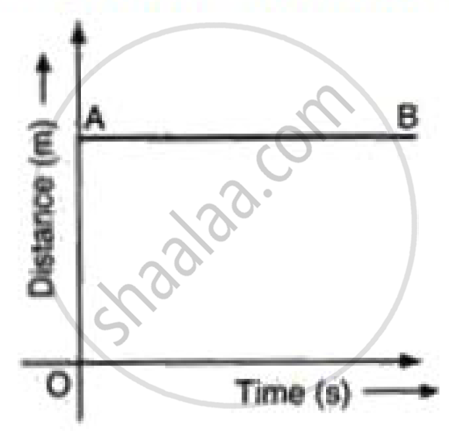
Advertisements
उत्तर
In distance time graph a straight line parallel to time axis represents state of motion.
APPEARS IN
संबंधित प्रश्न
What does the slope of a speed-time graph indicate ?
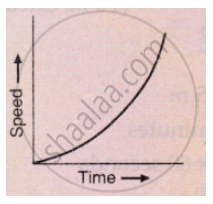
What conclusion can you draw about the acceleration of a body from the speed-time graph shown below .
Draw a displacement-time graph for a boy going to school with uniform velocity.
What does the area of an acceleration – time graph represent?
Diagram shows a velocity – time graph for a car starting from rest. The graph has three sections AB, BC and CD.
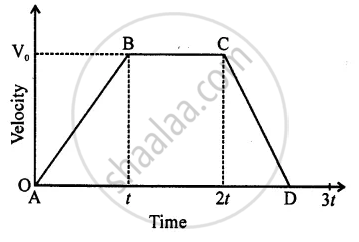
Compare the distance travelled in section BC with the distance travelled in section AB.
The area of the right triangle under a speed-time graph is 500 m, in a time interval of 20 s. What is the speed of the body? Is the motion uniform or non-uniform?
Draw the following graph:
Speed versus time for a non-uniform acceleration.
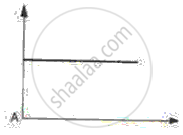
Given below are the speed -time graphs. Match them with their corresponding motions :
 |
(a) Uniformity retared motion |
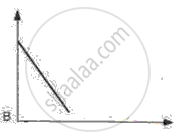 |
(b) Non-uniformity acceleration |
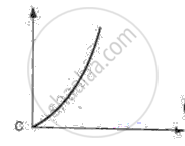 |
(c) Non-uniform motion |
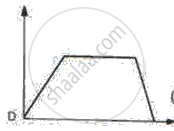 |
(d) uniform motion |
Figure shows the distance-time graph of three students A, B and C. On the basis of the graph, answer the following :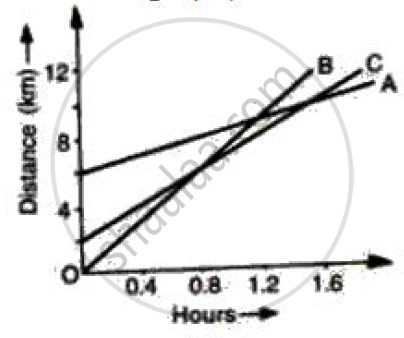
How far did B travel between the time he passed C and A?
A straight line parallel to the x-axis in the velocity-time graph represents the object moving in ______.
