Advertisements
Advertisements
प्रश्न
In quadrilateral ABCD, side AB is parallel to side DC. If ∠A : ∠D = 1 : 2 and ∠C : ∠B = 4 : 5
(i) Calculate each angle of the quadrilateral.
(ii) Assign a special name to quadrilateral ABCD
Advertisements
उत्तर
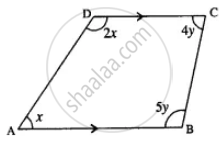
(i) ∵ ∠A : ∠D = 1 : 2
Let ∠A = x and ∠D = 2x
∵ ∠C : ∠B = 4 : 5
Let ∠C = 4y and ∠B = 5y
∵ AB || DC
∴ ∠A + ∠D = 180°
x + 2x = 180°
3x = 180°
x = 60°
∴ A = 60°
∠D = 2x = 2 × 60 = 120°
Again ∠B + ∠C = 180°
5y + 4y = 180°
9y = 180°
y = 20°
∴ ∠B = 5y = 5 x 20 = 100°
∠C = 4y = 4 x 20 = 80°
Hence ∠A = 60°; ∠B = 100°; ∠C = 80°
and ∠D = 120°
(ii) `square` ABCD is a trapezium.
संबंधित प्रश्न
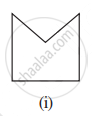
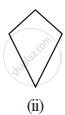
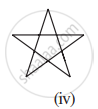
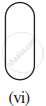
Given here are some figures:
 |
 |
 |
 |
 |
 |
 |
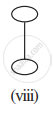 |
Classify each of them on the basis of the following:
- Simple curve
- Simple closed curve
- Polygon
- Convex polygon
- Concave polygon
What is the sum of the measures of the angels of a convex quadrilateral? Will this property hold if the quadrilateral is not convex? (Make a non-convex quadrilateral and try!)
Define the following term Convex Quadrilateral .
In a quadrilateral, define of the following Vertices .
Complete of the following, so as to make a true statement:
The number of pairs of opposite angles of a quadrilateral is .......
The three angles of a quadrilateral are respectively equal to 110°, 50° and 40°. Find its fourth angle.
A quadrilateral has three acute angles each measures 80°. What is the measure of the fourth angle?
The sum of the interior angles of a polygon is three times the sum of its exterior angles. Determine the number of sided of the polygon.
Determine the number of sides of a polygon whose exterior and interior angles are in the ratio 1 : 5.
Complete the following statement by means of one of those given in brackets against each:
A line drawn from the mid-point of one side of a triangle .............. another side intersects the third side at its mid-point.
Complete the following statement by means of one of those given in brackets against each:
f consecutive sides of a parallelogram are equal, then it is necessarily a ..................
If the bisectors of two adjacent angles A and B of a quadrilateral ABCD intersect at a point O such that ∠C + ∠D = k ∠AOB, then find the value of k.
The consecutive sides of a quadrilateral have
Two angles of a quadrilateral are 68° and 76°. If the other two angles are in the ratio 5 : 7; find the measure of each of them.
The diagonals of a rhombus are 6 .cm and 8 cm. State the angle at which these diagonals intersect.
Observe the figure below and find out their name.
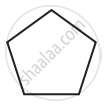
If angles A, B, C and D of the quadrilateral ABCD, taken in order, are in the ratio 3 : 7 : 6 : 4, then ABCD is a ______.
In the following figure, What is BD – BE?

What conclusion can be drawn from part of given figure, if BD bisects ∠ABC?

Which of the following represents the vertices of quadrilateral ABCD?
