Advertisements
Advertisements
प्रश्न
\[\ce{CH3CH2OH}\] can be converted into \[\ce{CH3CHO}\] by ______.
विकल्प
catalytic hydrogenation
treatment with \[\ce{LiAlH4}\]
treatment with pyridinium chlorochromate
treatment with \[\ce{KMnO4}\]
Advertisements
उत्तर
\[\ce{CH3CH2OH}\] can be converted into \[\ce{CH3CHO}\] by treatment with pyridinium chlorochromate.
Explanation:
Alcohols are oxidized to aldehydes and finally to acids.
\[\ce{CH3CH2OH ->[{[O]}] CH3CHO ->[{[O]}] CH3COOH}\]
Oxidations can be stooped at aldehyde stage by using pyridinium chlorochromate
\[\ce{(CrO3C5H5N.HCl)}\].
\[\ce{CH3CH2OH ->[PCC] CH3CHO}\]
APPEARS IN
संबंधित प्रश्न
Write the final product(s) in each of the following reactions:

Write the mechanism of the following reaction:

Write the mechanism of the following reaction :

Write the mechanism of acid-catalysed dehydration of ethanol to yield ethene.
Name the reagent used in the following reaction:
Oxidation of a primary alcohol to carboxylic acid.
Write the mechanism (using curved arrow notation) of the following reaction :

Lucas test is used for the detection of _____________.
In the reduction \[\ce{R - CHO + H2 -> RCH2OH}\] the catalyst used is:
By which of the following methods alcohol can be prepared in excellent yield?
Which of the following are used to convert RCHO into RCH2OH?
(i) H2/Pd
(ii) LiAlH4
(iii) NaBH4
(iv) Reaction with RMgX followed by hydrolysis
Primary and secondary alcohols on the action of reduced copper give:
Identify the secondary alcohols from the following set:
- \[\ce{CH3CH2CH(OH)CH3}\]
- \[\ce{(C2H5)3COH}\]
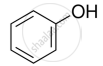

Explain why nucleophilic substitution reactions are not very common in phenols.
Ethers can be prepared by Williamson synthesis in which an alkyl halide is reacted with sodium alkoxide. Di-tert-butyl ether can’t be prepared by this method. Explain.
What is Lucas reagent?
Which of the following alcohols will not undergo oxidation?
Write the mechanism of acid dehydration of ethanol to yield ethene.
Write the mechanism of acid-catalysed dehydration of ethanol to yield ethene.
Write the mechanism of acid-catalysed dehydration of ethanol to yield ethene
