Advertisements
Advertisements
प्रश्न
What happens when (CH3)3 C – OH is heated with Cu/573 K?
Write the chemical equation in support of your answer.
Advertisements
उत्तर
When a tertiary alcohol is heated with Copper at 573 K, due to absence of α-hydrogen atom dehydration reaction takes place and produce 2-methyl propene.
\[\begin{array}{cc}
\phantom{....}\ce{CH3}\phantom{.................}\ce{CH3}\phantom{.}\\
\phantom{.}|\phantom{.....................}|\phantom{.}\\
\phantom{}\ce{CH3 - C - OH ->[Cu][573K] \underset{2-metyl propene}{CH3 - C = CH2}}\\
|\phantom{......................}\\
\ce{\underset{Tertiary Butanol}{CH3}}\phantom{...................}
\end{array}\]
APPEARS IN
संबंधित प्रश्न
Show how will you synthesize pentan-1-ol using a suitable alkyl halide.
Give the equation of the following reaction:
Treating phenol with chloroform in the presence of aqueous NaOH.
Lucas test is used for the detection of _____________.
Which of the following is not true in case of reaction with heated copper at 300°C?
Lucas test is done to differentiate between ____________.
The compound which gives the most stable carbonium ion on dehydration is:
Mark the correct increasing order of reactivity of the following compounds with HBr/HCl.
| (a) | 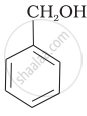 |
| (b) |  |
| (c) | 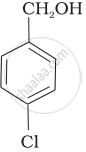 |
Name the factors responsible for the solubility of alcohols in water.
Explain why nucleophilic substitution reactions are not very common in phenols.
Write the mechanism of acid dehydration of ethanol to yield ethene.
