Topics
Basic Concepts in Economics
- Branches of Science
- Natural Science
- Social Science
- Concept of Economics
- Kautilya's Views on Economics
- Types of Economic Systems
- Capitalism
- Socialism
- Mixed Economy
- Introduction to Microeconomics and Macroeconomics
- Microeconomics
- Basic Concepts of Microeconomics > Want
- Basic Concepts of Microeconomics > Goods and Services
- Basic Concepts of Microeconomics > Utility
- Basic Concepts of Microeconomics > Value
- Basic Concepts of Microeconomics > Wealth
- Microeconomics > Personal Income
- Basic Concepts of Microeconomics > Personal Disposable Income
- Microeconomics > Economic Activity
- Types of Income
- Concept of Economic Good
- Macroeconomics
- Cyclical Unemployment
- Difference Between Economic Growth and Economic Development
Money
Partition Values
The Economy of Maharashtra
- Formation and Economic Progress of Maharashtra
- Administrative Divisions of Maharashtra
- Important Features of the Economy of Maharashtra
- Economic Development of Maharashtra
- Agricultural Sector
- Industrial Growth in Maharashtra
- Service Sector
- Core Areas of Service Sector
- Economic Infrastructure of Maharashtra
- Social Infrastructure of Maharashtra
- Measures for Social Infrastructure: Education
- Measures for Social Infrastructure: Health Services
- Co – operative Movement in Maharashtra
- Symbols of Educational Schemes in India
- Tourism in Maharashtra
- Hospitality
- Entertainment Industry
Rural Development in India
Population in India
- Concept of Population in India
- Trends in Population Growth
- Theories of Population Growth
- Population Explosion in India
- Types of Population Based on Resource Availability
- Birth Rate
- Death Rate
- Survival Rate
- Legal Age of Marriage for Males and Females in Different Countries
- The Population as a Human Resource
- Role of Human Resources in Economic Development
Unemployment in India
- Concept of Unemployment
- Important Terms of Employment and Unemployment
- Types of Unemployment
- Rural Unemployment
- Urban Unemployment
- Extent of Unemployment in India
- State-Wise Unemployment Rates in India
- Causes of Unemployment
- General Measures to Reduce Unemployment
- Effects of Unemployment
- Government Measures for Employment Generation
Poverty in India
- Concept of Poverty in India
- Prof. Amartya Sen’s Views on Poverty
- Multi-dimensional Poverty
- Key Concepts of Poverty
- Countries with Highest Extreme Poverty Rates
- Poverty Line
- Informal Sector and Related Activities
- Income Pyramid
- Types of Poverty
- Extent of Poverty in India
- Estimates of Poverty
- Causes of Poverty
- Effects of Poverty
- Sustainable Development Goals
- Understanding Maharashtra’s Tri Colour Family Ration Cards
- Eradication of Poverty
- Poverty Alleviation Programmes and Their Target Sectors
- Tracking Anti-Poverty Efforts
Economic Policy of India since 1991
- Economic Transition of India
- Main Objectives of the Economic Policy of 1991
- Features of the Economic Policy of 1991
- Public Bank Vs Private Banks Vs Foreign Banks
- Components of New Economic Policy
- Liberalisation
- Privatisation
- Globalisation
- Evaluation of the Economic Policy of 1991
- Corporate Social Responsibility
Economic Planning in India
- India’s Planning Commission
- Economic Planning in India
- Overview of the Bombay, People’s, and Gandhian Plans
- Features of Economic Planning
- Five Year Plans (FYP)
- 12th Five Year Plan (2012-2017)
- Levels of National Family Health Survey (NFHS)
- NITI Aayog (National Institution for Transforming India)
- Planning Commission VS NITI Aayog
- Introduction
- Formula
- Example
- The 4 Basic Material Needs
- Characteristics
- Classification
- Real-Life Application
- Key Point Summary
Introduction
Human wants are desires backed by both the purchasing power (money) and the willingness to buy. This differs from mere desires, which everyone can have regardless of their financial ability.
Formula
Want = Desire + Money + Willingness to Purchase.
Example
- Mere Desire: A student wishes for a luxury sports car.
- Economic Want: The same student wants a smartphone and has ₹15,000 to buy it.
The 4 Basic Material Needs
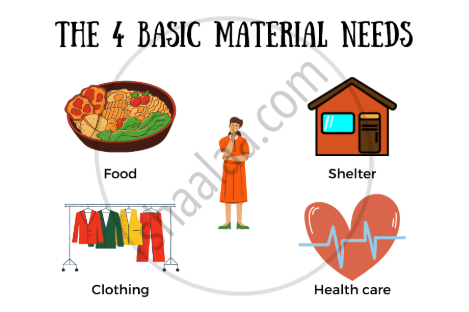
Every human being requires these fundamental necessities for survival:
- Food: Essential nutrition for life
- Shelter: Protection and housing
- Clothing: Protection from weather and social needs
- Healthcare: Medical care for well-being
These form the foundation of Maslow's hierarchy and represent the most basic economic wants that must be satisfied first.
Characteristics
1. Wants Are Unlimited – New wants keep arising even after satisfying existing ones.
2. Wants Are Recurring – Many wants repeat regularly – hunger occurs multiple times daily, and the need for new clothes arises seasonally.
3. Wants Differ with Age
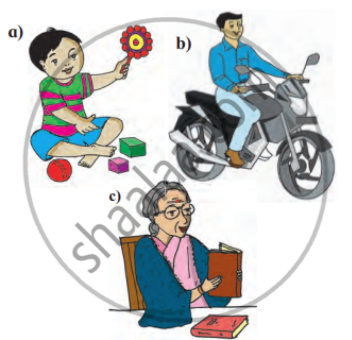 Fig. Age and Wants – a, b, c
- Children want toys and games
- Teenagers want trendy clothes and gadgets
- Adults want career growth and family security
- Elderly people want health services and comfort.
4. Wants differ with Gender – Men and women often have different preferences in clothing, accessories, and lifestyle choices.
5. Wants differ due to Culture- Food preferences, festival celebrations, and clothing styles vary significantly across different cultural backgrounds.
6. Wants change with Seasons – Our clothing preferences and lifestyle wants change dramatically with seasons.
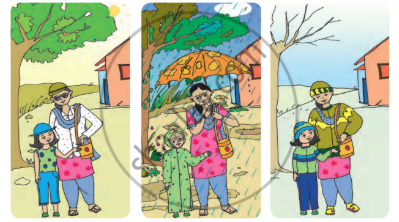 Fig. Seasons and Wants
- Summer: Light clothing, cold beverages, air conditioning.
- Winter: Warm clothing, heating systems, hot beverages.
- Autumn: Seasonal fashion with earth tones and layered clothing.
- Spring: Fresh styles and transitional wear.
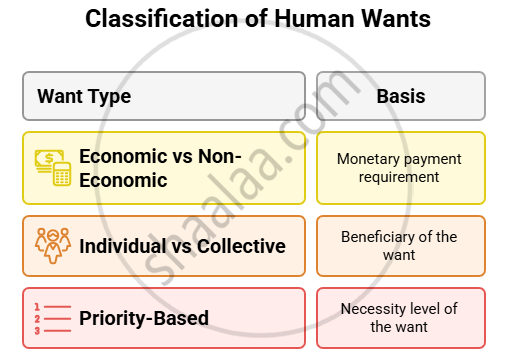
Classification
Real-Life Application
Twenty years ago, people wanted basic mobile phones for calling. Today, we want smartphones with high-resolution cameras, fast internet, gaming capabilities, and multiple apps - showing how wants evolve with technology.
Key Point Summary
- Human wants are desires backed by purchasing power and willingness to buy.
- The conflict between unlimited wants and limited resources creates the fundamental economic problem.
- Understanding wants is crucial for studying consumer behaviour and market dynamics.
