Advertisements
Online Mock Tests
Chapters
1: Bricks, Beads And Bones: The Harappan Civilisation
2: Kings, Farmers And Towns: Early States and Economies
3: Kinship, Caste And Class: Early Societies
4: Thinkers, Beliefs And Buildings: Cultural Developments
Part 2
5: Through The Eyes Of Travellers: Perceptions of Society
6: Bhakti –Sufi Traditions: Changes in Religious Beliefs and Devotional Texts
▶ 7: An Imperial Capital: Vijayanagara
8: Peasants, Zamindars And The State: Agrarian Society and the Mughal Empire
Part 3
9: Colonialism And The Countryside: Exploring Official Archives
10: Rebels And The Raj: 1857 Revolt and its Representations
11: Mahatma Gandhi And The Nationalist Movement: Civil Disobedience and Beyond
12: Framing The Constitution: The Beginning of a New Era
![NCERT solutions for Themes In Indian History Part I, II, and III [English] Class 12 chapter 7 - An Imperial Capital: Vijayanagara - Shaalaa.com](/images/themes-in-indian-history-part-i-ii-and-iii-english-class-12_6:81c2d22dfccf437dbdcef1d2cd896e40.jpg "NCERT solutions for Themes In Indian History Part I, II, and III [English] Class 12 chapter 7 - An Imperial Capital: Vijayanagara")
Advertisements
Solutions for Chapter 7: An Imperial Capital: Vijayanagara
Below listed, you can find solutions for Chapter 7 of CBSE NCERT for Themes In Indian History Part I, II, and III [English] Class 12.
NCERT solutions for Themes In Indian History Part I, II, and III [English] Class 12 7 An Imperial Capital: Vijayanagara Intext Questions [Pages 171 - 190]
|
Born in 1754, Colin Mackenzie became famous as an engineer, surveyor and cartographer. In 1815, he was appointed the first Surveyor General of India, a post he held till his death in 1821. He embarked on collecting local histories and surveying historic sites in order to better understand India’s past and make governance of the colony easier. He says that “it struggled long under the miseries of bad management … before the South came under the benign influence of the British government”. By studying Vijayanagara, Mackenzie believed that the East India Company could gain “much useful information on many of these institutions, laws and customs whose influence still prevails among the various Tribes of Natives forming the general mass of the population to this day.”
Mackenzie and his assistants This is a copy by an unknown artist of an oil painting by the portrait painter Thomas Hickey. It dates to c.1825 and belongs to the collection of the Royal Asiatic Society of Britain and Ireland. On Mackenzie’s left is his peon Kistnaji holding a telescope; on his right are Brahmana assistants – a Jaina pandit (right) and behind him the Telugu Brahmana Cauvellery Ventak Letchmiah. |
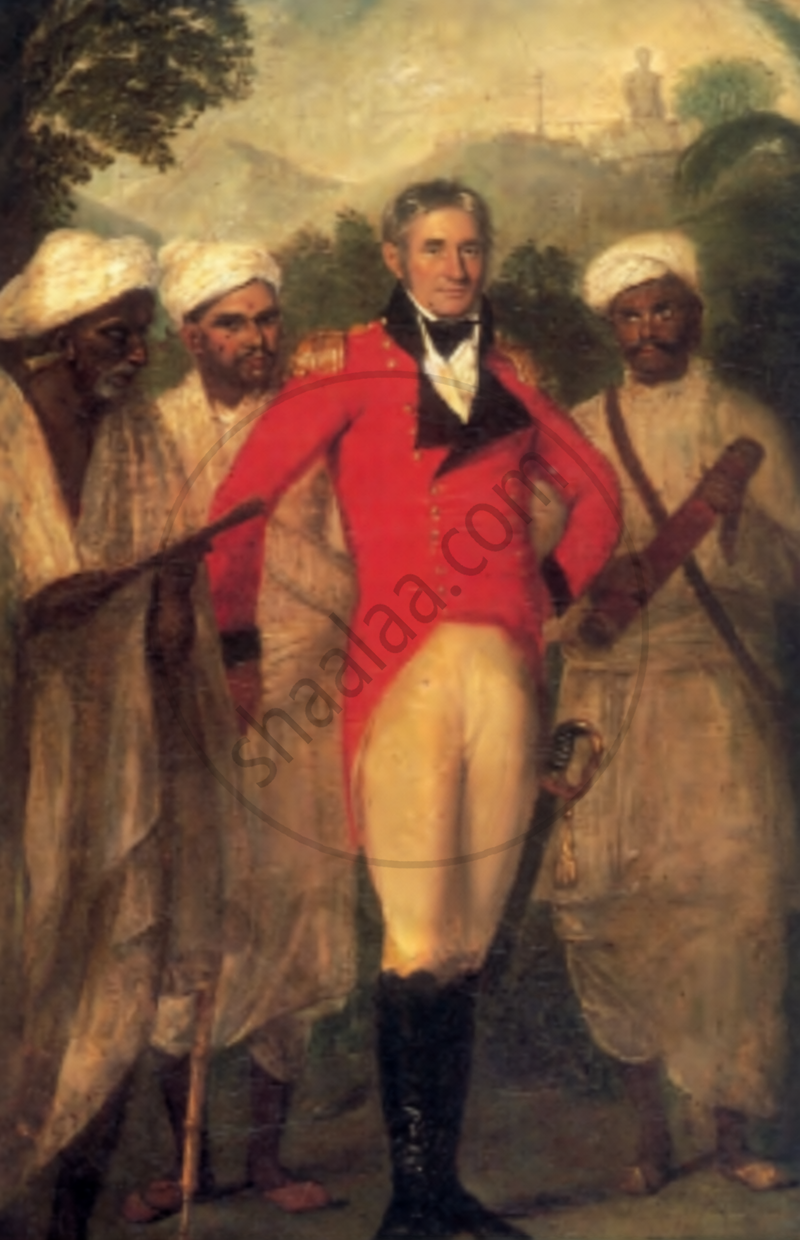
- How has the artist portrayed Mackenzie and his indigenous informers?
- What ideas about him and his informants are sought to be impressed upon the viewers?
|
Krishnadeva Raya (ruled 1509-29), the most famous ruler of Vijayanagara, composed a work on statecraft in Telugu known as the Amuktamalyada. About traders he wrote: A king should improve the harbours of his country and so encourage its commerce that horses, elephants, precious gems, sandalwood, pearls and other articles are freely imported … He should arrange that the foreign sailors who land in his country on account of storms, illness and exhaustion are looked after in a suitable manner … Make the merchants of distant foreign countries who import elephants and good horses be attached to yourself by providing them with daily audience, presents and allowing decent profits. Then those articles will never go to your enemies. |
- Why do you think the king was interested in encouraging trade?
- Which groups of people would have benefited from these transactions?
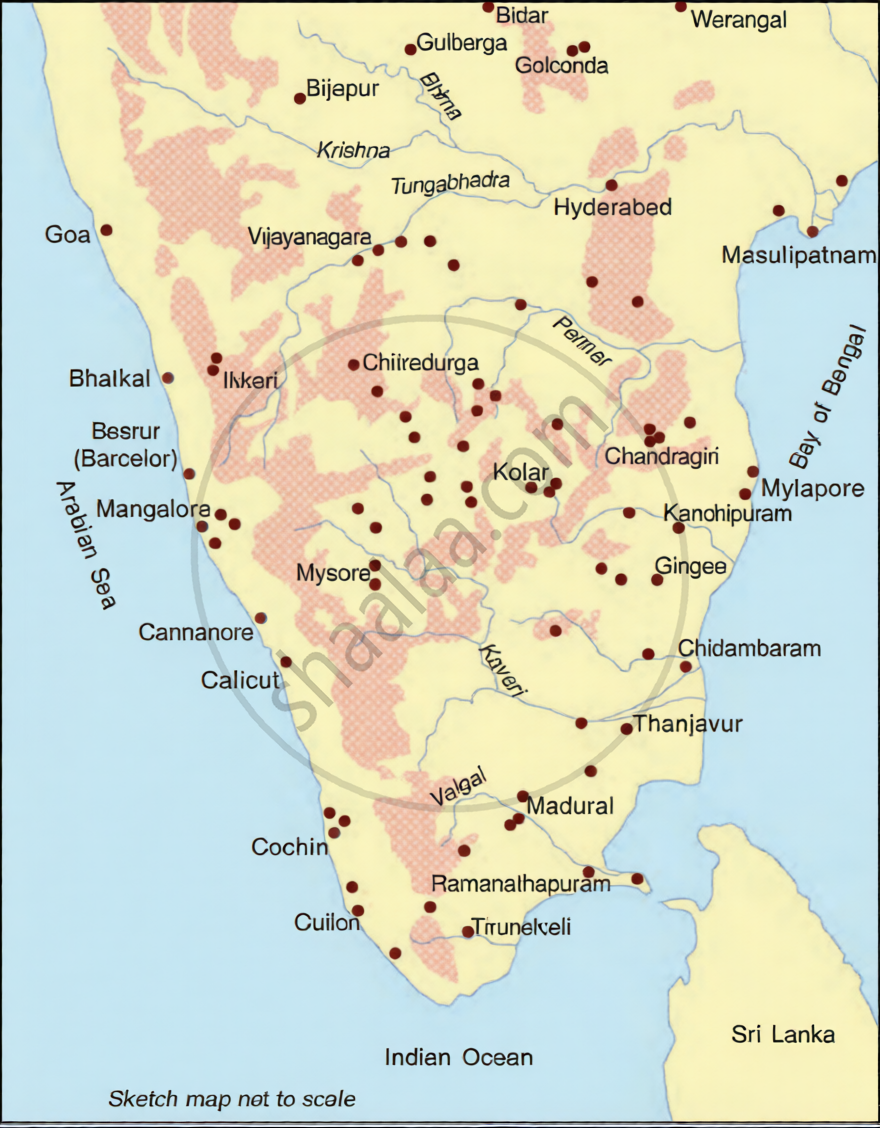
Identify the present-day states that formed part of the empire.
Discuss
Locate Chandragiri, Madurai, Ikkeri, Thanjavur and Mysore, all centres of nayaka power, on the map of South India. Discuss the ways in which rivers and hills may have facilitated or hindered communication with Vijayanagara in each case.
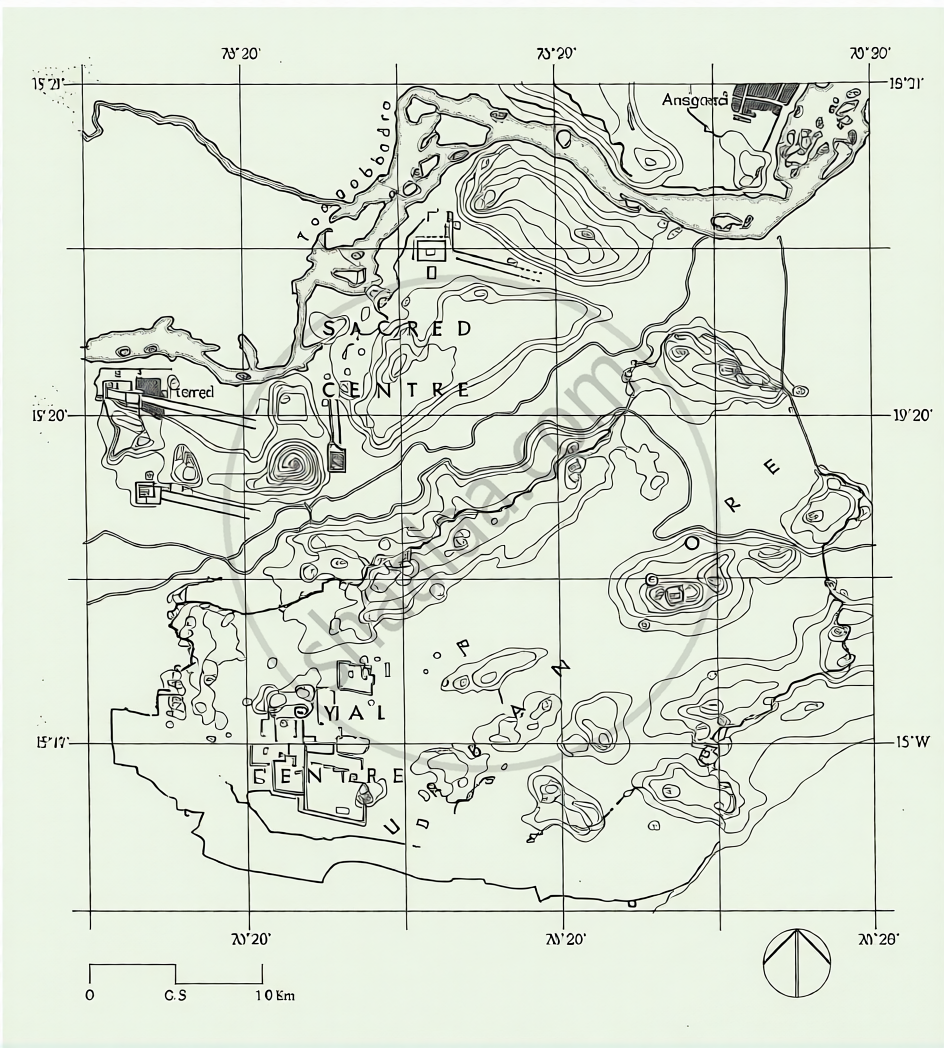
Identify three major zones on the plan. Look at the central part. Can you see channels connecting up with the river? See how many fortification walls you can trace. Was the sacred centre fortified?
|
This is an excerpt from Domingo Paes’s description of Vijayanagara: The size of this city I do not write here, because it cannot all be seen from any one spot, but I climbed a hill whence I could see a great part of it; I could not see it all because it lies between several ranges of hills. What I saw from thence seemed to me as large as Rome, and very beautiful to the sight; there are many groves of trees within it, in the gardens of the houses, and many conduits of water which flow into the midst of it, and in places there are lakes; and the king has close to his palace a palm-grove and other rich fruit-bearing trees. |
- Would you find these features in a city today?
- Why do you think the gardens and water bodies were selected for special mention by Paes?
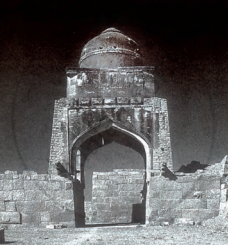
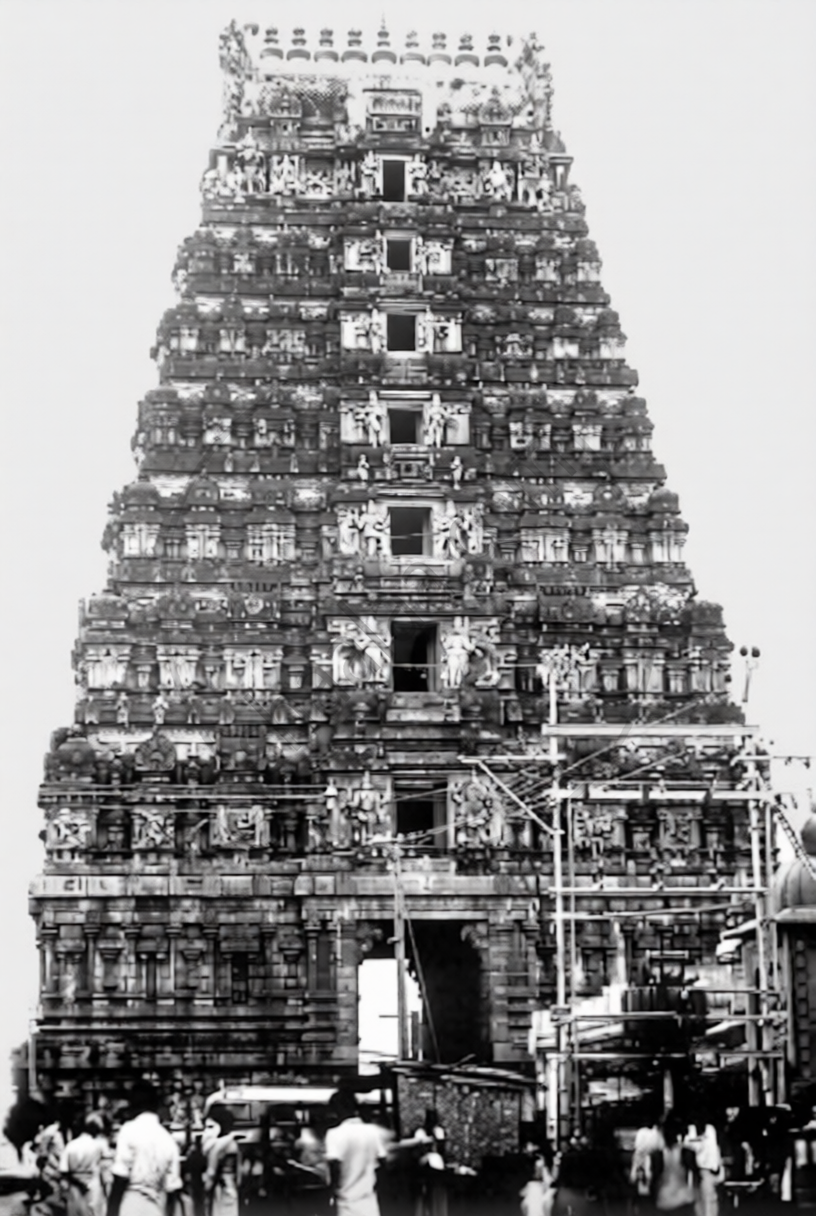
Describe the similarities and differences between these two entrances. Why do you think the rulers of Vijayanagara adopted elements of Indo-Islamic architecture?
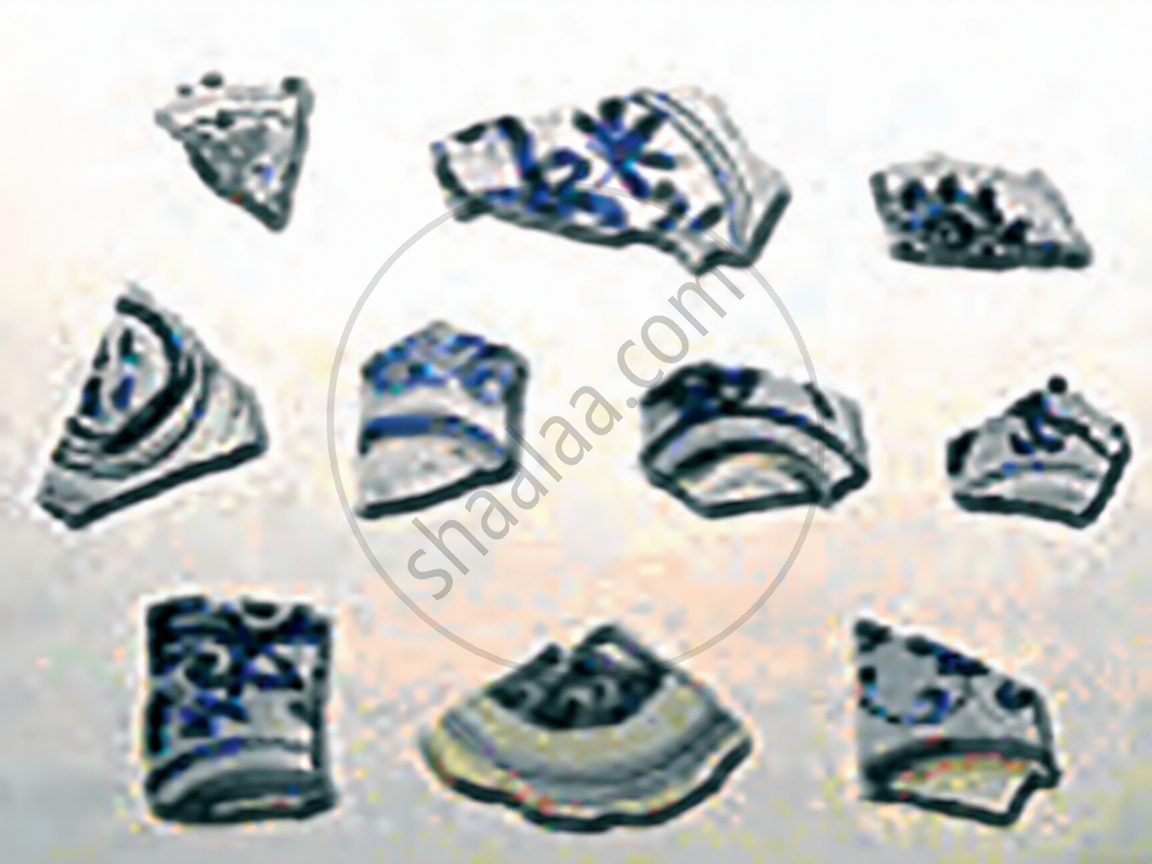
What kinds of vessels do you think these shards were originally parts of?
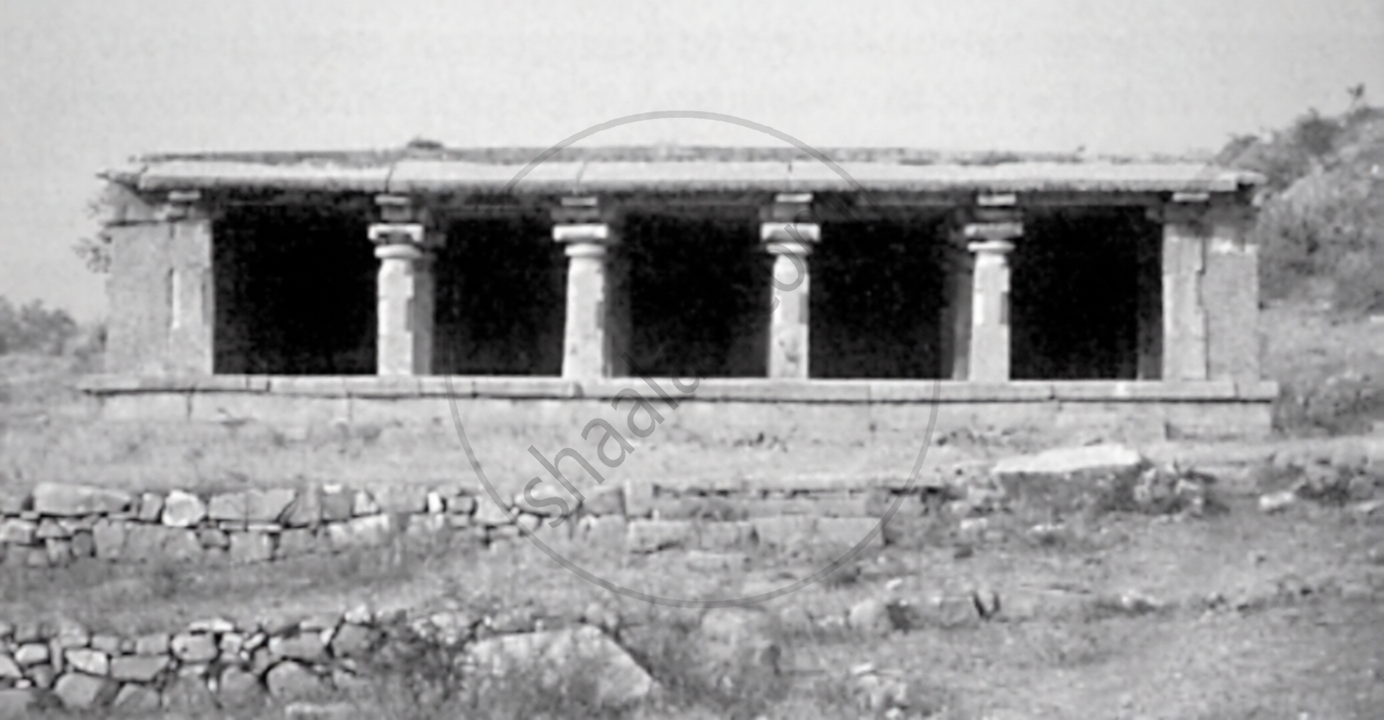
Does the mosque have the typical features of Indo-Islamic architecture?
Discuss
Compare the layout of Vijayanagara with that of your town or village.
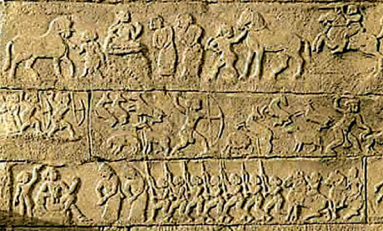
Can you identify the themes of the carvings?
Compare the photograph of Lotus Mahal and the elevation drawing of Lotus Mahal, and make a list of the features that are common to both, as well as those that can be seen in only one. Also compare the arch in the detailed arch of Lotus Mahal with the arch in the fortified city gateway arch. The Lotus Mahal had nine towers – a high central one, and eight along the sides. How many can you see in the photograph and how many in the elevation? If you had to rename the Lotus Mahal, what would you call it?
Compare the photograph of the elephant stables and the plan of a single chamber in the stables with the elevation drawing of the elephant stables, making a list of features visible in each one. Do you think these were actually elephant stables?
Can you identify scenes of dancing? Why do you think elephants and horses were depicted on the panels?
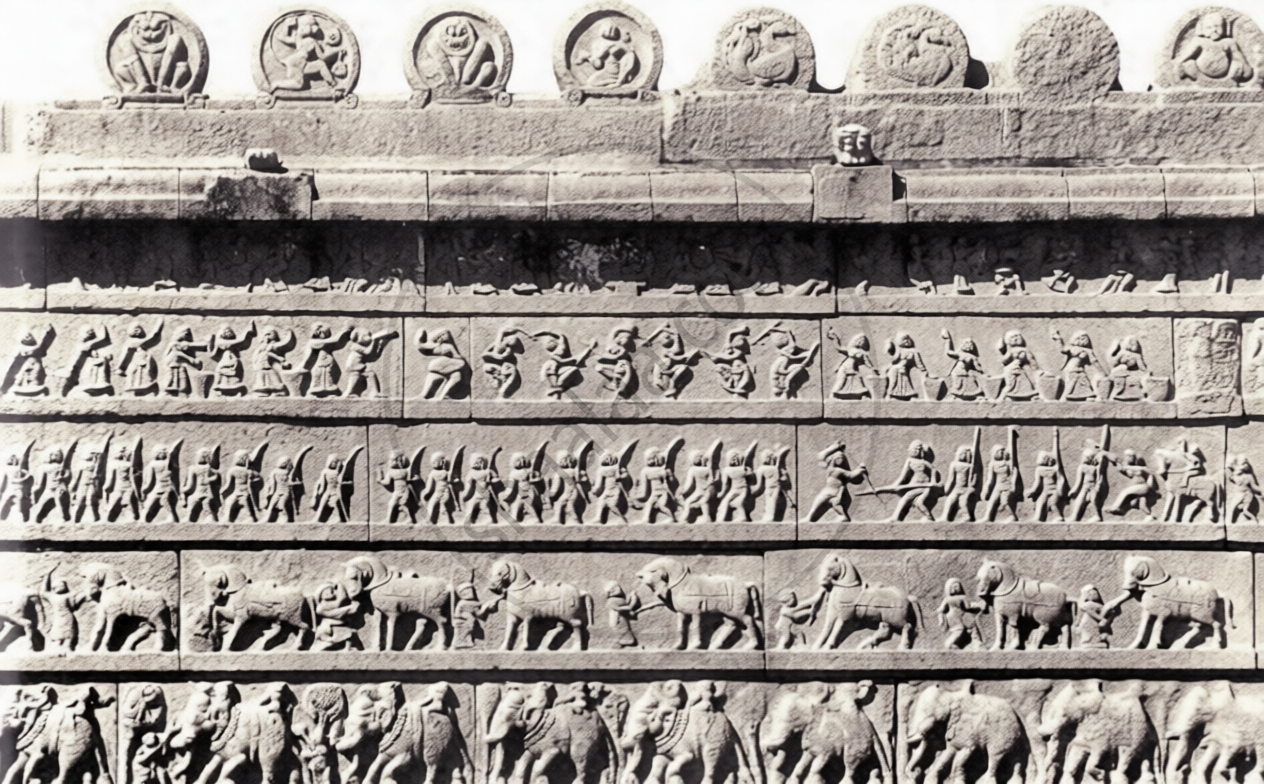
Discuss
Why did the nayakas continue with the building traditions of the rulers of Vijayanagara?
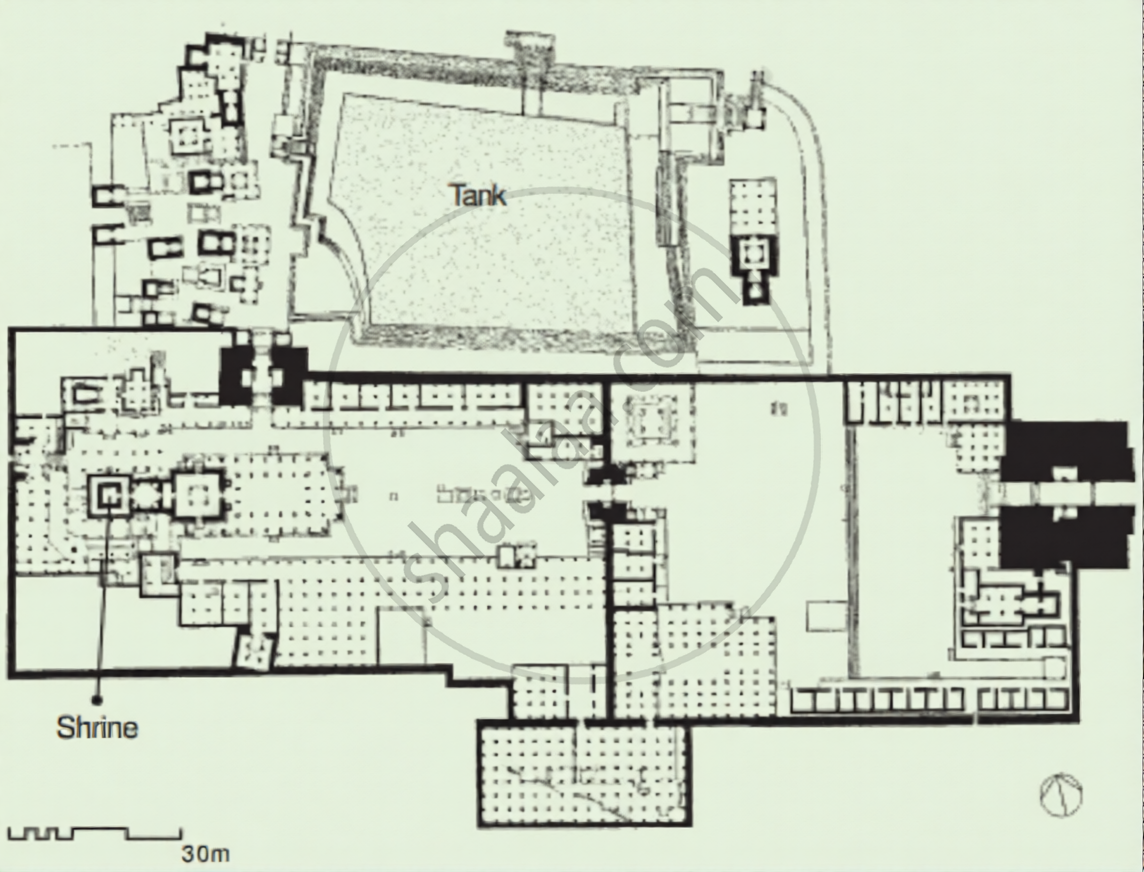
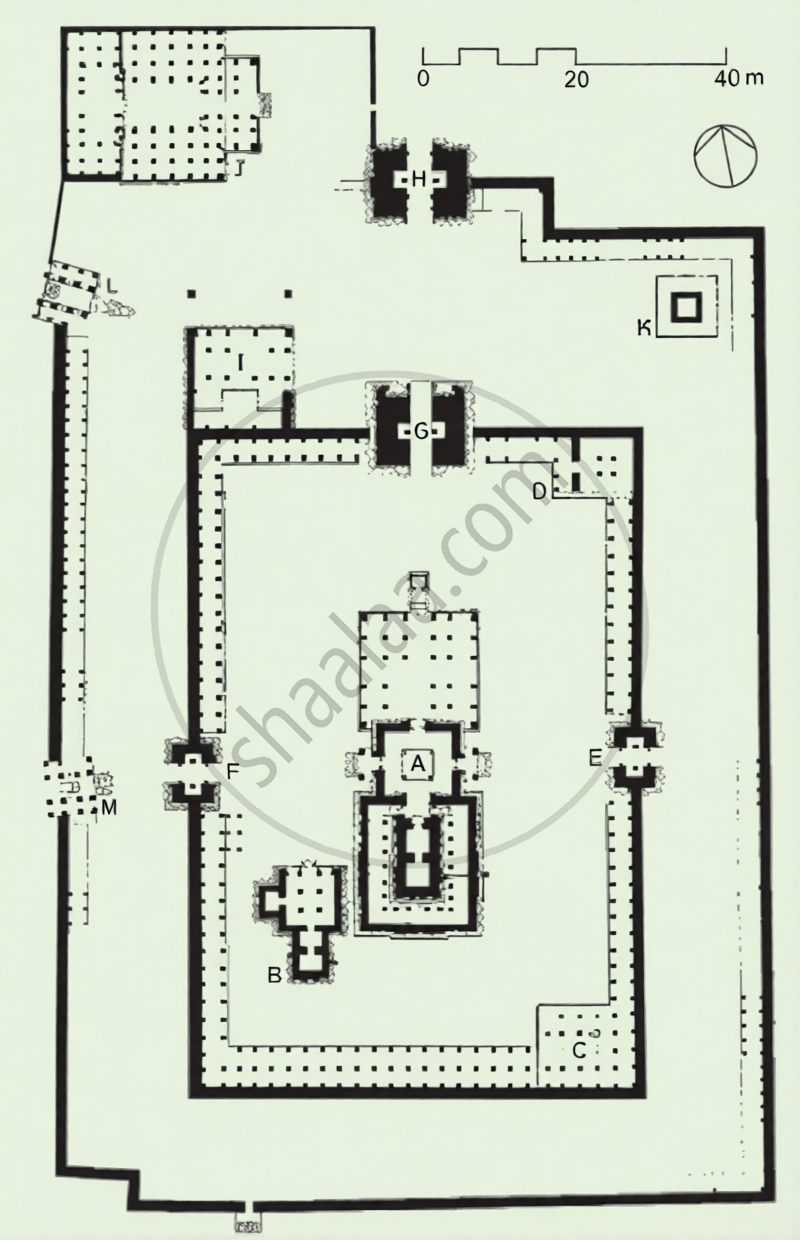
Using the scale in the plan, measure the distance from the main gopuram to the central shrine. What would have been the easiest access from the tank to the shrine?
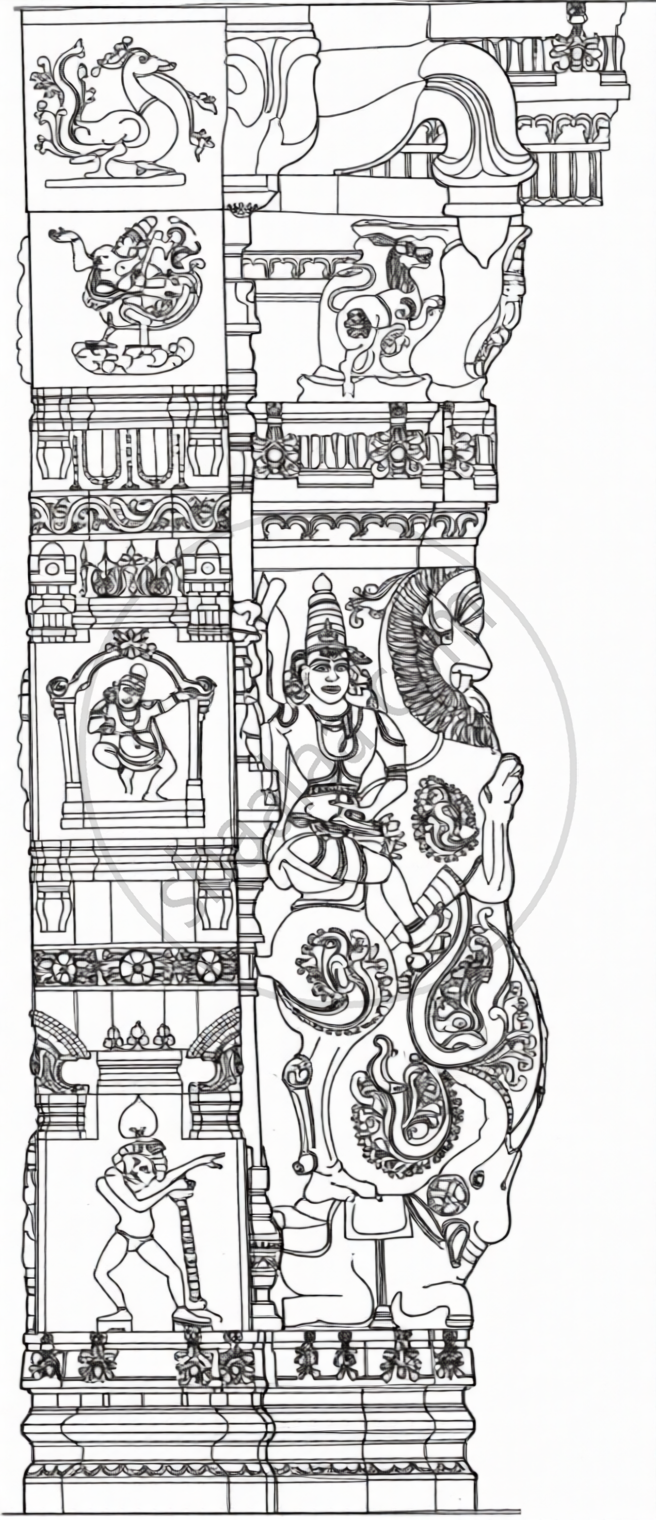
Describe what you see on the pillar.
Do you think chariots would have actually been built like this?
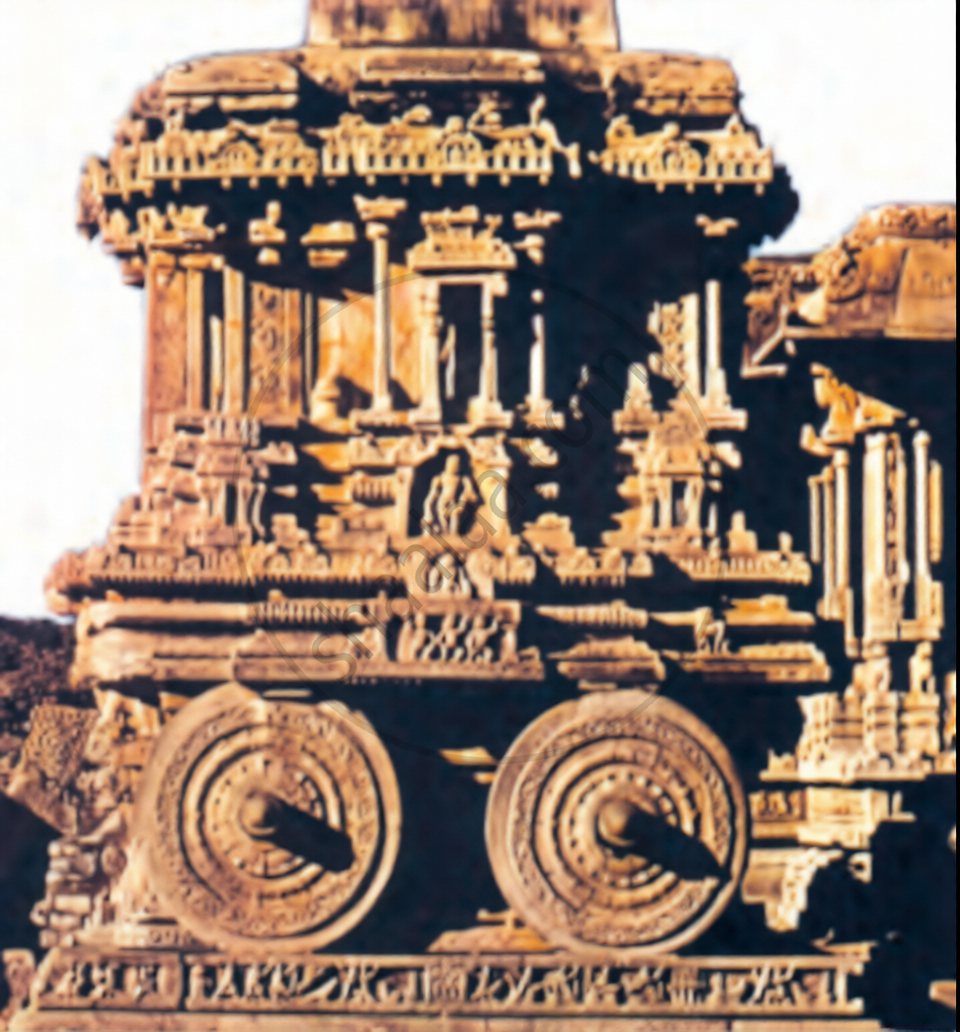
Discuss
How and why did the rulers of Vijayanagara adopt and adapt earlier traditions of ritual architecture?
Which is the letter of the alphabet that was not used? Using the scale in the map, measure the length of any one of the small squares.
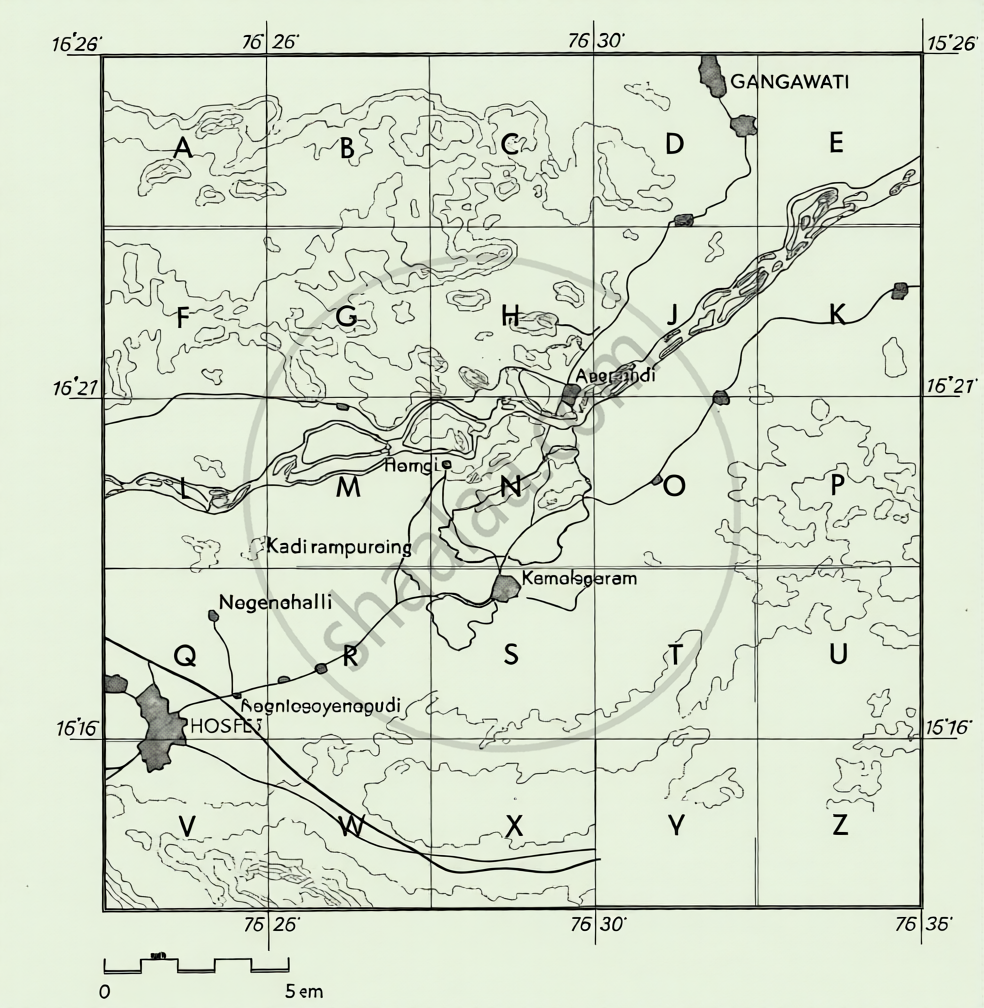
What is the scale used on this map?
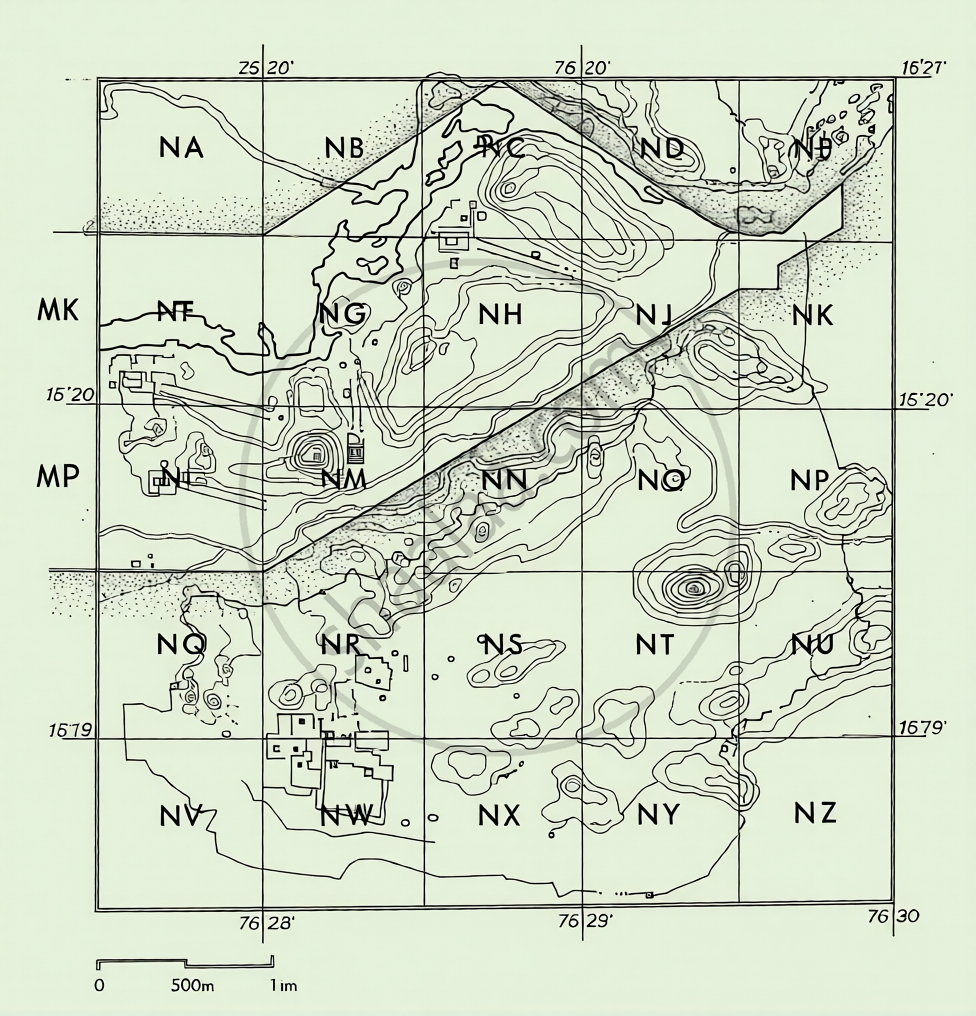
Identify a temple. Look for walls, a central shrine, and traces of paths leading to the temple. Name the squares on the map which contain the plan of the temple.
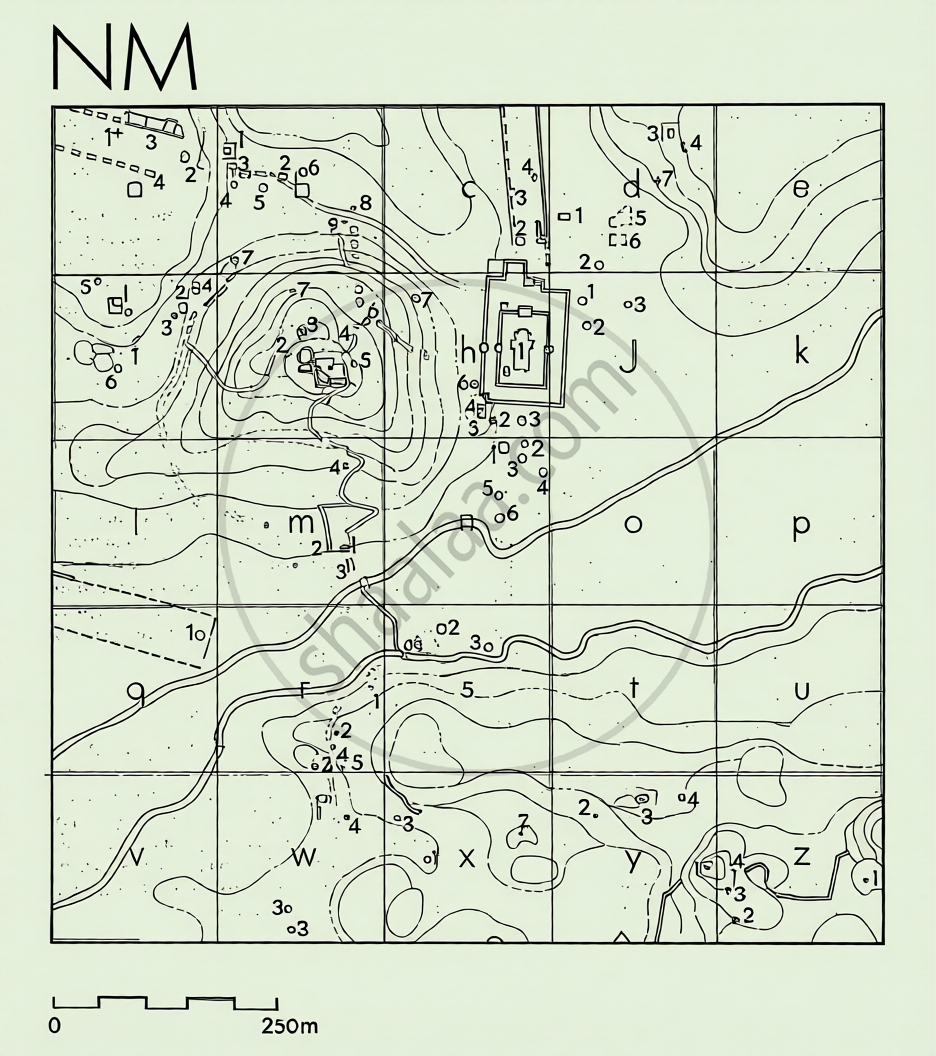
Identify the gopuram, halls, colonnades and central shrine. Which areas would you pass through to reach the central shrine from the outer entrance?
NCERT solutions for Themes In Indian History Part I, II, and III [English] Class 12 7 An Imperial Capital: Vijayanagara Exercises [Pages 194 - 195]
Answer In 100-150 words
What have been the methods used to study the ruins of Hampi over the last two centuries? In what way do you think they would have complemented the information provided by the priests of the Virupaksha temple?
Answer In 100-150 words
How were the water requirements of Vijayanagara met?
What do you think were the advantages of enclosing agricultural land within the fortified area of the city?
What do you think were the disadvantages of enclosing agricultural land within the fortified area of the city?
Answer In 100-150 words
What do you think was the significance of the rituals associated with the mahanavami dibba?
Answer In 100-150 words
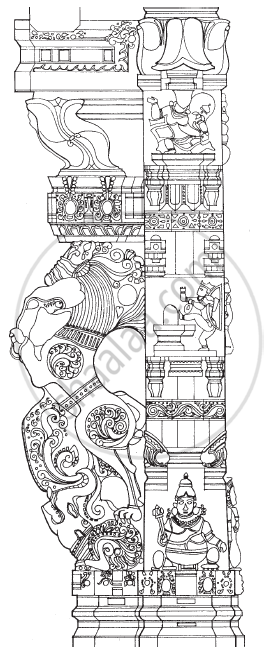
The following figure is an illustration of another pillar from the Virupaksha temple. Do you notice any floral motifs? What are the animals shown? Why do you think they are depicted? Describe the human figures shown.
Write a Short Essay (About 250-300 Words) on the Following:
Discuss whether the term “royal centre” is an appropriate description for the part of the city for which it is used.
Write a Short Essay (About 250-300 Words) on the Following:-
What does the architecture of buildings like the Lotus Mahal and elephant stables tell us about the rulers who commissioned them?
Write a Short Essay (About 250-300 Words) on the Following:-
What are the architectural traditions that inspired the architects of Vijayanagara? How did they transform these traditions?
Write a Short Essay (About 250-300 Words) on the Following:-
What impression of the lives of the ordinary people of Vijayanagara can you cull from the various descriptions in the chapter?
Map work
On an outline map of the world, mark approximately Italy, Portugal, Iran and Russia. Trace the routes the travellers mentioned on would have taken to reach Vijayanagara.
Project (choose one)
Find out more about any one of the major cities which flourished in the subcontinent during c. fourteenth-seventeenth centuries. Describe the architecture of the city. Are there any features to suggest that these were political centres? Are there buildings that were ritually significant? Is there an area for commercial activities? What are the features that distinguish the urban layout from that of surrounding areas?
Visit a religious building in your neighbourhood. Describe, with sketches, its roof, pillars and arches, if any, corridors, passages, halls, entrance, water supply, etc. Compare these features with those of the Virupaksha temple. Describe what each part of the building is used for. Find out about its history.
Solutions for 7: An Imperial Capital: Vijayanagara
NCERT solutions for Themes In Indian History Part I, II, and III [English] Class 12 chapter 7 - An Imperial Capital: Vijayanagara
Shaalaa.com has the CBSE Mathematics Themes In Indian History Part I, II, and III [English] Class 12 CBSE solutions in a manner that help students grasp basic concepts better and faster. The detailed, step-by-step solutions will help you understand the concepts better and clarify any confusion. NCERT solutions for Mathematics Themes In Indian History Part I, II, and III [English] Class 12 CBSE 7 (An Imperial Capital: Vijayanagara) include all questions with answers and detailed explanations. This will clear students' doubts about questions and improve their application skills while preparing for board exams.
Further, we at Shaalaa.com provide such solutions so students can prepare for written exams. NCERT textbook solutions can be a core help for self-study and provide excellent self-help guidance for students.
Concepts covered in Themes In Indian History Part I, II, and III [English] Class 12 chapter 7 An Imperial Capital: Vijayanagara are The Discovery of Hampi, Rayas, Nayakas and Sultans, Vijayanagara - the Capital and Its Environs, The Royal Centre, The Sacred Centre, Plotting Palaces, Temples and Bazaars, Questions in Search of Answers, Overview of An Imperial Capital : Vijayanagara (c. fourteenth to sixteenth centuries), Overview of An Imperial Capital : Vijayanagara (c. fourteenth to sixteenth centuries).
Using NCERT Themes In Indian History Part I, II, and III [English] Class 12 solutions An Imperial Capital: Vijayanagara exercise by students is an easy way to prepare for the exams, as they involve solutions arranged chapter-wise and also page-wise. The questions involved in NCERT Solutions are essential questions that can be asked in the final exam. Maximum CBSE Themes In Indian History Part I, II, and III [English] Class 12 students prefer NCERT Textbook Solutions to score more in exams.
Get the free view of Chapter 7, An Imperial Capital: Vijayanagara Themes In Indian History Part I, II, and III [English] Class 12 additional questions for Mathematics Themes In Indian History Part I, II, and III [English] Class 12 CBSE, and you can use Shaalaa.com to keep it handy for your exam preparation.
