Advertisements
Chapters
▶ *: Bharat Our Land
2: The Pot Maker
*: Gifts of Grace: Honouring Our Vocations
3: Winds of Change
*: Canvas of Soil
4: Vitamin-M
*: I Cannot Remember My Mother
5: The World of Limitless Possibilities
*: Nine Gold Medals
6: Twin Melodies
*: A Friend Found in Music
7: Carrier of Words
*: Words
8: Follow That Dream
*: Believe in Yourself

Advertisements
Solutions for Chapter *: Bharat Our Land
Below listed, you can find solutions for Chapter * of CBSE NCERT for English Kaveri Class 9.
NCERT solutions for English Kaveri Class 9 * Bharat Our Land Reflect and Respond [Page 23]
Recall the lines of the National Anthem and complete the table given below with the names of the states, mountain ranges, and rivers mentioned in it.
| States/Provinces | Mountain Ranges | Rivers |
| ______, ______ | ______ | ______ |
| ______, ______ | ______ | ______ |
| ______, ______ | ||
| ______ |
Work in pairs. Discuss what the words ‘जय हे’ (Jaya he) in the last two lines of the National Anthem convey. Share your answer with your classmates and teacher.
Read the underlined word in the given line of the poem. Choose the odd one out that does not correspond with the meaning of the underlined word.
She’s peerless, let’s praise her!
valuable, incomparable, unmatched
Read the underlined word in the given line of the poem. Choose the odd one out that does not correspond with the meaning of the underlined word.
Many a sage has sanctified this land.
blessed, purified, applauded
Read the underlined word in the given line of the poem. Choose the odd one out that does not correspond with the meaning of the underlined word.
And here all auspicious things are found.
fortunate, fantastic, favourable
Read the underlined word in the given line of the poem. Choose the odd one out that does not correspond with the meaning of the underlined word.
Of hoary antiquity is Bharat,
ancient times, recent past, time immemorial
NCERT solutions for English Kaveri Class 9 * Bharat Our Land Exercise [Pages 25 - 32]
Fill in the blanks by choosing appropriate words from the box given below to complete the summary of the poem.
| warriors | peerless | Upanishads |
| Ganga | Buddha | Himavant |
| sages | praise | historical greatness |
| Brahma-knowledge |
The poem is a tribute to India, celebrating its natural beauty, spiritual heritage, and 1. ______. The poet praises the 2. ______, describing it as mighty and unparalleled. The 3. ______ is depicted as generous and graceful, while the 4. ______ are honoured as sacred and unmatched. The poem highlights the contributions of 5. ______ and 6. ______ who have enriched the land with their bravery and wisdom. It also acknowledges the presence of 7. ______ and the teachings of 8. ______, highlighting India’s deep-rooted spiritual and philosophical traditions. The poet repeatedly asserts that India is 9. ______, urging everyone to 10. ______ her.
Complete the following features about the poem.
- The impact on the readers (mood):
- The poet’s attitude (tone):
- The rhyme scheme:
- Examples of personification:
What is the impact of the refrain, ‘she’s peerless, let’s praise her!’?
Complete the following sentence appropriately.
India is metaphorically described as ‘this sunny golden land,’ suggesting that it is ______.
The poet uses symbolism. Match the symbols in Column 1 to what they suggest in Column 2.
| Column 1 | Column 2 |
| 1. Himavant | (i) knowledge and enlightenment |
| 2. Ganga | (ii) spiritual and philosophical legacy |
| 3. Upanishads | (iii) purity and generosity |
| 4. Gallant warriors and sages | (iv) richness and glory |
| 5. Brahma-knowledge and Buddha’s Dhamma | (v) strength and permanence |
| 6. Sunny golden land | (vi) courage and wisdom |
The poet uses imagery (descriptive language to create vivid mental pictures that appeal to the senses). Give any two examples from the poem.
What is the impact of the use of hyphens in the first stanza? Select the options that are true.
- Creates deliberate pauses to reinforce the sense of admiration and pride
- Emphasises the contrast between India’s strengths and weaknesses
- Lends to the lyrical quality giving it a measured, chant-like rhythm
- Suggests hesitation or uncertainty in the poet’s claims about India
- Presents a key element of India’s greatness before the hyphen and makes a strong assertion about its uniqueness after the hyphen
The poet uses hyperbole in the poem.
Hyperbole (hi-puh-buh-lee) is a figure of speech that involves extreme exaggeration to highlight a point or create a dramatic effect. It is not meant to be taken literally but is used to make something sound more impressive or intense.
For example:
- My luggage weighs a tonne. Does the luggage actually weigh a tonne?
- She was so happy that her smile was a mile wide. Can a smile be a mile wide?
The poem is an ode.
|
An ode is a lyrical poem that expresses deep admiration, praise, or reverence for a person, place, object, or idea. It is often written in an elevated and formal style, celebrating the subject with enthusiasm and emotion. An ode’s language is often grand and expressive; and it seeks to highlight the extraordinary qualities of its subject. |
Now, identify examples from the poem that correspond to it being an ode.
The poet uses allusion in the poem.
Read the explanations and identify the matching allusions from the poem for the following.
- An allusion to the ancient Indian scriptures that form the philosophical core and symbolise deep wisdom and enlightenment.
- An allusion to the concept of spiritual knowledge associated with self-realisation and ultimate truth.
- An allusion to Gautama Buddha’s teachings, which include compassion, non-violence, and enlightenment. This highlights India’s role in shaping major religious and philosophical traditions.
Critical Reflection:
Read the extract given below and answer the questions that follow.
| The mighty Himavant is ours there’s no equal anywhere on earth. The generous Ganga is ours which other river can match her grace? The sacred Upanishads are ours what scriptures else to name with them? |
1. Complete the sentence.
The word ‘mighty’ refers to the ______ of the Himavant.
2. Choose the correct option to complete the sentence given below.
The question mark at the end of the fourth and sixth line of the extract is used to ______.
- show doubt and uncertainty
- emphasise a point
- highlight confusion and hesitation
- reveal inquiry and curiosity
3. The poet uses the word ‘generous’ to describe the Ganga. Why?
4. Why has the movement of the river been described as graceful?
5. Fill in the blank with the correct option from the words given in the brackets.
The poet is implying that the Upanishads are ______ (unmatched/abundant) in their wisdom and spiritual depth.
Answer the following questions.
How does the poem reflect a strong connection to cultural identity and heritage?
What can you infer about the poet’s attitude towards India from the repeated phrase ‘she’s peerless, let’s praise her!’?
What does the line ‘many a sage has sanctified this land’ suggest about India’s spiritual heritage?
How does the poet connect warriors and music to India’s greatness?
How does this poem foster a sense of national pride?
Vocabulary in Context:
Complete the table by choosing words from the poem.
| Suffix | Meaning | Examples |
| -ous | full of, having the qualities of kindness | 1. ______ous |
| -ity | the state of being very old or ancient | 2. ______ity |
| -est | superlative form | 3. ______est |
| -less | without something | 4. ______less |
Complete the following table by adding a different suffix to form new words. Also, create a sentence using the created word. One example has been done for you.
| Suffix | Meaning | Sentences |
| -tion | the action or process of | Example: indicate -indication The dark clouds were an indication that it would rain soon. 1. |
| -ive | quality or nature of | 2. |
| -ment | the action or result of | 3. |
| -ed | past-tense version of a verb | 4. |
Listen and Respond:
You will listen to four people talk about the places they like to travel to. As you listen, write the speaker number for the two pictures given.
 |
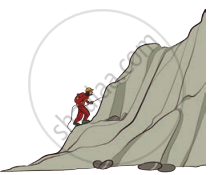 |
| 1. Speaker No. ______ | 2. Speaker No. ______ |
You will once again listen to the four speakers. As you listen, match the given statements to the speaker. There are two statements that you do not need.
| Statement | Speaker |
| 1. The green surroundings look beautiful visually. | |
| 2. The group visits make even the difficult areas seem easy. | |
| 3. The quietness of the environment here leads to a peaceful experience. | |
| 4. The risk and thrill in such an area is what is most appealing. | |
| 5. The dry expanse promises to appeal to the spirit of exploration. | |
| 6. The sight of such beauty is very inviting and has to be captured. |
Speaking Activity:
In pairs, take turns to speak about the aspects of your village/town/city that you feel are an asset. It could be about geographical, cultural, traditional features, or even its history.

Use these cues to express your praise and admiration.
- One thing that I find truly wonderful about my village/town/city is...
- If I had to describe my village/town/city in one word, it would be...
- I have always been fascinated by the way the people of my village/town/city...
- When it comes to the scenery, my village/town/city truly shines because...
- I feel a deep sense of pride when I think about my village/town/city...
Writing Task:
Write a paragraph about a place that you have visited which has stayed in your memory.
Remember to mention the following:
- Why did you go there?
- Who did you travel with?
- How did you prepare for the travel?
- Where did you stay?
- What activities did you do there?
Learning Beyond the Text:
Search for poems or songs dedicated to India, your motherland, in your regional language. Share them with your classmates and explain their meaning too.
In groups of six, prepare an interdisciplinary project on India’s major geographical features. For each feature, describe the region, explain its importance in the lives of the people living there and mention the languages spoken in that region. Include one example of each of the following.
- Mountains - Himalayas, Western Ghats, etc.
- Rivers - Ganga, Yamuna, Krishna, Kaveri, Godavari, etc.
- Deserts - Thar Desert, Rann of Kutch, etc.
- Valleys - Kangra Valley, Nubra Valley, etc.
- Islands - Andaman and Nicobar Islands, Lakshadweep, etc.
- Plateaus - Deccan, Malwa, Meghalaya, etc.
Solutions for *: Bharat Our Land
NCERT solutions for English Kaveri Class 9 chapter * - Bharat Our Land
Shaalaa.com has the CBSE Mathematics English Kaveri Class 9 CBSE solutions in a manner that help students grasp basic concepts better and faster. The detailed, step-by-step solutions will help you understand the concepts better and clarify any confusion. NCERT solutions for Mathematics English Kaveri Class 9 CBSE * (Bharat Our Land) include all questions with answers and detailed explanations. This will clear students' doubts about questions and improve their application skills while preparing for board exams.
Further, we at Shaalaa.com provide such solutions so students can prepare for written exams. NCERT textbook solutions can be a core help for self-study and provide excellent self-help guidance for students.
Concepts covered in English Kaveri Class 9 chapter * Bharat Our Land are .
Using NCERT English Kaveri Class 9 solutions Bharat Our Land exercise by students is an easy way to prepare for the exams, as they involve solutions arranged chapter-wise and also page-wise. The questions involved in NCERT Solutions are essential questions that can be asked in the final exam. Maximum CBSE English Kaveri Class 9 students prefer NCERT Textbook Solutions to score more in exams.
Get the free view of Chapter *, Bharat Our Land English Kaveri Class 9 additional questions for Mathematics English Kaveri Class 9 CBSE, and you can use Shaalaa.com to keep it handy for your exam preparation.
