Advertisements
Advertisements
Why should we not throw cooking oil and fats down the drain?
Concept: undefined >> undefined
Match the items of Column I with the items of Column II with reference to sewage.
| Column I | Column II | ||
| (a) | Inorganic impurities | (i) | phosphorus and nitrogen |
| (b) | Organic impurities | (ii) | nitrates and phosphates |
| (c) | Nutrients | (iii) | cholera and typhoid |
| (d) | Bacteria | (iv) | pesticides and herbicides |
Concept: undefined >> undefined
Advertisements
Match the items of Column I with the items of Column II with reference to sewage.
| Column I | Column II | ||
| (a) | Inorganic impurities | (i) | phosphorus and nitrogen |
| (b) | Organic impurities | (ii) | nitrates and phosphates |
| (c) | Nutrients | (iii) | cholera and typhoid |
| (d) | Bacteria | (iv) | pesticides and herbicides |
Concept: undefined >> undefined
A mixture (x) in water contains suspended solids, organic impurities, inorganic impurities (a), nutrients (b), disease-causing bacteria and other microbes. Give names for (x), (a) and (b)?
Concept: undefined >> undefined
A mixture (x) in water contains suspended solids, organic impurities, inorganic impurities (a), nutrients (b), disease-causing bacteria and other microbes. Give names for (x), (a) and (b)?
Concept: undefined >> undefined
Fill in the blanks in the following statements using words given in the box.
| air, handpumps, cholera, water, large, ground |
A very ______ number of our people defecate in the open. It may cause ______ pollution and soil pollution. Both the surface water and ______ water get polluted. ______ water is the source for wells, tubewells and ______. Thus it becomes the most common route for ______ borne diseases like ______, dysentery, etc.
Concept: undefined >> undefined
Fill in the blanks in the following statements using words given in the box.
| air, handpumps, cholera, water, large, ground |
A very ______ number of our people defecate in the open. It may cause ______ pollution and soil pollution. Both the surface water and ______ water get polluted. ______ water is the source for wells, tubewells and ______. Thus it becomes the most common route for ______ borne diseases like ______, dysentery, etc.
Concept: undefined >> undefined
Think and suggest some ways to minimise waste and pollutants at their source, taking your home as an example.
Concept: undefined >> undefined
Think and suggest some ways to minimise waste and pollutants at their source, taking your home as an example.
Concept: undefined >> undefined
Find out what vitamins are and get the following information.
- Why are vitamins necessary in the diet?
- Which fruits or vegetables should be eaten regularly to get vitamins?
Write a one-page note on the information collected by you. You may take the help of a doctor, a dietician, your teacher or any other person, or from any other source.
Concept: undefined >> undefined
Bring the soil sample of your area, find out if it is acidic, basic or neutral. Discuss with farmers if they treat the soil in any manner.
Concept: undefined >> undefined
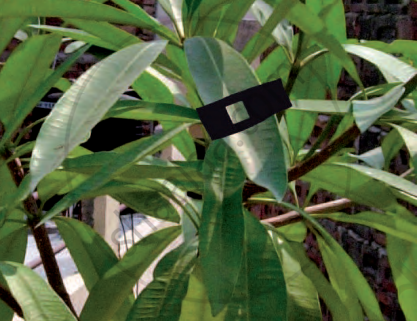
Take a potted plant with broad leaves. Take two strips of black paper and cut out a small square in the centres. Cover a part of two leaves with these papers and secure them with paper clips Figure. Keep the plant in sunlight for 2–5 days. Observe the difference in the colour of the covered and the uncovered portions on the leaf. Perform iodine test on this leaf. Did the two parts show different results? Now take second leaf. Remove the strip and expose the covered part to the sunlight for 2–3 days and do the iodine test again. Describe your observations.
Concept: undefined >> undefined
Try growing a sweet potato just in water. Describe your experiment and observations.
Concept: undefined >> undefined
Find out about blood groups and their importance.
Concept: undefined >> undefined
Name any two of the decomposers.
Concept: undefined >> undefined
Visit a forest. Here is a list of points that would make your visit more fruitful.
- Make sure that you have permission to go into the forest.
- Make sure that you can find your way around. Get a map and go along with someone who is familiar with the area.
- Keep a record of the things you see and do. Observations make the visit interesting. Sketches and photographs are useful.
- You may record bird calls.
- Collect different kinds of seeds or hard fruits like nuts.
- Try to recognise various types of trees, shrubs, herbs, etc. Make lists of plants from different places in the forest and of different layers. You may not be able to name all the plants, but it is worth recording and seeing where they grow. Make a record of approximate heights of plants, crown shape, bark texture, leaf size, and flower colour.
- Learn to recognise the animal’s droppings.
- Interview the forest officials and the people of surrounding villages and other visitors.
You must never collect birds’ eggs, and their nests should never be disturbed.
You can read more on the following website:
Concept: undefined >> undefined
Construct a crossword puzzle of your own using the keywords.
Concept: undefined >> undefined
Construct a crossword puzzle of your own using the keywords.
Concept: undefined >> undefined
Why do organisms need to take food?
Concept: undefined >> undefined
Green plants are called ______ since they synthesise their own food.
Concept: undefined >> undefined
