Please select a subject first
Advertisements
Advertisements
Read the first activity, read the extract and then do all the activities:
The next year Dell enrolled at the University of Texas. Like most first-year students, he needed to earn spending money. Just about everyone on campus was talking about personal computers. At the time, anyone who didn’t have a PC wanted one, but dealers were selling them at a hefty mark-up. People wanted low-cost machines custom-made to their needs, and these were not readily available. Why should dealers get such a big mark-up for so little added value ? Dell wondered. Why not sell from the manufacturer directly to the end user ?
Dell knew that IBM required its dealers to take a monthly quota of PCs, in most cases more than they could sell. He also knew that holding excess inventory was costly. So he bought dealers’ surplus stock at cost. Back in his dormitory room, he added features to improve performance. The improved models found eager buyers. Seeing the hungry market, Dell placed local advertisements offering his customized computers at 15 percent of retail price. Soon he was selling to businesses, doctors’ offices and law firms. The trunk of his car was his store; his room took on the appearance of a small factory.
During a holiday break, Dell’s parents told him they were concerned about his grades. “If you want to start a business, do it after you get your degree,” his father pleaded. Dell agreed, but back in college he felt the opportunity of a lifetime was passing him by. “I couldn’t hear to miss this chance,” he says. After one month he started selling computers again- with a vengeance.
A1. True / False - (2)
Rewrite the following sentences stating against each of them whether they are true or false :
(i) Dell bought computers directly from the IBM company.
(ii) Dealers were selling computers at high prices.
(iii) Dell’s father wanted Dell to get his degree.
(iv) Dealers disagreed to sell the surplus stock of computers to Dell.
A2. Give reasons - (2)
Dell wanted to stait a business of selling computers because :
(i) ____________
(ii) ____________
A3. Guess : (2)
“I couldn’t bear to miss this chance,” Dell says. Guess. which chance Dell did not want to miss”.
A4. Vocabulary - (2)
Find out the words from the extract which mean :
(i) college hall of residence
(ii) large amount added to the cost price
(iii) quantity of good in stock
(iv) with great intensity
A5. Personal response : (2)
Suggest two strategies businessman to become a successful businessman.
A6. Grammar - (2)
Rewrite the following sentences in the ways instructed :
(i) Seeing the hungry market, Dell placed local advertisement. (Make it a compound sentence)
(ii) He added features to improve performance. (Frame ‘Wh’ question to get the underlined part as an answer.)
Concept: Unseen Passage Comprehension
Read the given extract and then do all activities that follow:
If you do not get lowered in your own eyes
While you raise yourself in those of others
If you do not give into gossips and lies
Rather heed them not,- saying, ‘Who bothers?’
You may be the person I am looking for.
If you crave not for praise when you win
And look not for sympathy while you lose
If cheers let not your head toss or spin
And after a set-back you offer no excuse.
You may be the person I am looking for.
If you accept counsel without getting sore
And reassess yourself in the light thereof
If you pledge not to be obstinate any more
And meet others without any frown or scoff.
You may be the person I am looking for.
A1. Enlist (2)
Enlist any four things that inspire you to live inspire of failures:
(i) ____________________
(ii) ___________________
(iii) ___________________
(iv) ___________________
A2. Poetic Device? (2)
Figure of speech :
Pick out an example of Refrain from the extract and write down its criteria to identify it.
A3. Personal Response (2)
Express your views in about 50 words, the need to look for an ideal person.
A4. Poetic creativity? (2)
If you do not get lowered in your own eyes.
While you raise yourself in those of others.
If you do not give in to gossips and lies
--------------------------------------------------------------------
You may be the person I am looking for.
Compose a line of your own to rhyme with the second line in the given stanza.
Concept: Unseen Poem Comprehension
Read the following extract and then do all the activities that follow :
How do you know
Peace is a woman?
I know for
I met her yesterday
on my winding way
to the world’s fare,
She has such a wonderful face
just like a golden flower faded
before the prime.
I asked her why
She was so sad?
She told me her baby
was killed in Auschwitz,
her daughter in Hiroshima
and her sone in Vietnam,
Ireland, Israel, Palestine, Lebanon,
Bosnia, Rwanda, Kosovo and Chechnya ......
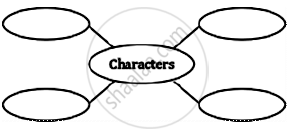
A1. Web -
Completely the following web by listing character mentioned in the extract :
A2. Poetic device -
Figure of speech :
‘Peace is a woman ?’
Name and explain the figure of speed in the above line.
A3. Personal response :
Suggest two solutions to avoid wars.
A4. Creativity :
Compose two poetic lines titled “Say ‘no’ to wars”.
Concept: Unseen Poem Comprehension
Read the extract and do the activities that follow :
‘Your father was my enemy,’ said Frederick. ‘I would have been better pleased by your brave deed if you had told me of another father?’
‘I am proud to be Sir Rowland's son,’ answered Orlando angrily,’ and I would not change my place to be the heir of this dukedom.’
The Duke and his lords went away, leaving Orlando alone with Rosalind and Celia. Celia was angry with her father for speaking so unkindly to Orlando. ‘Would I have done this in my father’s place?’ she said to Rosalind.
‘My father loved Sir Rowland as much as his own soul,’ Rosalind said to Celia, ‘and all the world agreed with him. If I had known that his young man was Sir Rowland’s son I should have begged him with tears not to take so great a risk.’
‘Let us go and speak to Orlando,’ said gentle Celia. ‘I am ashamed of my father’s rude and angry words.’
The two girls went up to Orilando and praised him for his bravery. Rosalind took a gold chain from her neck and gave it to him. ‘I would like to give you more’, she said, ‘but I am not rich.’ Then she and Celia went away.
Orlando, however, could not forget them. He had already fallen in love with the fair Rosalind, but he could not stay at the Duke’s palace. His friends warned him that Frederick was angry and jealous of him. They told Orlando to leave the dukedom, because the Duke meant to do him harm.
A1. Match -
Match the characters and their attributes:
| A | B | ||
| i. | Celia | a. | fair |
| ii. | Orlando | b. | rude and unkind |
| iii. | Frederick | c. | gentle |
| iv. | Rosalind | d. | brave |
A2. Write an imaginary paragraph:
Write an imaginary paragraph in about 50 words in continuation with the given extract.
Concept: Unseen Passage Comprehension
Read the following extract and then do all the activities that follow:
We used to watch the valley play hide and seek.
Shadowed by the mountain's immeasurable peak.
Considered the largest thing known to man.
Now skyscrappers are the most extravagant and titanic part of the plan.
We used to sit next to the stream. The wind caressing our crown Watching the magnificent untamed beasts
roam far, far from town. Now they are just characters of folktales, memories we pass down.
An adjective to describe someone, no more a noun
This could be our reality
If we continue to live in impracticality
No more vast, endless oceans _______
Only littered swamps, the colour of a witch's potions.
No more soaring birds overhrad _______
Only planes, so loud they rock your bed.
No more woods
No more natural goods.
We have little time
To change our self centered, one track minds
Before we are stuck with a great heap of jumble
Left only with an artifical concrete jungle.
A1. Complete ______
Complete the following sentences choosing correct alternatives:
(1) The poet used to watch the valley play hide and seek, because _______
(i) he had integration with the nature and landscape
(ii) he had no park to enjoy playthings
(iii) he had no friends
(2) According to the poet, only littered swamps could be reality, because _______
(i) vast, endless oceans are getting polluted due to our neglect of flora and fauna.
(ii) water from oceans will become magical potions.
(iii) Oceans are changing into swamps for fishing purposes.
A2. Poetic device
Figure of speech
Name and explain the figure of speech used in the following line: ‘We used to watch the valley play hide and seek’.
A3. Personal response:
Suggest some remedies on how we can enrich our nature.
A4. Poetic creativity
Compose the following four lines as a free verse using the words life, oxygen, trees, nature with the help of
clue given in each line so it would covey message :
No _________
No __________
No __________
No __________
Concept: Unseen Poem Comprehension
Read the following extract and then do all the activities that follow :
I rain into a stranger as he passed by
“Oh, excuse me please” was my reply.
He said, “please excuse me too; wasn't even watching for you.”
We were very polite, this stranger and I.
We went on out way and we said good-bye.
But at home a different story is told.
How we treat out loved ones, young and old.
Later that day, cooking the evening meal,
My daughter stood beside me very still.
When I turned, I nearly knoked her down.
“Move out of the way,” I said with a frown.
She walked away, her little heart broken.
I didn't realize how harshly I'd spoken.
While I lay awake in bed,
God's still small voice came to me and said,
“While Dealing with a stranger, common courtesy you use,
But children you love, you seem to abuse.”
A1. Order-
The incidents narrated in the extract are arranged in a jumbled manner here, Rearrange them in a proper order as they occur in the extract:
(i) The poet and the stranger went on their way saying good-bye.
(ii) Seeking excuse politely from the stranger, she went her way.
(iii) The poet ran into a stranger on the road.
(iv) The poet yelled at her daughter.
A2. Poetic device:
Make a list of rhyming pairs from the second stanza and note down the rhyme scheme of the same stanza.
A3. Personal Response:
Understanding and politeness are the essentials of out everyday life. Explain your views in brief.
A4. Creativity -
Frame two poetic lines on the following situation using a rhyming pattern with the help of clues given:
“While introducing great personalities, we praise them highly and talk about their qualities, but while speaking
about our friends we may not follow the same trend.”
While introducing great personalities, — a
------------------------------------ — a
But while speaking about our friends, — b
------------------------------------ — b
Concept: Reading Skills
(A) Read the extract and do the activities that follows :
“Pluck the flowers off”, said the other boy and the daisy trembled for fear, for to be pulled off meant death
to it; and it wished so much to live, as it was to go with the square of turf into the poor captive lark’s cage.
“No, let it stay,” said the other boy, “it looks so pretty.” And so it stayed, and was brought into the lark’s cage. The poor bird was lamenting its lost liberty, and beating its wings against the wires; and the little daisy could not speak or utter a consoling word, much as it would liked to do so. So the forenoon passed. “I have no water,” said the captive lark, “they have all gone out and forgotten to give me anything to drink. My throat is dry and burning. I feel as if I had fire and ice within me and the air is so oppressive. Alas! I must die, and part with the warm sunshine, the fresh green meadows, and all the beauty that God has created.” And it thrust its beak into the piece of grass, to refresh itself a little. Then it noticed the little daisy, and nodded to it, and kissed it with its beak and said : “You must also fade in here, poor little flower. You and the piece of grass are all they have given me in exchange for the whole world, which I enjoyed outside. Each little blade of grass shall be a green tree for me, each of your white petals a fragrant flower. Alas! You only
remind me of what I have lost .
A1. True / False -
State whether the following statements are true or false :
(i) The boys had kept water in the cage for the lark.
(ii) The daisy had a desire to console the poor lark.
(iii) The lark was reminded of its lost liberty.
(iv) The daisy did not want to go into the lark’s cage.
A2. Write an imaginary ending :
Write an imaginary paragraph in about 50 words to give a different ending to the above extract.
Concept: Unseen Passage Comprehension
(B) Read the extract and do the activities that follows :
“May I come in?” asked the pink lady.
“Please come in,” said my mother. “Do sit down. Do you require a room?”
“Not today, thank you. I’m staying with Padre Dutt. He insisted on putting me up. But I may want a room
for a day or two – just for old times’ sake.”
“You’ve stayed here before.”
“A long time ago. I’m Mrs. Green, you know. The missing Mrs. Green. The one for whom you put up that handsome tombstone in the cementery. I was very touched by it. And I’m glad you didn’t add ‘Beloved wife of Henry Green’, because I didn’t love him any more than he loved me.”
“Then – then – you aren’t the skeleton?” Stammered my mother.
“Do I look like a skaleton?”
“No!”, we said together.
“But we heard you disappeared,” I said, “and when we found that skeleton —”
“You put two and two together.”
“Well, it was Miss Kellner who convinced us,” said my mother. “And you did disappear mysteriously. You
were missing for years. And everyone knew Mr. Green was a philander.”
“Couldn’t wait to get away from him,” said the pink lady. “Couldn’t stand him any more. He was a ladykiller
but not a real killer.”
“But your father came looking for you. Didn’t you get in touch with him?”
“ My father and I were never very close. Mother died when I was very young, and the only relative I had
was a cousin in West Africa. So that’s where I went – Sierra Leone!”
B1. Complete -
Complete the following sentenses :
(i) Mrs. Green couldn’t stand Mr. Green, because ________.
(ii) The relationship between Mrs. Green and her father ________.
(iii) Mrs. Green cousin lived in ________.
(iv) Miss. Kellner convinced the narrator’s mother that the skeleton was of Mrs. Green, because ______.
B2. Convert dialogue into a story :
Convert the above dialogue into a story form in about 50 words.
Concept: Unseen Passage Comprehension
Read the extract and do the activities that follow:
My mother was still managing Green's, even though its days were numbered. The day after my return I joined her in the small office, where she sat behind her over-large desk, telephone on her right and the latest paperback western before her, ready to be taken up when noting much was happening – which was fairly often. My mother enjoyed reading westerns-particularly Luke Short, Max Brand, and Clarence E Mulfordmuch in the same way that I enjoyed detective fiction. Both genres were freely available in cheap collins ‘White Circle’, edition published during and just after the War.
We discussed the affair of the skeleton in the cupboard, but as there was no longer any mystery about it, there was nothing for me to investigate. However, armed with the key to the store room, I went down to the basement on my own and made a thorough search of all the old furniture, on the offchance that another skeleton moght tumble out of a cupboard or be found jammed into a drawer or trunk. I did find some old tennis rackets, back numbers of Punch, a cracked china chamber-pot, some old postcards of Darjeeling and Simla, and a framed photograph of King Edward the Seventh. I took the copies of ‘Punch’ to my room and read the reviews of all the plays that had been running in London between 1926 and 1930, thus becoming an authority on the theatre in England of that period.
A1. True/False
State whether the following statements are true or false:
(i) The narrator found one skeleton jammed into a drawer
(ii) The narrator did not like to read detective fiction
(iii) The narrator's mother was managing the Green's hotel
(iv) The narrator wanted to be an authority on the English theatre of that period
A2. Write a gist :
Write a gist of the above given extract in about 50 words.
Concept: Unseen Passage Comprehension
Read the extract and do the activities that follow:
The duke senior and his follower were sitting down to a meal one day when Orlando rushed out from among the trees, his sword in his hand. ‘Stop, and cat no more!’ he cried. The Duke and his friends asked him what he wanted.
‘Food,’ said Orlando. ‘I am almost dying of hunger’. They asked him to sit down and eat, but he would not do so. He told them that his old servant was in the woods, dying of hunger. ‘I will not eat a bite until he has been fed,’ Orlando said.
So the good Duke and his followers helped him to bring Adam to their hiding-place, and Orlando and the old man were fed and taken care of. When the Duke learned that Orlando was a son of his old friend sir Rowland de Boys, he welcomed him gladly to his forest court.
Orlando lived happily with the Duke and his friends, but he had not forgotten the lovely Rosalind. She was always in his thoughts andevery day he wrote poetry about her pinning it on the trees in the forest. ‘These trees shall be my books,’ he said, ‘so that everyone who looks in the forest will be able to read how sweet and good Rosalind is’.
Rosalind and Celia found some of these poems pinned on the trees. At first they were puzzled, wondering who could have written them; but one day Celia came in from a walk with the news that she had seen Orlando sleeping under a tree, and she and Rosalind guessed that he must be the poet. Rosalind was happy to think that Orlando had not forggoten her, because she loved him as much as he loved her.
A1. Complete - (2)
Complete the following sentences:
(i) Rosalind was happy to think _______
(ii) The Duke and his followers helped Orlando to bring _________
(iii) Orlando pinned the poems written about Rosalind on ______
(iv) When the Duke cam to know that Orlando was a son of his old friend, he _________
A2. Write a gist: (2)
Write a gist of the above given extract in about 50 words.
Concept: Reading Skills
Read the extract and do the activities that follow:
“And that skeleton,” I asked. “ What about the skeleton in the cupboard? Did you know about it?”
“Yes, I knew about it. But I have no idea whose skeleton it was. You see, back in the twenties, when Green took over this hotel, he had one of his sudden enthusiasms and was convinced this town needed a medical school or college, and he set about preparing the ground for one. He was ready to finance the project, or part of it. And of course medical students need a skeleton. So he acquired one from the Lady Hardinge Medical College in New Delhi. It was a medical school skeleton you found. And if you’d looked closely you'd have noticed that it was varnished.”
“Why was it varnished?” I asked.
“To help preseve it, of course. It was also articulated”
“Articulated?”
“That means the joints were connected up, so that the whole thing wouldn't fall apart. Want to be a doctor, young man?”
“No,” I said. “A detective.”
“Well, you didn't solve this case”.
“I wasn't here. And now we'll never be able to identify the skeleton.”
“Some poor woman of the streets, no doubt. Unclaimed, unwanted. But in the end you gave her a decent burial-even if she wan't a Cristian. Padre Duett is a bit embarrassed, but I've told him I don’t mind my name on the tombstone. I’ll be returning to Africa shortly, and when I die I shall have another tombstone there. Not everyone is lucky enough to have two tombstones! “
B1. True/False - (2)
State whether the following statements are true or false:
(i) The narrator wanted to be a doctor.
(ii) Mrs. Green counted herself lucky to have two tombstones.
(iii) The skeleton was varnished to preserve it for a longer time.
(iv) Mrs. Green was embarrased to see her name on the tombstone.
B2. Provide a different ending: (2)
Provide a different ending to the above given extract in about 50 words.
Concept: Unseen Passage Comprehension
Read the following extract and answer the questions given below:
I celebrate the virtues and vices
of suburban middle-class people
who overwhelm the refrigerator
and position colourful umbrellas
near the garden that longs for a pool:
for my middle-class brother
this principle of supreme luxury:
what are you and what am I, and we go on deciding
the real truth in this world.
(1) Give a list of the objects of luxury as given in the extract.
(2) What is your idea about a Luxurious life?
(3) Give an example of a 'paradox' from the extract.
(4) This poem does not follow any fix-verse pattern (rhyme scheme). What type of poem is it?
Concept: Unseen Poem Comprehension
Read the following extract and answer the questions given
below:
Another relative has no plans of joining this league though.
She is rather μnabashed about waking up past noon on a daily basis. To be fair, her husband is a media personality who typically arrives home from work past midnight. That does indeed give them sufficient justification to stay longer in slumber-land each morning. This practice does lead to certain oddities though. He goes for his 'morning' walk at 1 pm, heatwaves and appalled onlookers notwithstanding. They once returned from a night out only to meet the neighbour's son who was off on an early morning jog!
Early risers clearly have the edge in life. By the time most
of us wake up, they've been through their morning rituals, enjoyed their walk, had their tea and read the daily news. They're also likely to have made long-distance calls before dawn to those similarly inclined. Thus, by the time the sun warms up they're likely to have discussed all varieties of 'men, matters, and affairs' with a dozen people.
The upshot of these varying tendencies is that such extreme
contrasts often exist in the same household. Weeks pass before
the younger lot (typically late risers) and the older lot (normally early birds) come face to face. It's almost as if they live in different time zones and different countries.
Questions:
(1) What information does the extract give about the typical
routine of a media person?
(2) According to the writer, who are the early risers and the late risers?
(3) Why does the writer say that early risers clearly have the edge in life?
(4) Do you rise early or late? Why?
(5) Rewrite the following sentences in the ways instructed:
- They live in different time zones and different countries.
(Rewrite the sentence using 'not only- but also'.) - That gives them sufficient justification.
(Rewrite the sentence using the Present Perfect tense.) - She is rather unabashed about waking up past noon on a daily basis.
(Rewrite the sentence using 'infinitive' form of
the underlined word.)
(6) Find out from the extract the words which mean:
(i) frightened
(ii) sleep
Concept: Unseen Passage Comprehension
Read the following extract and answer the questions given below :
Reuben arrived at the factory. The sack buyer was about to lock up.
"Mister! Please don't close up yet." The man turned and saw Reuben, dirty and sweat-stained.
"Come back tomorrow, boy."
"Please, Mister. I have to sell the sacks now-please." The man heard a tremor in Reuben's voice and could tell he was close to tears.
"Why do you need this money so badly?"
"It's a secret."
The man took the sacks, reached into his pocket and put four nickels into Reuben's hand. Reuben murmured a quiet thank-you and ran home.
Then, clutching the tin can, he headed for the store.
"I have the money" he solemnly told the owner, pouring his coins onto the counter.
The man went to the window and retrieved Reuben's treasure. He wiped the dust off and gently wrapped it in brown paper. Then he placed the parcel in Reuben's hands.
Racing home, Reuben burst through the front door. His mother was scrubbing the kitchen range. "Here Mum!Here!" Reuben exclaimed as he ran to her side. He placed a small box in her work-roughened hand.
She unwrapped it carefully, to save the paper. A blue-velvet jewel box appeared. Dora lifted the did, tears beginning to blur her vision.
In gold tettering on a small, almond-shaped brooch was the word 'Mother'
It was Mother's Day, 1946
Dora had never received such a gift; she had no finery except her wedding ring. Speechless, she smiled radiantly and gathered her son into her arms.
(1) Why did Reuben insist on the sack buyer to buy his sacks that day only?
(2) How did the mother react when Reuben gave her the gift?
(3) In what way was Reuben's gift special to his mother?
(4) What do you plan to do on Mother's Day?
(5) Rewrite the following sentences in the ways instructed :
(i) I have to sell the sacks.
(Rewrite it replacing the underlined part with the modal auxiliary showing 'compulsion'.)
(ii) She smiled radiantly and gathered her son into her arms. (Use 'As soon as'.)
(iii) She unwrapped it carefully.
(Rewrite the sentences using the noun form of the underlined word.)
(6) Find out the words/phrases from the extract which mean:
(i) showing joy (ii) got back
Concept: Unseen Passage Comprehension
Read the following extract and answer the questions given below:
Researchers recently announced the earth could actually withstand up to 200,000 times the current population. They arrived at this figure by calculating the amount of heat a human body emits, and only at 1.3 million billion would the earth be too hot to be habitable. And though it would feel like being in a can of sardines if that figure were ever reached, the earth is capable of comfortably sustaining a population several times the current 6.5 billion.
In fact, fertility is actually on the decline worldwide. Though the population has grown, the rate of growth has fallen sharply. Twenty years ago, the UN projected that the population would reach 11.16 billion in 2050, today they say it will reach only 9.3 billion. Moreover, the human population will stabilize at about 11.5 billion. While this figure is almost twice the current one, it is hardly claustrophobic.
True, the demands on resources are heavy even now, but this is more due to the manner in which these resources are being used. In fact, figures show that a bigger population does not amount to greater consumption. Over 20% of the world's people in the highest-income countries account for 86% of total private consumption expenditure - the poorest 20% a tiny 1.3%. With just 5% of the world's population, the US consumes about 40% of the world's resources. Would you say the US is overpopulated?
Concerns on the scarcity of food are equally baseless. In fact, global food production has actually kept up with population growth.
(1) What is the main idea of the first paragraph?
(2) What is the relationship between the population and the available resources?
(3) Why do the researchers claim that the earth is capable of sustaining a bigger population?
(4) What, according to you, are the problems caused by the increasing population?
(5) Rewrite the following sentences in the ways instructed :
(i) The earth would be too hot to be habitable. (Remove 'too'.)
(ii) Though the population has grown, the rate of growth has fallen sharply. (Rewrite it using 'but')
(iii) Moreover, the human population will stabilize at about 11.5 billion. (Make it 'less definite'.)
(6) Find out the words from the extract which mean :
(i) natural capacity to produce (ii) shortage
Concept: Unseen Passage Comprehension
Read the following extract and complete the table given below:
Children are perpetually asking questions. As adults, we are awkward with questions. We link the act of asking questions to ignorance. It indicates that we do not know; hence, we may look stupid while asking questions.
Children have no shame, whereas adults suffer from layers and layers of shame. Because children have no shame, they are more capable of failing at something and moving on from it. Our sense of shame makes us inhibited. So we do not try new things at work.
Children quickly make friends with strangers. Put two small kids alongside a few toys and they will start playing before they care to know about each other’s antecedents. As adults, we seek the false comfort of known relationships before we agree to play with each other.
Children freely express their emotions; adults learn to suppress their emotional side. We come to the workplace and are frequently counselled, “Do not get emotional.”
Children play. They find play in everything. Adults shun play and consider it the opposite of “serious work”. To a child, every act is an act of play.
Traits Delinking Childhood and Adulthood:
| Traits | Children | Adults | |
| 1 |
Asking Questions |
Perpetually ask questions freely |
(1) Feet awkward with questions (2) ___________ |
| 2 |
Feeling Shame |
(1) Feel no shame (2) ____________ |
(1) Suffer from shame (2) Inhibited to try new things at work |
| 3 |
Making friends |
(1) Quick in making friendship without knowing each other |
(1) ____________ |
| 4 |
Expressing emotions |
(1) ____________ |
(1) Suppress emotions. |
Concept: Unseen Passage Comprehension
Read the following extract and answer the questions given below:
Now there is only one type of bobcat we see
The one that is for free, clearing the pavements of all debris
We used to walk through a footpath in a forest of pine
The smell intoxicating our lungs and mind
Now the only smell to be found comes from plastic trees
Swaying on my rear-view mirror, labelled pine breeze
We used to watch the valley play hide and seek
Questions:
(1) What signs of urbanisation are mentioned in the first six lines of the extract?
(2) Do you think skyscrapers are necessary? Why do you think so?
(3) Pick out the example of personification from the extract.
(4) Pick out the lines from the extract expressing the fond memory of the poet about the pines.
Concept: Unseen Poem Comprehension
Read the following extract and answer the questions given below:
Organic farming is the form of agriculture that relies on ecological processes, biodiversity, and cycles adapted to local conditions. Organic farmers ensure soil fertility with the help of crop rotation, compost, and other biologically-induced soil amendments. A healthy soil structure increases and insects and there is no need to depend on synthetic fertilizers, synthetic pesticides, plant growth regulators, livestock feed additives and genetically modified organisms, all of which are extremely harmful to the plants as well as human beings who consume them.
According to the International Federation of Organic Agriculture Movements: "Organic agriculture combines tradition, innovation, and science to benefit the shared environment and promote fair relationships and good quality of life for all involved.... ." In India,
the Green Revolution, which was water-intensive and involved a heavy dose of chemical fertilizers, has not been a boon. Many farmers have seen the effects of chemical farming - soil erosion and loss of soil nutrients, loss of nutrition in food, and human diseases resulting from the chemicals that seep into the water table.
But organic farming is often hard for the farmers who have to invest considerable time, energy and resources to regenerate the soil and reestablish the delicate balance between soil, water, air, animals and plants. further, the lack of support on maintaining such a balance makes the products more expensive, putting the burden on consumers who choose to eat healthy.
(1) What does the first paragraph focus on?
(2) Why was the Green Revolution not a boon for Indian farmers?
(3) How is organic farming advantageous to farmers?
(4) What agricultural problems, according to you, do farmers face?
(5)
Rewrite the following sentences in the ways instructed:
(i) Organic farmers ensure soil fertility with the help of crop rotation.
(Rewrite the beginning of the sentences with 'Soil fertility'.)
(ii) A healthy soil structure increases its ability to hold water. (Frame a 'Wh-question' to get the underlined part as its answer.)
(iii) Chemical fertilizers are extremely harmful to the plants as well as human beings.
(Rewrite the sentence using 'not only..... but also'.)
(6)
Find out the words from the extract which mean:
(i) leak slowly (ii) substance added to improve something.
Concept: Unseen Passage Comprehension
Read the following extract and answer the questions given below :
If you accept counsel without getting sore
And re-assess yourself in the light thereof
If you pledge not to be obstinate any more
And meet others without any frown or scoff.
You may be the person I am looking for.
If you have the will to live and courage to die
You are a beacon-light for people far and wide
If you ignore the jeers and, thus, expose the lie
"That virtue and success do not go side by side."
You are the person I am looking for.
(1) What does the poet advise us about interacting with others?
(2) What good qualities do you expect in your friend?
(3) Name and explain the figure of speech in the following line:
"If you have the will to live and the courage to die."
(4) Pick out the words from the extract which denote negative traits.
Concept: Unseen Poem Comprehension
Read the first activity, read the extract and then do all the activities:
A1. Complete the following sentence choosing the correct alternatives:
He goes for a morning walk at 1 p.m., because -
(1) ______________________________________________
(2) ______________________________________________
(a) He arrives from work past midnight.
(b) He has to stay in bed for a longer time till late morning.
(c) He has a special plan for early morning.
(d) He does not like to join the early birds' club.
|
Some people can just never wake up early. They munch their breakfast on the way to work. They have excuses ready when they reach the office late. They miss trains on a regular basis. They have never seen a sunrise or met the milkman. Until a loved one turned over a new leaf recently, she was one such late riser. Try as she might, she couldn't help pressing the snooze button a hundred times before she finally got up. She felt terrible about this tendency but there was nothing she could do about it. Come morning, She would just not be able to shrug off the desire to sleep a while more. Only when divine intervention answered her prayers recently was she able to join the early bird's club. Another relative has no plans of joining this league through. She is rather unabashed about waking up past noon on a daily basis. To be fair, her husband is a media personality who typically arrives home from work past midnight. That does indeed give them sufficient justification to stay longer in slumberland each morning. This practice does lead to certain oddities through. He goes for his 'morning' walk at 1 pm, heatwaves, and appalled onlookers notwithstanding. They once returned from a night out only to meet the neighbour's son who was off on an early morning jog! Early risers clearly have the edge in life. By the time most of us wake up, they've been through their morning rituals, enjoyed their walk, had their tea and read the daily news. They're also likely to have made long-distance calls before dawn to those similarly inclined. Thus, by the time the sun warms up they're likely to have discussed all varieties of 'men, matters, and affairs' with a dozen people. |
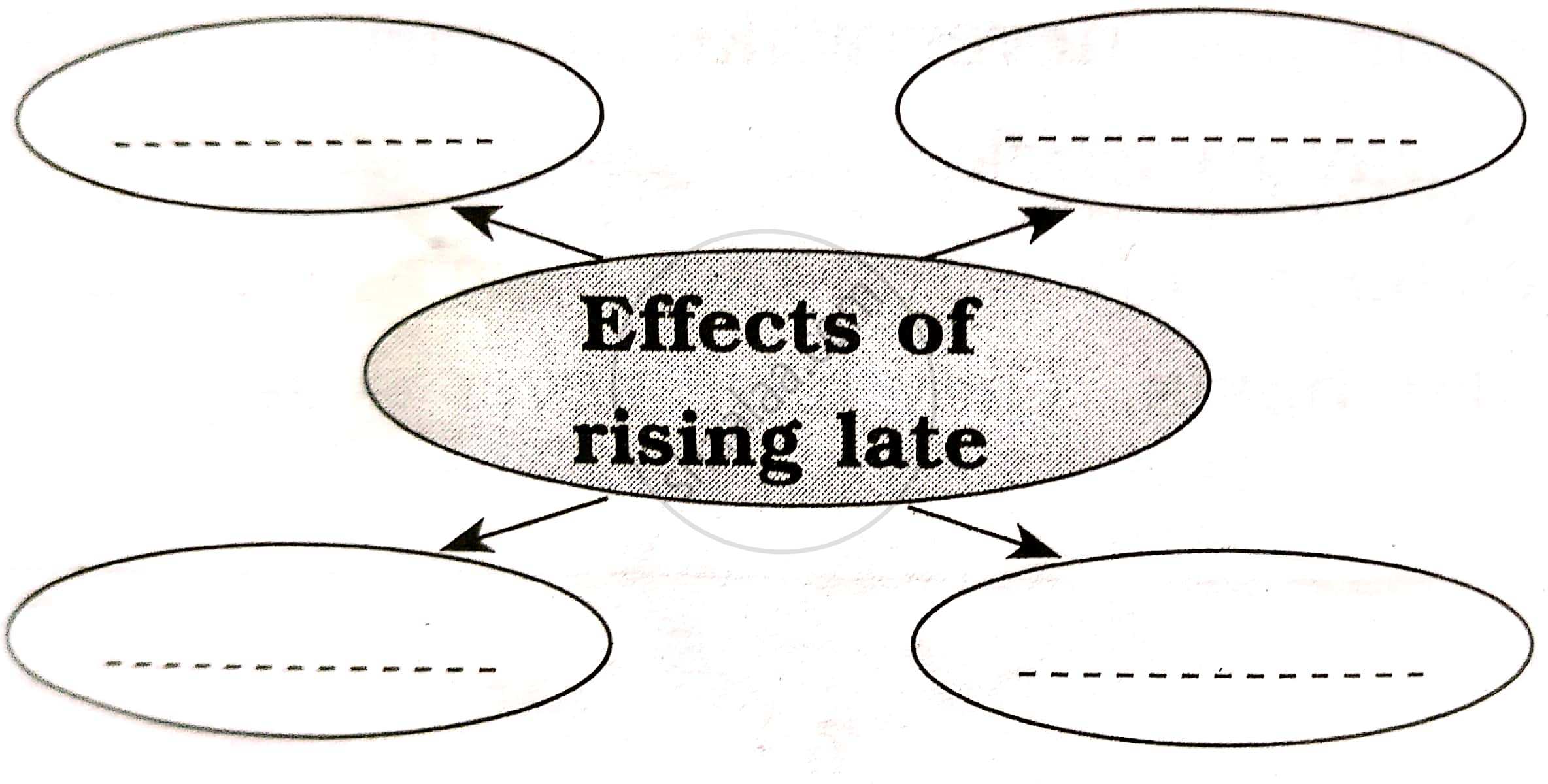
A2. Web :
Complete the following web :
A3. Complete the following statement :
Early risers clearly have the edge in life, because -
(1)
(2)
A4. Vocabulary :
Match the words in column 'A' with their meanings in Column 'B'.
| Column 'A' | Column 'B' |
| (1) justification | (a) dismiss |
| (2) oddities | (b) sleep |
| (3) slumber | (c) strange things |
| (4) shrug off | (d) clarification |
A5. Personal Response:
State two things that you can do to join the early birds' club.
A6. Grammar:
Rewrite the following sentences in the ways instructed :
(1) She felt terrible about this tendency but there was nothing she could do about it. (Rewrite the sentence using 'although'.)
(2) They have never seen a sunrise or met the milkman. (Rewrite using 'neither ... nor'.)
Concept: Unseen Passage Comprehension
