Advertisements
Advertisements
Question
Will you __________ me chess?
Options
learn
learns
learned
has learned
teach
teaches
taught
has taught
Advertisements
Solution
Will you teach me chess?
APPEARS IN
RELATED QUESTIONS
What had the cook planned to do with the vegetable scraps?
Look up the following words in the dictionary. They may have more than one meaning. List these meanings.
| ground |
||
| survey |
||
| scrap |
||
| sternly | ||
| tempting |
When caught in the net the foolish birds began to weep.
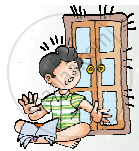
If you were alone at home and suddenly someone knocked at your door, what would you do?
I was very tired ______ confused.
Let's create a pyramid!
Use the following clues.
- A two-letter word beginning with B.
- A three-letter word beginning with C.
- A four-letter word beginning with D.
- A five-letter word beginning with E.
- A six-letter word beginning with F.

Why was Munna not happy with the timetable that Bhaiya made for him?
How do you think Munna felt when his brother was so strict with him? Why was Bhaiya so strict with him?
______ was his constant companion.
Why did the Barber want a lot of food?
Do you think the Sultan was really very generous? Why do you say so?
Now use the joining word given in the option to fill in the blank.
Please wait with me _______ the bus arrives.
Now use the joining word given in the option to fill in the blank.
Do you like football _______ cricket?
Why did the men rush back to the ship?
They put Gulliver on the ground to look at him because.
Complete the blank with rhyming word of the following and practice aloud.
Creatures- fe ______.
Why did the Ningthou want to choose a future king?
Write the meanings of the following in English.
- Tunggi Ningthou – ______
- Thouro! Thouro! – ______
- Phajei! Phajei! – ______
- Shagol thauba nupa! – ______
Fill in the correct word in the blanks and complete the story.
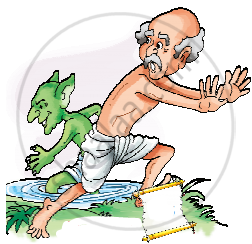
In a forest, there _________ (live/lives/lived) a goblin named Cruel. One day, he __________ (meet/met/meets) an old man wandering in the forest. Immediately, Cruel _____________ (leap/ leaps/leapt) on to the old man’s shoulders and _____________ (order/ orders/ ordered) him, “Let's go. Move fast.”
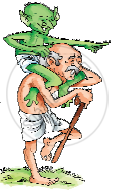
The frightened old man _________ (obey/obeys/ obeyed) the nasty goblin and _______ (walk/ walks/walked) on. As they ___________on, (move/moves/moved) he _________ (notice/ notices/ noticed) that the goblin's feet were very tender. The old man ____________ (ask/asks/ asked) Cruel, “ Sir, how are your feet so soft and tender?” Cruel __________, (reply/ replies/replied) “ I have taken a vow that I will not touch the ground with my feet, till I wash them.” They soon ____________ (come/comes/ came) to a pool. The goblin ________ (instruct/ instructs/ instructed) the old man to wait for him while he ___________ (enter/enters/ entered) the pool. The old man ___________ (think/ thinks/ thought) to himself, “Now that the goblin has wet his feet, he does not need me. Let me run for
my life or he will surely eat me up.” So he ___________ (run/runs/ran) off.