Advertisements
Advertisements
Question
What revenue reforms were introduced by Alauddin to meet heavy Army expenditure?
Advertisements
Solution
Alauddin needed a large amount of money to meet the heavy Army expenses and for this, he introduced certain revenue reforms like:
- He told the officers to measure the land and fix the share of the state.
- He appointed special revenue officials to collect the taxes.
- He increased the revenue from one-third to half.
APPEARS IN
RELATED QUESTIONS
What evidence do we have to prove that Alauddin was a patron of art and learning?
This is a picture of the most beautiful specimen of Khilji architecture, which was added as an entrance to the Qutb complex in Delhi.
Identify the monument.
This is a picture of the most beautiful specimen of Khilji architecture, which was added as an entrance to the Qutb complex in Delhi.
With reference to the reign of this ruler, mention two important features the Reorganization of the army
Answer the following question briefly:
Describe the important developments which took place in the following fields during the Sultanate period:
Dance
This is a picture of a popular form of devotional music.
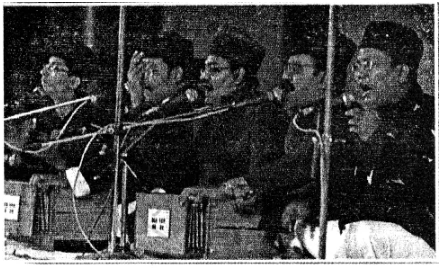
- What is the name of this form of music?
- Name the famous personality who created this.
- What is the theme of the music?
Choose the correct answer:
The ________ were the chief advisors to the sultans.
Choose the correct answer:
Amir Khusrau is believed to have invented the______.
Answer the following question in one or two words/sentences:
Which two styles of music influenced the development of Hindustani music?
Answer the following question in one or two words/sentences:
By whom were qawwalis popularized?
Answer the following question briefly:
Explain how new customs and practices changed the traditional lifestyle of the Indians.
