Advertisements
Advertisements
Question
What least number must be added to each of the numbers 5, 11, 19 and 37, so that they are in proportion?
Advertisements
Solution
Let x be the number added to 5, 11, 19, 37.
`(5 + x)/(11 + x) = (19 + x)/(37 + x)`
App. comp. and divi.
`(5 + x + 11 + x)/(5 + x - 11 - x) = (19 + x + 37 + x )/(19 + x - 37 - x)`
`(16 + 2x)/(-6) = (56 + 2x)/(-18)`
3(16 + 2x) = 56 + 2x
6x - 2x = 56 - 48
4x = 8
x = 2.
RELATED QUESTIONS
Find two numbers such that the mean proportional between them is 14 and third proportional to them is 112.
Given, `x/(b - c ) = y/(c - a ) = z/(a - b)` , Prove that
ax+ by + cz = 0
Which number should be subtracted from 12, 16 and 21 so that resultant numbers are in continued proportion?
Check whether the following numbers are in continued proportion.
2, 4, 8
a, b, c are in continued proportion. If a = 3 and c = 27 then find b.
If `x/a = y/b = z/c`, show that `x^3/a^3 - y^3/b^3 = z^3/c^3 = (xyz)/(zbc).`
Verify the following:
39 : 65 : : 141 : 235
If `x/a = y/b = z/c`, prove that `x^3/a^2 + y^3/b^2 + z^3/c^2 = (x+ y+ z)^3/(a + b+ c)^2`
The America’s famous Golden Gate bridge is 6480 ft long with 756 ft tall towers. A model of this bridge exhibited in a fair is 60 ft long with 7 ft tall towers. Is the model, in proportion to the original bridge?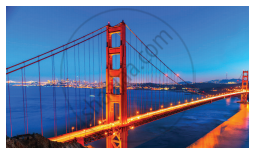
Determine if the following ratios form a proportion. Also, write the middle terms and extreme terms where the ratios form a proportion.
39 litres : 65 litres and 6 bottles : 10 bottles
