Advertisements
Advertisements
Question
What do you understand by atomic size? State its unit?
Advertisements
Solution
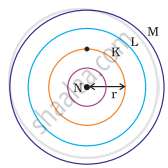
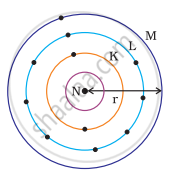
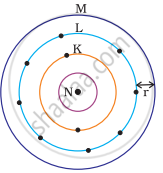
Atomic size is the distance between the centre of an atom's nucleus and its outermost shell. It is measured in Angstroms and Picometres.
APPEARS IN
RELATED QUESTIONS
Why is the size of sodium is greater than magnesium?
Which is greater in size Fe2+ or Fe3+?
Fill in the blank:
On moving across a period from right to left in the periodic table, the atomic size of the atom ___________.
Give reason for the following:
Argon atom is bigger than chlorine atom.
Arrange the following as per the instruction given in the bracket:
Mg, Cl, Na, S, Si, (decreasing order of atomic size).
On moving from left to right in a periodic table, the size of the atom ______.
Write scientific reason.
In same period, boron and oxygen elements have different atomic size.
An element X has mass number 40 and contains 21 neutrons in its atom. To which group of the Periodic Table does it belong?
Which one of the following depict the correct representation of atomic radius(r) of an atom?
|
(i) |
(ii) |
|
(iii) |
(iv) |