Advertisements
Advertisements
Question
The photographer was pleased after ______.
Advertisements
Solution
The photographer was pleased after developing the negative
APPEARS IN
RELATED QUESTIONS
What impression do you get of the children after reading the poem?
How does the poet describe the flowers by using personification?
What do ‘trade winds’ and ‘fat worms’ symbolise?
But a caged BIRD stands on the grave of dreams
His shadow shouts on a nightmare scream
His wings are clipped and his feet are tied
So he opens his throat to sing.
Read the above lines and answer the question that follow.
Explain with reference to the context.
What does the poem “Abou Ben Adhem” convey?
Discuss trans-culturation as represented in Seattle’s speech.
The programme ran________six hours.
The best candidate should be appointed________the post.
Referring closely to the essay On Going on a Journey, give Hazlitt's views about the manner in which a change of place brings about a.change in ideas, opinions, and feelings.
Last night’s dinner was cooked for us by father.
(Begin : Father …………… )
Given below is an interesting combination of words. Explain why they have been used together.
scientific detachment
Here are some commonly used medical terms. Find out their meanings.
| CT scan | MRI | tomography |
| Autopsy | dialysis | ECG |
| Post mortem | angiography | biopsy |
Words which describe ‘sleek’, ‘alert’, and ‘abrupt’
Distinguish between the following pairs of sentences.
You will find the historian and the scientist in the archaeology and natural science sections of the museum respectively.
Your teacher will speak the word given below. Write against two new words that rhyme with it.
chop ______ ______
Imagine that you are the fellow pilgrim and you wish to share your experience of the incident in the poem.
Write a short article about it for a magazine/journal. Also, convey what change it has brought in your life.
Given in a mixed order below are some good human attributes of the family. Pick out from the box and write it against the line that reflects it.
Thinking ahead of winter, the father decided to create a place safe from the elements.
Think and write in your own words.
How can the tender maiden Autumn become a full-grown woman? What change in nature does this imply?
Create a Personal Particular for your class with support from your teacher and collect personal and educational information.
Look at the picture given below and frame your own slogan.

Silent letter.
What is common in the following groups of words?
- knee, knife, knot, know ______
- neighbour, daughter, fight, straight ______
- honest, honour, hour, heir ______
Try and make more silent letter words.
gnat: ______, ______
tongue: ______, ______
chalk: ______, ______
whistle: ______, ______
Imagine you are going on a journey to the centre of the earth. What do you think you will see? What would you feel?
Match with and write the complete sentences below.
| A | B |
| Whenever | I go, I have friends. |
| Whoever | I am hungry, I eat. |
| Wherever | comes first, wins. |
Here is a report on Uncle Lal’s farm.
Father took me to visit Uncle Lal’s dairy farm. I saw all of Uncle Lal's cows. He has fifty cows. They eat grass in the big green farms. In the evening the farmers bring them to the barn to be milked. Uncle Lal sells his milk in the city.
When writing a report, remember to do these things
|
In groups of four, write a report on different brands of ice creams available in your area.
You may use the following clues.
- Start with a short introduction that contains the topic.
- Then list the ice cream brands available in your area.
- Next, say which are the common flavors of ice cream in each of the brands.
- Under each brand, find out which flavors are being sold the most. Also, find out their prices.
- Finally, write which do you think is the most popular ice cream.
Why did the friends part ways?
You are the School Pupil Leader. Your school organised an Inter-School Sports event at Nehru Stadium. Write a report on the special events conducted, in about 100-120 words for the school souvenir
“To me, it is but a worthless bauble.” Why did the photographer’s touch of technical expertise appear a worthless bauble to Leacock?
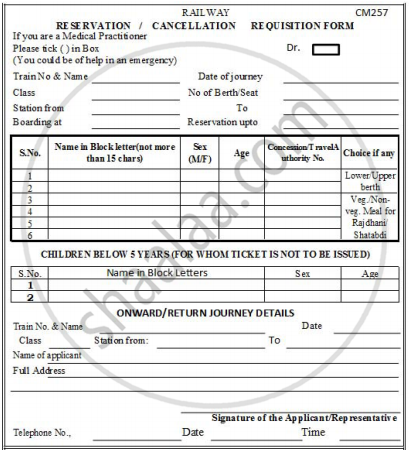
Fill in the following forms with imaginary details.
A college degree is needed to succeed in life. Argue for or against this statement.
What might success mean to the following people? Think about it and write.
A person who has applied for a job
