Advertisements
Advertisements
Question
The diagram given alongside shows an endocrine gland in the human body. Study the diagram and answer the following questions:
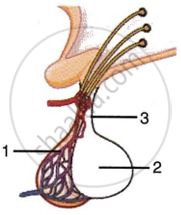 |
- Identify the gland. Write its specific location in the human body.
- Label the guidelines 1, 2 and 3 shown in the figure.
- Name any two secretions from part 1 and two from part 2.
- The deficiency of which hormone causes Diabetes insipidus? How is this condition different from Diabetes mellitus with respect to the abnormal substances present in the of urine.
Answer in Brief
Advertisements
Solution
- The pituitary gland is shown above. A small projection hangs from the base of the midbrain, below the hypothalamus.
-
- Anterior Pituitary
- Posterior Pituitary,
- Hypophyseal stalk
- Hormones produced by the anterior pituitary gland, including TSH. Posterior pituitary hormones include antidiuretic hormone (ADH) and oxytocin.
- Diabetes insipidus is caused by antidiuretic hormone deficiency. In this disease, the urine does not include glucose. However, in Diabetes mellitus, glucose is present in the urine.
shaalaa.com
Is there an error in this question or solution?
APPEARS IN
RELATED QUESTIONS
| Hormones | Target gland |
| Hypothalamic hormones | ______ |
Which hormones are secreted by anterior pituitary gland?
State the Location
Pituitary gland
Which disease is caused by hyper secretion of Glucocorticoids?
Which of the following statements is TRUE for testosterone?
______ is also known as the milk ejecting hormone.
Which endocrine gland is also known as ‘master gland’?
Find out the correct labelling of the given figure.
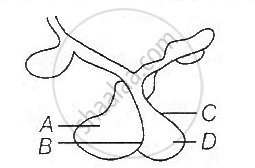
Identify the mismatched pair.
List the hormones secreted by the following:
Pituitary
