Advertisements
Advertisements
Question
Suppose the two photographs, shown in Figure 1 and Figure 2, had been taken at an interval of 10 seconds. If a distance of 100 metres is shown by 1 cm in these photographs, calculate the speed of the fastest car.
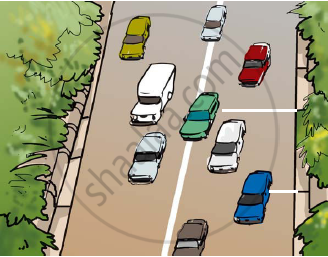
Figure 1 Vehicles moving in the same direction on a road
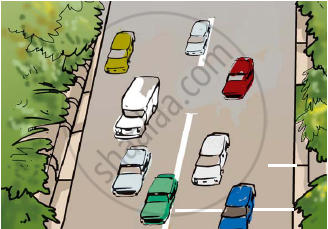
Figure 2 Position of vehicles shown in Figure 1 after some time
Advertisements
Solution
The distance covered by the blue car (as evident from the photograph) from one white strip to another, measured by scale, is 1.4 cm.
It is given that 1 cm is equivalent to 100 m.
Therefore, 1.4 cm is equivalent to 140 m.
Distance travelled by the car = 140 m
The time interval between the two photographs = 10s
Speed = `"Distance covered"/"Time taken"`
= `140/10`
= 14 m/s
APPEARS IN
RELATED QUESTIONS
Which is greater?
(i) 60 km/hr
(ii) 15 m/s
A car travels from P to Q at a uniform speed of 20 ms-1 and immediately turns back and travels towards Q with a uniform speed of 30 ms-1. What is the average speed for the whole journey?
A quantity is measured to be -30 m/s. Is it speed or velocity?
On a 120 km track, a train travels the first 40 km at a uniform speed of 30 km/h. How fast must the train travel the next 80 km, so as to average 60 km/h for the entire trip.
Distances between two cities are measured in kilometres.
The time period of a given pendulum is constant.
The correct symbol to represent the speed of an object is ______.
Paheli and Boojho have to cover different distances to reach their school but they take the same time to reach the school. What can you say about their speed?
If Boojho covers a certain distance in one hour and Paheli covers the same distance in two hours, who travels at a higher speed?
Assertion: The speed of a body can be Negative.
Reason: If the body is moving in the opposite direction of positive motion, then its speed is Negative.
