Advertisements
Advertisements
Question
State three differences between the primary and secondary cells.
Advertisements
Solution
|
Primary Cell |
Secondary cell |
|
1. Chemical reaction is irreversible. 2. Only chemical energy is converted into electrical energy when current is drawn from it. 3. It cannot be recharged and its internal resistance is high. |
1. Chemical reaction is reversible. 2. It converts electrical energy into chemical energy when current is passed in it (i.e., during charging), while converts chemical energy into electrical energy when current is drawn from it (i.e., during discharging). 3. It can be recharged and its internal resistance is low. |
APPEARS IN
RELATED QUESTIONS
What is the function of a key (or switch) in an electric circuit?
A cell is used to :
The unit of potential difference is :
Select the correct option:
In a metallic conductor, electric current is thought to be due to movement of:
The following figure shows a metal rod PQ mounted on an insulated stand. The cap of an uncharged electroscope touches one end Q of the metal rod. A negatively charged ebonite rod is brought near the other end P of the metal rod.
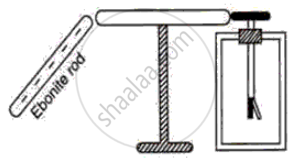
(a) What charge does the end P have?
(b) What charge does the end Q have?
(c) What charge does the cap of the electroscope have?
(d) What charge does the gold leaf have?
(e) Will the leaf diverge or collapse? Give reason.
(f) If the electroscope is now earthed, what charge does the metal rod have?
Compare the brightness of two 60 watt bulbs.
When they are connected in parallel.
Explain giving scientific reasons.
