Advertisements
Advertisements
Question
State the approximate range of wavelength associated with visible light.
Advertisements
Solution
Visible light wavelength range 4000 Å to 8000 Å.
APPEARS IN
RELATED QUESTIONS
To which part of electromagnetic spectrum does a wave of frequency 3 × 10¹³ Hz belong?
Name the region beyond the red end of the spectrum.
X-ray and visible light travel at the same speed in vacuum. Do they travel at the same speed in glass?
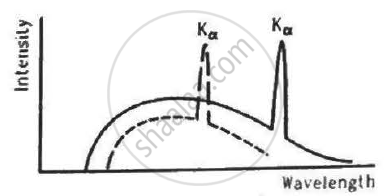
The figure shows the intensity-wavelength relations of X-rays coming from two different Coolidge tubes. The solid curve represents the relation for the tube A in which the potential difference between the target and the filament is VA and the atomic number of the target material is ZA. These quantities are VB and ZB for the other tube. Then,
Define the term "Intensity" in the photon picture of electromagnetic radiation.
Name the radiation of the electromagnetic spectrum which is used for the following:
Radar and Give the frequency range.
The frequency of x-rays, y-rays and ultraviolet rays are respectively a, b and c. Then:-
The ratio of contributions made by the electric field and magnetic field components to the intensity of an EM wave is ______.
Given below in the left column are different modes of communication using the kinds of waves given in the right column.
| A. | Optical Fibre Communication |
P. | Ultrasound |
| B. | Radar | Q. | Infrared Light |
| C. | Sonar | R. | Microwaves |
| D. | Mobile Phones | S. | Radio Waves |
From the options given below, find the most appropriate match between entries in the left and the right column.
Choose the correct option related to wavelengths (λ) of different parts of the electromagnetic spectrum.
