Advertisements
Advertisements
Question
The following questions are case-based questions. Read the passage carefully and answer the questions that follow:
|
Nucleophilic Substitution: Influences of solvent polarity: The reaction rate (SN2) of 2-bromopropane and NaOH in ethanol containing 40% water is twice slower than in absolute ethanol. Hence the level of solvent polarity has an influence on both SN1 and SN2 reactions but with different results. Generally speaking, a weak polar solvent is favourable for SN2 reaction, while a strong polar solvent is favourable for SN1. Generally speaking, the substitution reaction of tertiary haloalkane is based on SN1 mechanism in solvents with a strong polarity (for example ethanol containing water). |
Answer the following questions:
(a) Why racemisation occurs in SN1? (1)
(b) Why is ethanol less polar than water? (1)
(c) Which one of, the following in each pair is more reactive towards SN2 reaction? (2)
(i) CH3 – CH2 – I or CH3CH2 – Cl
(ii)
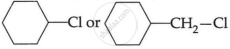
OR
(c) Arrange the following in the increasing order of their reactivity towards SN1 reactions: (2)
(i) 2-Bromo-2-methylbutane, 1-Bromo-pentane, 2-Bromo-pentane
(ii) 1-Bromo-3-methylbutane, 2-Bromo-2-methylbutane, 2-Bromo-3- methylbutane
Advertisements
Solution
(a) Because the carbocation intermediate generated in SN1 reactions is a planar molecule, it will lead to the formation of d- and l-form products. As a result, racemisation occurs.
(b) Because water has two hydrogen atoms bonded to oxygen \[\begin{array}{cc}\ce{O}\\/\backslash\\\ce{[H\phantom{..}H]}
\end{array}\] while alcohol, like ethanol, has a hydrogen atom and alkyl [ethyl] group bonded to an oxygen.
\[\begin{array}{cc}\ce{O}\phantom{.............}\\
\phantom{}/\phantom{.}\backslash\phantom{.............}\\
\ce{H\phantom{...}C2H5 [Ethanol]}
\end{array}\]
(c) (i) CH3 – CH2 – I undergoes SN2 reaction faster than CH3CH2 – Cl.
(ii) The first compound  is cyclohexyl chloride [2° halide] and the second compound is cyclohexyl methyl chloride is the primary halide; therefore, in
  undergoes SN2 reaction faster.
OR
(c) (i) 2-Bromo-2-methylbutane < 2-Bromo-pentane < 1-Bromo-pentane
(ii) 1-Bromo-3-methylbutane < 2-Bromo3-methylbutane < 2-Bromo-2-methylbutane
APPEARS IN
RELATED QUESTIONS
AgCN reacts with haloalkanes to form isocyanide. Haloalkanes react with KCN to form alkyl cyanides as the main product. Why?
Which of the following is an example of SN2 reaction?
Racemic compound has ____________.
Which of the following is a chiral compound?
Which of the following undergoes nucleophilic substitution exclusively by SN1 mechanism?
Assertion: KCN reacts with methyl chloride to give methyl isocyanide.
Reason: CN– is an ambident nucleophile.
Ethylene chloride and ethylidene chloride are isomers. Identify the correct statements.
(i) Both the compounds form same product on treatment with alcoholic KOH.
(ii) Both the compounds form same product on treatment with aq.NaOH.
(iii) Both the compounds form same product on reduction.
(iv) Both the compounds are optically active.
When CH3CH2CHCl2 is treated NaNH2 product formed is:-
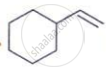 HCI, Major product ______.
Which of the following reactions is an example of nucleophilic substitution reaction?
