Advertisements
Advertisements
Question
‘Mrs. Croft’s was the first death I mourned in America, for, hers was the first life I had admired; she had left this world, at last, ancient and alone, never to return’—how do these lines encapsulate the bond that is possible between two strangers?
Advertisements
Solution
A person usually feels very detached from people staying around him abroad. Here is where originates the feeling of diaspora. The same happened with the narrator. He was away from his home and his family and, thus, never grew any feeling of affection towards anybody in America. He was quite alienated by the people of America. However, the course of an action justifies his attachment and the emotional bonding which grew between him and Mrs. Croft. In the foreign land, he grew a fondness of the old lady because of various reasons. When he got to know that she was older than a century, he felt a sense of responsibility towards her. He was amazed and was quite awestruck at the idea of a widow of that age residing all alone, with nobody to take care of her. Taking up chores like heating her soup every evening or giving her eight dollars in the envelope every month satisfied him. All these instances and many more cite the fact that a very strong bond had developed between the lady and the narrator.
APPEARS IN
RELATED QUESTIONS
You had gone on a trekking expendition with a group of friends. As night closed in, you realised that you were separated from the group. Describe your initial feelings and the place where you got lost. How did you spend the night alone before you were reunited with your group?
In the following items, sentence A is complete, while sentence B is not. Complete sentence B, making it as similar as possible to sentence A. Write sentence B.
(A) When she heard the news of her daughter’s result, she was very happy.
(B) On ........................................................................................
What brought the six humans together? Where were they?
How was the country affected by the war?
Who and what does the free bird symbolize?
In what mood is the speaker now? Where is he?
The air broke into a mist with bells,
The old walls rocked with the crowd and cries.
Had I said, "Good folk, mere noise repels....
But give me your sun from yonder skies!"
They had answered "And afterward, what else?"
Read the above lines and answer the question that follow.
What did the patriot want form the “Good folks”?
What lesson is learnt from the poem?
Fill in the blank with an appropriate word:
The soldier fought bravely__________ his country.
They have to go to bed early every night. They are allowed to stay update on Saturdays.
The best candidate should be appointed________the post.
Why couldn't the narrator sleep?
You are to be awarded a Special Prize at the Annual Prize Day ceremony of your school. Write a letter to a lady relative, giving her the news. Be sure to include details of the prize that you are to receive, and tell her why you have been chosen for this honour.
Read the following passage carefully and answer the questions that follow:
Lying in bed, Swami realized with a shudder that it was Monday morning. It looked as though only a moment ago, it had been the last period on Friday; already, Monday was here. He hoped that an earthquake would reduce the school building to dust but that my good building, Albert Mission School, had withstood similar prayers for over a hundred years now.
At nine o'clock, Swaminathan wailed, “I have a headache.”
His mother said, “Why don’t you go to school in a bullock cart?”
“So that I may be completely dead at the other end? Have you any idea what it means to be jolted in a cart?”
“Have you any important lessons today?”
“Important! Bah! That geography teacher has been teaching the same lesson for over a year now. And we have arithmetic, which means for a whole period we are going to be beaten by the teacher............ Important lessons!”
And Mother generously suggested that Swami might stay at home.
At 9:30, when he ought to have been lining up in the school prayer hall, Swami was lying on the bench in Mother’s room.
Father asked him, “Have you no school today?”
“Headache,” Swami replied,
“Nonsense! Dress up and go.”
“Headache.”
“Loaf about less on Sundays, and you will be without a headache on Monday.”
Swami knew how stubborn his father could be and changed his tactics.
“I can’t go so late to class.”
“I agree, but you’ll have to; it is your own fault. You should have asked me before deciding to stay away.”
“What will the teacher think if I go so late?”
“Tell him you had a headache, and so are late.”
“He will beat me if I say so.”
“Will he? Let us see. What is his name?”
“Mr. Samuel.”
“Does he beat the boys?”
“He is very violent, especially with boys who come late. Some days ago, a boy was made to stay on his knees for a whole period in a corner of the class because he came late, and after getting six cuts from the cane and having his ears twisted, I wouldn’t like to go late to Mr Samuel’s class.”
“If he is so violent, why not tell your headmaster about it?”
“They say that even the headmaster is afraid of him. He is such a violent man.”
And then Swami gave a lurid account of Samuel’s violence; how when he started caning, he would not stop till he saw blood on the boy’s hand, which he made the boy press to his forehead like a Vermillion marking. Swami hoped his father would be made to see that he couldn’t go to his class late. But his father’s behaviour took an unexpected turn. He became excited.
“What do these people mean by beating our children? They must be driven out of service. I will see…..”
The result was that he proposed to send Swami late to his class as a kind of challenge. He was also going to send a letter with Swami to the headmaster. No amount of protest from Swami was of any avail: Swami had to go to school.
By the time he was ready, his father had composed a long letter to the headmaster, put it in an envelope, and sealed it.
“What have you written, father?” Swaminathan asked apprehensively.
“Nothing for you. Give it to your headmaster and go to your class.”
Swami’s father did not know the truth—that, actually, Mr. Samuel was a very kind gentleman.
(a) Give the meaning of each of the following words as used in the passage. (3)
One-word answers or short phrases will be accepted.
- jolted
- stubborn
- avail
(b) Answer the following questions briefly in your own words:
- What did Swami wish for on a Monday morning? Why was his wish unlikely to be answered? (2)
- Which sentence tells us that Swami’s father was completely unsympathetic to his son’s headache? (2)
- In what way was Swami’s mother’s response different from his father’s? (2)
- Why did Swami give a colourful account of Mr. Samuel to his father? (2)
- In what way did Father’s behaviour take an unexpected turn? (2)
- What was Swami finally ordered to do by his father? (2)
(c)
(i) In not more than 60 words, describe how Swami tries to prove that Mr. Samuel is a violent man. (8)
(ii) Give a title to your summary in 3
(c). Give a reason to justify your choice. (2)
Discuss the following in groups of two pairs, each pair in a group taking opposite points of view.
Scientific intervention is necessary to unearth buried mysteries.
Look for some other poem on a bird or a tree in English or any other language.
Why are the last two lines put within brackets?
Discuss in groups of four.
“We have not inherited this earth from our forefathers; we have borrowed it from our children”.
The words ‘grip’, ‘dawn’. ‘usher’, ‘coin’, ‘passport’ have a literal as well as a figurative meaning. Write pairs of sentences using each word in the literal as well as figurative sense.
Entomologist and lepidopterists are mentioned in the text and you must have guessed the meanings of these words or found them out in the dictionary.
Now match the kinds of scientists given with the work they do:
|
A |
B |
|
ornithologist |
study of the skin |
|
gerontologist |
study of cells |
|
ergonomist |
study of birds |
|
dermatologist |
study of old age |
|
cytologist |
study of the design of equipment |
How did the narrator adjust to the ways of life first in London and then in Cambridge, U.S.A.?
How does the narrator bring out the contrast between the Indian way of life and American society? Do you think his wife Mala adjusted comfortably to the new way of life?
Examine the pieces of conversation in the story. How do they reflect the world view of each of the speakers?
Go to your school/college library and read some other stories by O’Henry like, ‘The Gift of the Magi’, ‘The Last Leaf’ and ‘After Twenty years’. Write the stories in short in your notebook.
Find out the information about the qualification and eligibility required in the profession related to wild life such as:
Forest officer / Ranger
We add ‘un-’ to make opposites. For example, true — untrue. Add ‘un’– to the word below to make its opposite. Then look up the meaning of the word you have formed in the dictionary.
important: ____________
What do you learn about Columbia from the lesson you have read? What was its final fate?
Glance through the text again and explain the qualities of Tenzing Norgay. Pick lines that show his unique qualities. One is done for you.
| Sr No. | Qualities | Lines |
| 1. | Patriotic | I told Colonel Hunt that I was carrying the Indian flag with me and I would like it to be on the top with other flags. |
|
2. |
||
| 3. | ||
| 4. |
Look at the sentences given below. Find out which one is correct. If the sentence is wrong give reasons.
Browse on the net and gather a variety of templates to write a 'Curriculum Vitae'.
Given in a mixed order below are some good human attributes of the family. Pick out from the box and write it against the line that reflects it.
Father taught the boys geometry and how to use triangles to measure big objects.
Choose any novel/book that you enjoyed. Prepare a synopsis of the novel. It should include the major events and the links between them as described in the novel. You may prepare a chapter-wise outline first and then put the outlines together to write a brief synopsis.
Write a few lines about yourself - your name, appearance, family, the place where you live, your school, your friends, neighbours, relatives, your likes, dislikes, hobbies, what you are good at, etc.
Now create an imaginary ‘persona’ for yourself. It can be quite different from your real self. Or, you may choose a fictional character - a character from a novel, story, etc. Write a few lines about this imaginary persona and introduce yourself in that role.
| Real Self | Imaginary Persona |
|
Hi, I am ____________________ ____________________________ ____________________________ |
Hi, I am ____________________ ____________________________ ____________________________ |
Give, in your own words, TWO reasons for each of the following :
The schoolboys were in a happy mood.
Write in your own words:-
Why does the poet remark that advice is cheap?
Make a painting or a collage to show the different things described in the poem.

Divide the class in four groups. Collect four different stories written by Sudha Murthy. Select a story for every group and write it in the form of a play. Enact it in front of the class.
Read the extract beginning from:
“Her name was Sulekha..... find bridegrooms for them.” Narrate this extract in short, making Sulekha (Bholi) the narrator. Write it in your notebook. Begin with “I was named Sulekha ..................”
You are a volunteer in your locality to serve people who are affected by floods. How will you caution them to move to a safer place taking only their bare necessities? Describe.
Write a paragraph of 100 – 120 words about a memorable anecdote/incident of your life.
Write a paragraph of 100 – 120 words about your favourite personality.
You lost your geometry box, and someone returns it to you. ______
It is very late at night and your father hasn’t returned from the office. ______
Develop the following hints.
A wood cutter - cutting wood - dropped his axe in the pond - started weeping - an angel appeared - asked what the matter was - brought a golden axe - from the pond - wood cutter did not accept - brought a silver axe - not accepted - brought an iron axe - accepted - pleased with the honesty - offered all the axes to him.
Arrange the jumbled sentences and write a paragraph. Use appropriate conjunctions.
Jane Eyre is an orphan.
She lives with her aunt Mrs. Reed.
Mrs. Reed does not like Jane because Jane is not her daughter.
Jane’s uncle Mr. Reed likes Jane, but he dies.
He makes Mrs. Reed promise to take care of Jane, but instead she sends Jane away.
Jane is ten years old, she is sent to Lowood school.
Jane graduates and stays there to teach.
She leaves for Thornfield, where she is a governess.
She is very happy there.
Pick out the rhyming words from the poem and write them in the table.
| Stanza -1 | Stanza -2 | Stanza -3 |
Write some sentences about the picture.

It, is, has, walks, elephant, legs, tusk, trunk, big, long, slowly, strong.
Write a narrative paragraph on Kamarajar, using the given information and add more information on your own.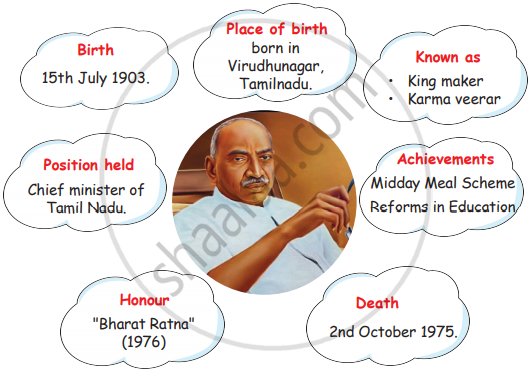
______ do you have for breakfast?
Discuss and write –
- Why do cats and dogs fight?
- Why do we walk across the road, not run?
- Why do people like ice-cream?
The red tea cups are filled with a particular word. Fill in the yellow tea cups with similar sounding words. Note the example given.

Find out stories about other great people’s lives and their childhood and write these in your notebook. Collect at least two such stories and share them with your friends.
You could think of famous
- scientists
- religious people
- freedom fighters
- brave children
- astronauts
- artists
Describe Mary Kom’s personal experiences during her first International Championship match from the time of selection to winning the medal.
Lack of adequate financial resources and sponsorships often affect sportspersons. How is this evident from Mary Kom’s life?
What was the human side to the photographer?
Write slogan to create awareness of the following topic using the tips given above.
- Junk food
- Labour Day
- Save Water
- Yoga
- Blood Donation
Read the given sentence and underline the no word.
There is nothing to do.
Read the following passage and write a summary of it. Suggest a suitable title to the summary.
|
According to some experts, a staggering 93 percent of our daily communication is non-verbal. Facial expressions are easy to decipher. One can readily detect happiness, sadness, anger. Physicians can tell a patient is doing well (or not) by looking at his/her face. Eye contact is another type of non-verbal communication, which can tell a lot about the other person. The eyes convey a range of emotions-happiness, sadness, boredom, surprise, confidence ..... even emotional interest. Staring at someone's forehead may intimidate the recipient, staring at the mouth is sometimes interpretated as a sign of emotional interest. In fact staring into someone's eyes is a sign of lying, and so is looking away. In certain cultures, lack of eye contact is taken as a sign of respect. If body language is to be defined, it is a combination of facial expression, gestures, eye contact, body movements and posture and voice. Frequent blinking is a sign of the person feeling distressed or uncomfortable. If the pupils are dilated, it often indicates interest, even emotional interest. The lips also reflect our body language, and lip biting indicates worry and/or anxiety; tightening of the lips may be an indication of disapproval. Slightly turned-up lips indicate happiness and slightly turned-down lips indicate sadness. |
Prepare a dialogue from the jumbled sentences:
- It will reach Nagpur at 7: 15 a.m.
- What is the departure time of the Vidarbha Express?
- When will it reach Nagpur?
- The departure time is 8:30 p.m.
What might success mean to the following people? Think about it and write.
A doctor
