Advertisements
Advertisements
Question
Mother's blood flows into the foetus through placenta.
Options
True
False
Advertisements
Solution
This statement is False.
Explanation:
The placenta separates the mother's and foetal blood. The placenta separates the maternal and foetal circulations, allowing for the exchange of oxygen, nutrients, and waste products without direct blood mixing.
APPEARS IN
RELATED QUESTIONS
What is the significance of amniotic fluid?
Mention three functions of the placenta.
Describe briefly the ways how a mammalian embryo is nourished
Describe briefly the ways how a mammalian embryo is respires
Differentiate
Amnion and Chorion.
The diagram given below is that of a developing human foetus in the womb. Study the same and then answer the questions that follow:
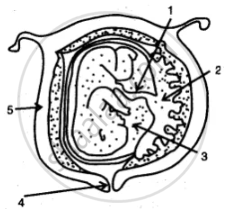
- Name the parts '1' to '5' indicated by guidelines.
- What term is given to the period of development of the foetus in the womb?
- How many days does the foetus take to be fully developed?
- Mention two functions of the parts labelled ‘2’ other than its endocrine function.
- Name the hormone (anyone) produced by the part labelled ‘2’.
- What is the function of the part marked ‘3’?
Which of the following hormones is produced by ovary?
In human beings, the placenta is formed by ______.
Heart and blood vessels have been formed by the end of five weeks of pregnancy.
Which of the following cannot pass readily through the placenta to the foetus?
