Advertisements
Advertisements
Question
Match the parts of plant given in Column I with their function in Column II.
| Column I | Column II | ||
| (a) | Flower | (i) | Excretion |
| (b) | Leaf | (ii) | Photosynthesis |
| (c) | Stem | (iii) | Reproduction |
| (d) | Root | (iv) | Bears branches |
| (v) | Anchorage | ||
Advertisements
Solution
| Column I | Column II | ||
| (a) | Flower | (iii) | Reproduction |
| (b) | Leaf | (ii) | Photosynthesis |
| (c) | Stem | (iv) | Bears branches |
| (d) | Root | (v) | Anchorage |
APPEARS IN
RELATED QUESTIONS
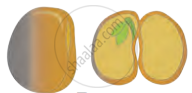
Explain the following image in your own words.
Why would living things not be able to live without plants?
Take two potted plants. Keep one in sunlight and the other in a fully covered box. Water them regularly. After a week observe the plants.
| Before a week | After a week |
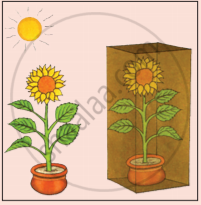 |
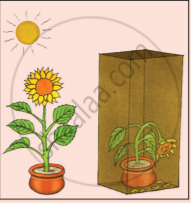 |
| What did you observe? | Plant in sunlight | Plant in box |
Stamen contains _______ grains.
Plants can live without water.
Mention few desert plants.
Why do we call the jasmine plant, a twiner?
The seasons are four.
The living world comprises plants and animals.
Fill in the blanks with the terms that are listed below:
| anther | male | ovary | ovule | petals | pistil | stamen | filament |
Sepals, ___(a)___, stamens and ___(b)___ are the parts of a flower. Stamen is made up of ___(c)___ and ___(d)___ and it represents the ___(e)___ part of the flower. The female part of the flower is called the ___(f)___. The basal, swollen part of the pistil is called the ___(g)___ which contains the ___(h)___.
