Advertisements
Advertisements
प्रश्न
Match the parts of plant given in Column I with their function in Column II.
| Column I | Column II | ||
| (a) | Flower | (i) | Excretion |
| (b) | Leaf | (ii) | Photosynthesis |
| (c) | Stem | (iii) | Reproduction |
| (d) | Root | (iv) | Bears branches |
| (v) | Anchorage | ||
जोड़ियाँ मिलाइएँ
Advertisements
उत्तर
| Column I | Column II | ||
| (a) | Flower | (iii) | Reproduction |
| (b) | Leaf | (ii) | Photosynthesis |
| (c) | Stem | (iv) | Bears branches |
| (d) | Root | (v) | Anchorage |
shaalaa.com
Plant Forms and Functions
क्या इस प्रश्न या उत्तर में कोई त्रुटि है?
APPEARS IN
संबंधित प्रश्न
Explain the following image in your own words.

Explain the following image in your own words.
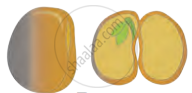
Plants can live without water.
Green plants need sunlight.
Look at the diagram given below and answer the following question.
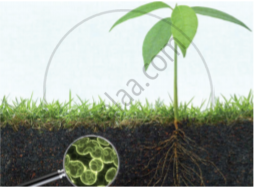
Soil fertility is increased by bacteria How?
The living world comprises plants and animals.
What are the uses of plants?
Give some examples of monocotyledonous plants and dicotyledonous plants.
Which of the following combination of features would you observe in grass?
In vexillary type of aestivation, two lateral petals which overlap the two smallest anterior petals are called ______. This aestivation is characteristic feature of family ______.
