Advertisements
Advertisements
Question
Match Column A with Column B
| Column A | Column B | ||
| 1 | Bimbisara | (a) | Hereditary Rule |
| 2 | Ajatashatru | (b) | 6th Century BC |
| 3 | Monarchy | (c) | First Prominent Kind of Magadha |
| 4 | Rise of Mahajanapadas | (d) | Killed his father and became king |
Advertisements
Solution
| Column A | Column B | ||
| 1 | Bimbisara | (c) | First Prominent Kind of Magadha |
| 2 | Ajatashatru | (d) | Killed his father and became king |
| 3 | Monarchy | (a) | Hereditary Rule |
| 4 | Rise of Mahajanapadas | (b) | 6th Century BC |
APPEARS IN
RELATED QUESTIONS
What policy did Bimbisara follow to extend his territories?
Name the king who conquered Anga?
Fill in blank
The first important king of Magadha was __________.
Match the Columns:
| Column A | Column B |
| 1. Democratic republic | a. Pataliputra |
| 2. Kingdom | b. Champa |
| 3. Bimbisara | c. Rule of kings |
| 4. Ajatashatru | d. Macedonia |
| 5. Alexander | e. Rule by elected representatives |
How did the conquest of Anga benefit Magadha?
Why was Alexander unable to conquer Magadha?
This is a painting of two important kings who became friends after the war.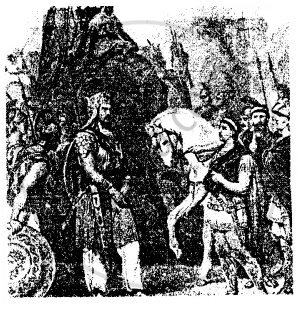
Can you identify the two rulers in this painting?
State whether the following is true or false.
The power of the small states in north-western India was shattered by Alexander’s invasion.
This is a painting of two famous kings who became friends after a war in the 4th-century BCE.
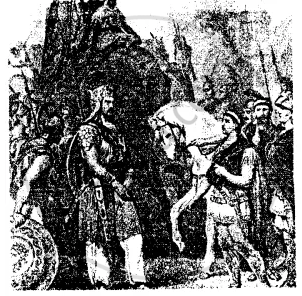
Give an account of the earlier developments that led to this event.
This is a painting of two famous kings who became friends after a war in the 4th-century BCE.
Name the most powerful kingdom in India during this time. Which dynasty ruled this kingdom?
