Advertisements
Advertisements
प्रश्न
Match Column A with Column B
| Column A | Column B | ||
| 1 | Bimbisara | (a) | Hereditary Rule |
| 2 | Ajatashatru | (b) | 6th Century BC |
| 3 | Monarchy | (c) | First Prominent Kind of Magadha |
| 4 | Rise of Mahajanapadas | (d) | Killed his father and became king |
Advertisements
उत्तर
| Column A | Column B | ||
| 1 | Bimbisara | (c) | First Prominent Kind of Magadha |
| 2 | Ajatashatru | (d) | Killed his father and became king |
| 3 | Monarchy | (a) | Hereditary Rule |
| 4 | Rise of Mahajanapadas | (b) | 6th Century BC |
APPEARS IN
संबंधित प्रश्न
Fill in the blank:
__________ invaded India in 326 BC.
Name the Magadhan king who killed his father?
Fill in blank
The first important king of Magadha was __________.
How did the conquest of Anga benefit Magadha?
Mention briefly the effects of Alexander’s invasion.
Choose the correct answer:
Alexander’s invasion led to the establishments of ______ trade routes by land and sea.
State whether the following is true or false.
The power of the small states in north-western India was shattered by Alexander’s invasion.
Give an account of the causes and results of the battle between Alexander and Porus.
This is a painting of two famous kings who became friends after a war in the 4th-century BCE.
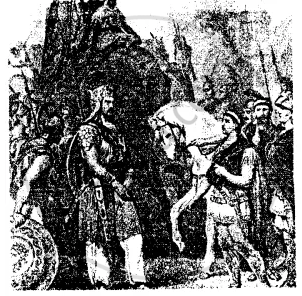
Give an account of the earlier developments that led to this event.
This is a painting of two famous kings who became friends after a war in the 4th-century BCE.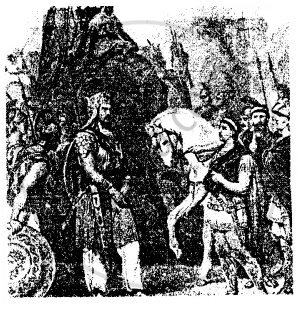
Name the most powerful kingdom in India during this time. Which dynasty ruled this kingdom?
