Advertisements
Advertisements
Question
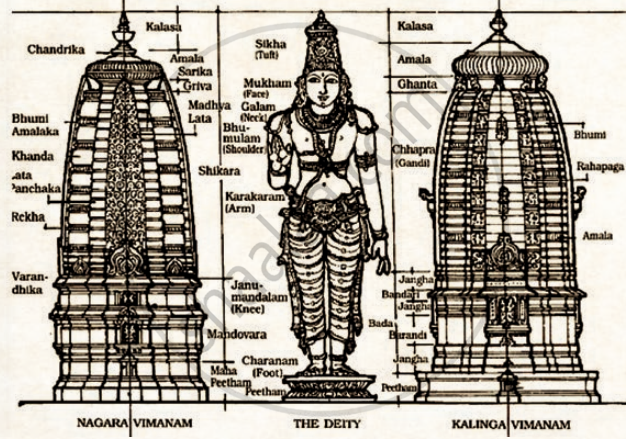
India’s classical temples come in distinct regional styles. For instance, note the pyramidal shape of Bṛihadīśhvara Temple’s vimāna and compare with the shapes in Fig. Revisit the pictures of the Angkor Wat and Kandāriyā Mahādeva Temples and note the chief differences you can observe.
Very Long Answer
Advertisements
Solution
The main differences can be understood by comparing the shape of the vimāna/shikhara and the overall temple design:
- Bṛihadīśhvara Temple (Drāviḍa style): Its vimāna is tall, pyramidal and made of progressively smaller storeys as it rises. This is characteristic of the South Indian Drāviḍa style shown in the figure.
- Kandāriyā Mahādeva Temple (Nāgara style): Its main tower has a curving, upward-rising shikhara rather than a stepped pyramid. Numerous smaller towers cluster around the central tower, giving it a mountain-like appearance. The temple is also richly covered with sculptures.
- Angkor Wat (Khmer/Cambodian style): It has five prominent towers arranged like the peaks of a mountain, surrounded by large galleries, courtyards and enclosing walls. Its towers have a more lotus-bud-like form, and the complex is much more spread out and monumental than the typical Indian temple shown in the figure.
shaalaa.com
Is there an error in this question or solution?
