Advertisements
Advertisements
Questions

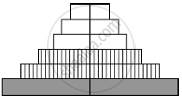
Identify the type of pyramid given above. Write the identifying feature on the basis of which you identified it.
Identify the type of pyramid given below and write two identifying features of such a pyramid:
Advertisements
Solution
It shows the age pyramid for the expanding human population.
Identifying features:
- There are many more pre-reproductive and reproductive age groups in these kinds of pyramids.
- Compared to pre-reproductive and reproductive age groups, the post-reproductive age group population is minuscule.
APPEARS IN
RELATED QUESTIONS
Define the carrying capacity.
Answer the following question.
"The size of a population for any species is not a static parameter." Justify the statement with specific reference to fluctuations in the population density of a region in a given period of time.
Mention the different ways by which the population density of different species can be measured.
Age distribution in a population can influence
What parameters are used for tiger census in our country’s national parks and sanctuaries?
The density of a population in a habitat per unit area is measured in different units. Write the unit of measurement against the following:
Bacteria
The density of a population in a habitat per unit area is measured in different units. Write the unit of measurement against the following:
Fish

Label the three tiers 1, 2, 3 given in the above age pyramid.
The following diagrams are the age pyramids of different populations. Comment on the status of these populations.

Given below is the Age Pyramid of the population in one of the states in India as per 2011 census. It depicts the male population on the left-hand side, female population on the right-hand side, newborns towards the base and gradually increasing age groups as we move from base to the top, with the oldest population at the top. Study this pyramid and comment upon the appropriateness of the Assertion and the Reason.

Percentage to the total population
Assertion: It is a stable population.
Reason: The pre-reproductive and reproductive individuals are almost in equal numbers and the post-reproductive individuals are relatively fewer.
