Advertisements
Advertisements
Question
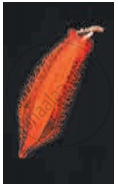
Identify the animal given in the picture and write features of its phylum/class.
Answer in Brief
Advertisements
Solution
The given animal is Tomopteris. It belongs to the phylum Annelida.
For features of Annelida,
- Animals belonging to the phylum Annelida are worms with annuli or rings.
- They are bilaterally symmetrical true coelomates showing metamerically segmented soft, elongated and cylindrical body.
- Digestive system is complete with a mouth and anus at opposite ends of the body.
- Locomotory organs are setae, parapodia, or suckers. They have well-developed layers of circular and longitudinal muscles which help in the movement of the body.
- Excretory organs are nephridia which is a characteristic feature of annelids.
- Respiration takes place through the body surface. Circulatory system is of a closed type. Haemoglobin is dissolved in plasma.
- The nervous system is in the form of nerve rings and ganglionated nerve cords.
- The reproductive system well developed. Animals are mostly hermaphrodites. Few are unisexual.
- Leech (a sanguivorous annelid), Nereis, earthworm, Aphrodite, etc. are examples of Annelida.
shaalaa.com
Is there an error in this question or solution?
