Advertisements
Advertisements
Question
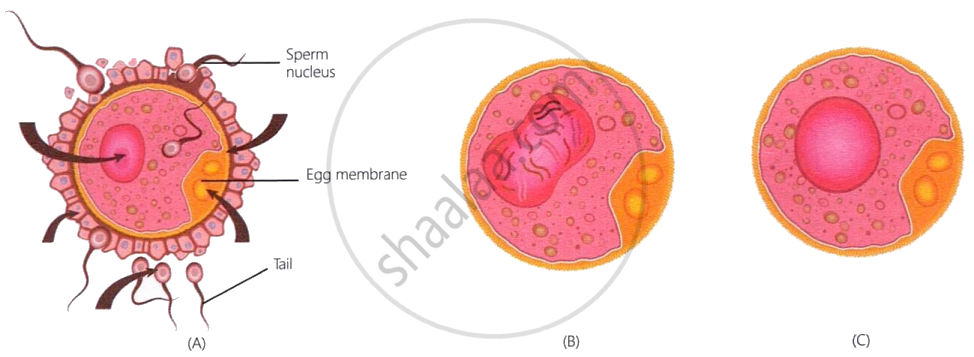
Given below are diagrams showing the different stages in the process of fertilisation of an egg in the female reproductive tract. Study the diagrams and answer the questions:
- Arrange the letters given below each diagram in a logical sequence to show the correct order in the process of fertilisation.
- Where does fertilisation normally take place? What is ‘implantation’ that follows fertilisation?
- Mention the chromosome number of the egg and zygote in humans.
- Explain the term ‘gestation’. How long does gestation last in humans?
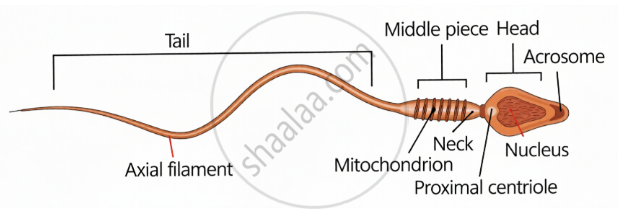
- Draw a neat labelled diagram of a mature human sperm.
Diagram
Explain
Long Answer
Advertisements
Solution
- C → A → B
- C: Mature ovum before fertilisation.
- A: Sperm enters the ovum (fertilisation).
- B: Formation of the zygote after fusion of the nuclei.
-
- Fertilisation normally takes place in the fallopian tube (oviduct).
- It is followed by the formation of a zygote, which begins repeated cell division (cleavage) and develops into an embryo.
-
- Egg (ovum): 23 chromosomes (n)
- Zygote: 46 chromosomes (2n)
-
- Gestation is the period from fertilisation (conception) to the birth of the baby.
- In humans, it lasts for about 280 days (40 weeks or approximately 9 months).
shaalaa.com
Is there an error in this question or solution?
