Advertisements
Advertisements
Question
Give the abbreviated formula of the third member of the alcohol.
Advertisements
Solution
CH3 – CH2 – CH2 – OH
APPEARS IN
RELATED QUESTIONS
Write the name and formula of the 2nd member of homologous series having general formula CnH2n.
Distinguish between homologous organs and analogous organs. In which category would you place wings of a bird and wings of a bat? Justify your answer giving a suitable reason.
Give three points to differentiate between saturated and unsaturated
hydrocarbons.
What is a homologous series?
Complete the following table for homologous series of Alkenes.
| Name | Molecular formula | Condensed structural formula | Number of carbon atom | Number of -CH2- units | Boiling point °C |
| Ethene | C2H4 | CH2 = CH2 | 2 | 0 | -102 |
| Propene | C3H6 | CH3–CH = CH2 | 3 | 1 | -48 |
| 1-Butene | C4H8 | CH3–CH2–CH = CH2 | ______ | ______ | -6.5 |
| 1-Pentene | C5H10 | CH3–CH2–CH2–CH = CH2 | ______ | ______ | 30 |
Observe the structural formula and answer the following questions.
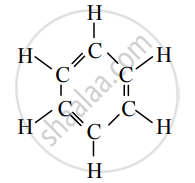
- Write the name of the given hydrocarbon.
- The given hydrocarbon is included in which type of hydrocarbon?
- What is the kind of compounds with the above characteristic structure called?
Successive members of a homologous series vary by how many atomic mass unit?
Which of the following does not belong to the same homologous series?
Name the following:
Group of organic compounds where the successive members follow a regular structural pattern, successive compounds differ by a 'CH2' group.
