Advertisements
Advertisements
Question
Give scientific reason.
Our body irritates if it comes in contact with a jellyfish.
Advertisements
Solution
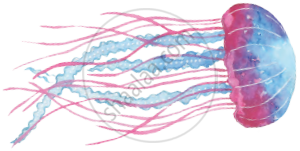
- The mouth of jellyfish is surrounded by tentacles.
- The tentacles possess cnidoblasts which are used for capturing prey or for defense.
- When our body comes in contact with the tentacles of jellyfish, these cnidoblasts penetrate our skin as a defensive action.
- Cnidoblast injects the toxin in our body and thus, our body irritates if it comes in contact with jellyfish.
APPEARS IN
RELATED QUESTIONS
Label the following.
Porifera : Asymmetrical : : Cnidaria : __________
Tentacles are used for capturing the prey.
The body of the animal in which phylum is radially symmetrical and diploblastic?
How does the animal in the figure protect itself?

To which phylum we belong to, if we are marine/aquatic animals?
What is the use of cnidoblast for us?
How do we destroy the harmful insects?
Mesoglea is present in ______.
Real organs are absent in
______ are diploblastic.
Name the following:
A phylum with diploblastic animals.
How is the body wall of coelenterates arranged?
Alternation of generations in Coelenterata is known as
Which of the following traits is not shared by both sea anemones and jelly fish?
Match the following:
| Animals | Locomotory Organ |
| a. Octopus | i. Limbs |
| b. Crocodile | ii. Comb plates |
| c. Catla | iii. Tentacles |
| d. Ctenoplana | iv. Fins |
Name
An animal with cnidoblasts
