Advertisements
Advertisements
Question
Fill in the blanks:
To establish economic equality in the country, the government is directed to ensure a _______and _______distribution of the ______and _________ of the country.
Advertisements
Solution
To establish economic equality in the country, the government is directed to ensure a fair and equal distribution of the wealth and material resources of the country.
RELATED QUESTIONS
Fill in the blank:
The citizens of India have right to profess, ________ and practice the religion of their choice..
Tick mark (✓) the correct statement or (X) if it is wrong.
That the institution of the Panchayati Raj is one of the Directive Principles related to Economic Equality.
Tick mark (✓) the correct statement or (X) if it is wrong.
That the state shall ensure equal pay for equal work, is one of the Directive Principles relating to Economic Equality.
Write short notes on the following:
Principles relating to economic equality.
Fill in the blanks:
The government is directed to promote _______industries in villages and prohibit the _________of cows and other cattle according to the Gandhian principles.
What are Cultural and Educational Rights? Explain with the help of an example.
Choose the correct answer:
Some of the ideas of __________ were included as Directive Principles.
One of the ______ directs the government to prevent the consumption of liquor.
Mention the category under which the following principles are classified:
- a decent standard of living and leisure.
- prevention of the slaughter of cows and other cattle.
- protection of the environment.
This is the picture of the Father of our Nation, who championed the cause of the poor and downtrodden people in India.
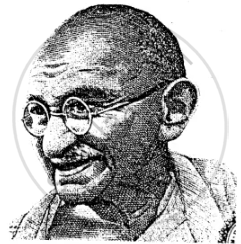
Identify the person in the picture.
