Advertisements
Advertisements
Question
What are Cultural and Educational Rights? Explain with the help of an example.
Advertisements
Solution
India is a land of diverse religions, languages and culture.
To maintain unity many cultural and educational rights have been given:
- Any community can safeguard its culture, language and script.
- There is no discrimination on the basis of religion at the time of admission to state or state aided institutions.
- All sects and minorities in the country have been granted the right to preserve or develop their culture.
RELATED QUESTIONS
Fill in the blank:
The citizens of India have right to profess, ________ and practice the religion of their choice..
Tick mark (✓) the correct statement or (X) if it is wrong.
That the institution of the Panchayati Raj is one of the Directive Principles related to Economic Equality.
Tick mark (✓) the correct statement or (X) if it is wrong.
That the state shall ensure equal pay for equal work, is one of the Directive Principles relating to Economic Equality.
Which directive Principle concerns the Scheduled Castes and Scheduled Tribes?
Answer the following question:
How do the Directive Principles of State Policy seek to promote internationalism?
Write short notes on the following:
Principles relating to economic equality.
Fill in the blanks:
The Directive Principles contain a list of important and basic _______and ________rights which the farmers of the Constitution wanted every Indian to enjoy.
Choose the correct answer:
After 200 years of foreign rule, the Indian economy was _________.
Choose the correct answer:
Some of the ideas of __________ were included as Directive Principles.
This is the picture of the Father of our Nation, who championed the cause of the poor and downtrodden people in India.
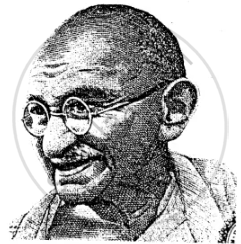
Identify the person in the picture.
