Advertisements
Advertisements
Question
Explain the undertones in the statement:
'Wife and husband in unusual rapport
State one unspoken thought':
Advertisements
Solution
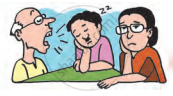
The statement explores the subtle relation between a husband and a wife. The statement shows both sides of the relation. While the two are probably in a heated argument, yet they both think alike and read each other's thoughts as well. Other than being husband and wife they are parents to a boy of seven. They have the same feelings towards their child; who, they both believed, should be disciplined. When the son approaches them demanding the dinner from his mother, she points a finger at him telling him to stay quiet for some time as there was an ongoing discussion that he was interrupting. However, the impatient child continued to nag. Both the parents gave each other a look as they both agreed at least on this that the discussion was being interrupted, no matter whether the father was least interested. However, later he agreed that the boy should be given the dinner immediately due to his wits and logic. But at this time, they both think of the same thing, it is the parenthood that binds them other than their own relation. And just an exchanged look was all they needed to read what the other one was thinking only to realise that it was exactly the same.
APPEARS IN
RELATED QUESTIONS
Answer any four of the following questions in 30 – 40 words each :
(a) After initial reluctance why did the lawyers tell Gandhiji that they were ready to follow him into jail?
(b) What is Mukesh's attitude towards the family business of making bangles?
(c) How does the poet show the futility of Aunt Jennifer's efforts?
(d) Stephen Spender in his poem, 'An Elementary School Classroom in a Slum' paints a dismal picture of poverty. Comment.
(e) Jackson went through the contents of Rev. McLeery's suitcase. Which object therein puzzled him sorely? What was his comment on that?
(f) How did the servants react when they realized that Dr. Sadao was going to save the life of an enemy?
Dolly Winthrop has a very noble nature. Comment.
Read the passage carefully and complete the activities given below :
A1 True or False
A2 Mention the two things that were found when the tall grass was hacked.
A3 The narrator prayed that Rex should not make any sudden movements meets. Explain giving reasons.
Attempt the following question in 100-150 words:
What do you think about Anne’s talent for writing essays, which she wrote convincingly when punished by the teacher?
The author’s grandmother was a religious person. What are the different ways in which we come to know this?
Discuss the following in pairs
Behind the public face of the people in various occupations is a whole saga of personal suffering and joy which they wish to share with others.
We 'draw up a deed'. Complete the following phrase with an appropriate word.
________one's word
Why do you think that the poet has chosen the title ‘Telephone Conversation’? If you were to suggest another title for the poem, what would it be?
'There is no sophistry in my body' – this statement expresses the brutal frankness of the Hawk. Does the poet suggest something through this statement?
Think, choose and fill up the labels with what a ‘sunrise’ symbolizes.
(jewellery/art/hope/birth/anger/new opportunities/good manners/inspiration/new achievements/happiness/misery/bright moments/new aims/money/new surprises)

Read the story and complete the following.
Revathi was confident of proving her ownership of her pot of plants because, ____________.
Answer in your own words.
What helped Revathi to claim her plants - her belief in magic or the belief in her convictions? Explain your choice.
Answer in your own words.
What are the provisions in the Declaration of the United Nations, to ensure the equality of men and women?
Read the poem aloud and you will find some old outdated words that we do not use in the everyday language now.
However, some writers/poets use them to impart an old-fashioned flavour to suit the background of their write-up. Such words are called Archaic words.
Give the modern words for the archaic words from the poem.
- thy
- being
- bestow'd
- thee
- thou
- cans't
Paraphrase the poem in your own simple language. Write it down in your notebook.
Read the Preamble of the Constitution of India given in your textbook. Pick out a word that refers to the following.
Brotherhood
‘Never mind faded forests, Austin’. The word ‘faded’ means to become dim or faint. The word describes the forests that have become faint or dim in appearance. Now go through the poem again and complete the table.
| Describing word | Object | Explanation |
| 1. faded | forests | The forests have become faint or dim in appearance. |
| 2. silent | ||
| 3. unfading | ||
| 4. bright |
Building a bridge needs careful planning. Think about what goes on before the actual construction begins.
- Proper planning
- ________________
- ________________
- ________________
- ________________
Johnsy was hopeful that she will live.
Discuss in your class.
Do you like to study science?
Answer the following question in short.
What was Pundit Shahane’s claim as a scholar?
The description of the character is given below. Identify the character from the play. Find some sentences which support your choice.
He is a major character. He dominates in the story.
How do the following avoid giving anything to the traveller?
Motiram
(Answer in one or two lines.)
Portia had many brothers and sisters.
Write one line about the following with the help of the poem.
wind in the autumn evening
Write a character sketch of each of the animals. Write about their actions and thoughts and the qualities that emerge through them. You may present the sketch in the form of a graphic.
A parody is a playful, comic imitation of a writer’s style. A parody is like a verbal cartoon. Compare the original poem and its parody given on page 35 using the following points:
|
How doth the little busy bee |
How doth the little crocodile (parody) |
| Choice of a subject (an animal) | __________________ |
| __________________ | __________________ |
| Number of lines and stanzas | __________________ |
| __________________ | __________________ |
| Same or similar constructions | __________________ |
| __________________ | __________________ |
| Tone of the poem | __________________ |
| __________________ | __________________ |
Prepare a table to show 'Caesar’s Pranks' at home and outside.
Rohan and Muk entered the garden at midnight ______.
Did Gopal Bhand have a field?
List and say whether the following statement agrees with the passage or not.
You should always speak softly but clearly.
Write other meaningful words that begin/end with footprint.
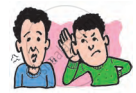
Look at the speaker in each picture. Say whether each one is a good speaker. Give reasons for your answer.
 |
 |
 |
 |
 |
Do you long to be something else? Write about your longing.
____________ had provided Prospero formerly with books and provisions.
Identify the character or speaker.
Now pray tell me, sir, your reason for raising this sea-storm?
Read the following line from the poem and answer the question given below.
The worst thing is that if anyone stays
Among them too long, he will learn their ways;
- What is the worst thing that can happen if anyone stays with them?
- What are the ways of the Grumble family?
Write a paragraph on ‘The Grumble Family’ and their attitude towards other folks.
Write a summary based on the story map.

What did Raj buy?
When did Usha Rani start playing Kabaddi?
What did she sell to support her family?
What does the phrase ‘presence of mind’ mean? Explain the phrase using Muthu’s action.
Complete the sentence given below with word/phrase.
The wild dogs came to the spot to catch______.
Match the following.
| treat everyone | love each of her child |
| nation | no inner boundaries |
| kind | not divided as people |
| country | alike |
Where is Jaswantgarh located?
The rich man ______ at the beggar.
Who sews the cloth?
The bird catcher’s clothes were dry.
Write the rhyming word.
one
Did they find a new country?
Why was the teacher annoyed?
Why did Jana’s friends stop her from going near the tree?
What should we vow for?
What did Ani's parents teach her?
Who lived in the old house?
What was Farhan's father's advice to his son?
Why is your nose important for you?
Describe in your own words the garden that Alice saw.
Now, read the following passage on “Laughter Therapy” and answer the questions that follow.

- Laughing is an excellent way to reduce stress in our lives; it can help you to cope with and survive a stressful life. Laughter provides full-scale support for your muscles and unleashes a rush of stress-busting endorphins. Since our bodies cannot distinguish between real and fake laughter, anything that makes you giggle will have a positive impact.
- Laughter Therapy aims to get people laughing, in groups and individual sessions and can help reduce stress, make people and employees happier and more committed, as well as improve their interpersonal skills. This laughter comes from the body and not the mind.
- Laughter Yoga (Hasya yoga) is a practice involving prolonged voluntary laughter. It aims to get people laughing in groups. It is practiced in the early mornings in open-parks. It has been made popular as an exercise routine developed by Indian physician Madan Kataria, who writes about the practice in his 2002 book ‘Laugh for no reason'. Laughter Yoga is based on the belief that voluntary laughter provides the same physiological as well as psychological benefits as spontaneous laughter.
- Laughter yoga session may start with gentle warm-up techniques which include stretching, chanting, clapping, eye contact and body movements to help break down inhibitions and encourage a sense of playfulness. Moreover, laughter is the best medicine. Breathing exercises are used to prepare the lungs for laughter followed by a series of laughter exercises that combine a method of acting and visualization techniques. Twenty minutes of laughter is sufficient to augment physiological development.
- A handful of small-scale scientific studies have indicated that laughter yoga has some medically beneficial effects, including cardiovascular health and mood. This therapy has proved to be good for depressed patients. This laughter therapy also plays a crucial role in social bonding.
Answer the following.
a. How does laughter help one to cope with stress?
b. Which word in the text (para 2) means the same as ‘dedicated'?
c. Why do you think voluntary laughter provides the same physiological as well as psychological benefits as spontaneous laughter?
d. ‘Laughter is the best medicine’. Explain.
e. Given below is a set of activities. Which of these are followed in the ‘Laughter Yoga’ technique?
- sitting on the ground with legs crossed
- body movements
- clapping
- closed eyes
- breathing exercises
- chanting
- stretching of arms and legs
- bending backwards
- running/jogging
- eye contact
f. ‘Laughter therapy also plays a crucial role in social bonding’. How?
