Advertisements
Advertisements
Question
Explain the Term
Hepatic Portal System
Advertisements
Solution
Systems of veins carrying blood capillaries of the intestine to the liver in mammals is called the hepatic portal system. The blood from the intestine carries digested carbohydrates and proteins, i.e., glucose and amino acids to the liver which converts them into glycogen and urea respectively.
RELATED QUESTIONS
What does the term “double circulation” mean?
What is Endothelium?
Give reason for the following:
Blood flowing away from the stomach and intestines is put into circulation via the liver and
not directly.
pH of oxygenated blood is ______.
How many litres of blood does an adult human body have?
The lymphatic system consists of which of the following?
______ prevent blood clotting.
Given below are four statements regarding human blood circulatory system:-
- Arteries are thick walled and have narrow lumen as compared to veins.
- Angina is acute chest pain when the blood circulation to the brain is reduced.
- Persons with blood group AB can donate blood to any person with any blood group under ABO system.
- Calcium ions play a very important role in blood clotting.
Which two of the above statements are correct?
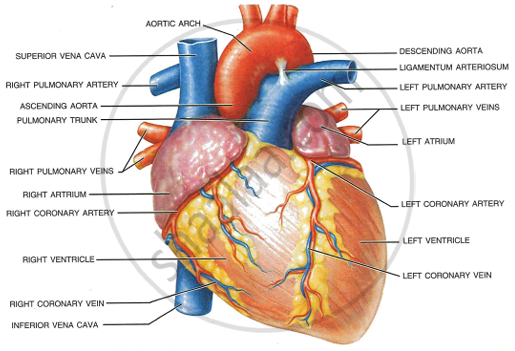 |
Can you answer why the pulmonary artery shown in Fig. is blue in colour?
Name these:
Two kinds of circulatory systems in different animals.
