Advertisements
Advertisements
Question
Explain the difference between a transparent, a translucent, and an opaque medium. Give two examples of each.
Advertisements
Solution
1. Transparent objects: Those objects through which light can pass easily are called transparent objects. e.g. Water, glass, air.
2. Translucent object: The object through which light can pass partially are called translucent object, e.g. tracing paper, waxed paper.
3. Opaque object: The objects which do not allow the light to pass through are called opaque objects, e.g. wood.
APPEARS IN
RELATED QUESTIONS
How do we see objects around us ?
Fill in the blank.
A medium which allows light to pass through it easily is called the ...................
Fill in the blank
Speed of light in vacuum is .................
Write true or false
The moon has its own light.
Write true or false
Opaque objects do not allow light to pass through them.
Answer the following.
Distinguish between transparent, translucent, and opaque objects.
Match the following.
| Group A | Group B |
| (a) Mirror | (1) Non-luminous |
| (b) Firefly | (2) Inverted image |
| (c) Pinhole camera | (3) Reflection |
| (d) Moon | (4) Luminous |
Light is a form of ______.
State whether true or false. If false, correct the statement.
If a ray of light passes obliquely from one medium to another, it does not suffer any deviation.
Look at the figure given in the following figure.
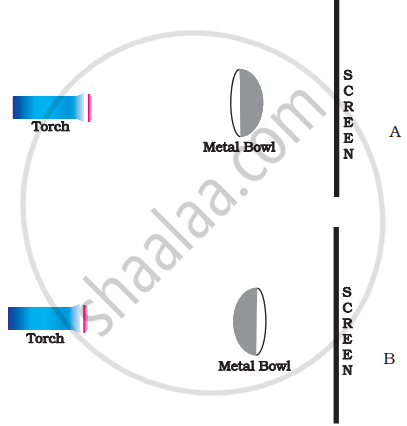
Will there be any difference in the shadow formed on the screen in A and B.
