Advertisements
Advertisements
Question
During a practical exam, a plant cell in a particular solution was placed under a compound microscope. Students were told to observe the cell and name the tonicity of the solution and mention the process that occurred in the cell.
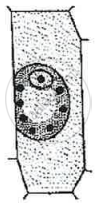
Options
Isotonic, Endosmosis
Hypotonic, Active Transport
Hypertonic, Endosmosis
Hypertonic, Exosmosis
Advertisements
Solution
Hypertonic, Exosmosis
APPEARS IN
RELATED QUESTIONS
Differentiate between the following on the basis of what is indicated in the bracket.
Hypotonic solution and Hypertonic solution (condition of a plant cell when placed in them).
Define the following:
Osmosis
What do you mean by transpiration pull ?
Give Reasons for the following.
Salt and sugar are used in preserving food.
Differentiate between the following
Endosmosis and Exosmosis
Give Technical Term for the following.
Solutions which have the same osmotic pressure.
Give Technical Term for the following.
The pressure which is responsible for the movement of water molecules across the cortical cells of the root.
Explain the Term: Endosmosis
