Advertisements
Advertisements
Question
Correct the use of the describing word in the following sentence.
This is the simpler problem of them all.
Advertisements
Solution
This is the simplest problem of all.
APPEARS IN
RELATED QUESTIONS
The poet refers to a dying fire. Who were sitting beside it and why?
What do you think is the poet’s attitude towards the following 3 things: nature, memory, loneliness?
How did the narrator and Lord Otori overpower the intruder?
Read the extract given below and answer the questions that follow:
Inspector: [Sharply] Are you sure there was nobody in the room already?
De Levis: [Taken aback] I don’t know. I never thought. I didn’t look under the bed if you mean that.
Inspector: [Jotting I Did not look under bed. Did you look under it after the theft?
De Levis: No. I didn’t.
Inspector: Ah! Now, what did you do after you came back from your bath? Just give us that precisely.
(i) What reply did De Levis give to the inspector’s last question in the extract?
(ii) What made De Levis check the contents of his pocketbook? What did he find there?
Whom did he go to upon discovering the theft?
(iii) Who was Robert? Where was Robert’s room? At what time did he take De Levis’ clothes and boots?
(iv) What is the Inspector’s final theory of the theft?
(v) Whom did De Levis accuse of stealing his money? What were his reasons for making this accusation?
He was so tired that he could not stand.
(Use: too ...................................................)
Give reasons for the following.
The boy king changed his name from Tutankhaten to Tutankhamun.
Combine the following sets of ideas to show the contrast between them.
(i)The Emperor commissions a painting and appreciates its outer appearance.
(ii)The artist reveals to him the true meaning of his work.
Use the phrase in a sentence of your own, after finding out its meaning.
streaked over
Write your views/opinions in brief on the following topic.
Role of youth in creating social awareness.
If you could change the end of the story i.e. after the Swallow refused to fly to Egypt, how would you change it? Summarise your idea in 10 to 12 lines.
Write a summary of the poem using the following points:
- Title
- Introductory paragraph (about the poem, type, nature, tone)
- Main body (central idea, the gist of the poem)
- Conclusion (opinion, views, appeal)
Choose the correct alternative for the given line. Focus on the inference of the poet.
‘Dull would he be of soul who could pass by’
The line means - __________________.
When you open a savings account at the bank you need to fill up Deposit forms/slips. Observe the following forms and fill up your details.

Write a paragraph and give an appropriate title to it. Use the following points.
| Birds and Animals | Love and Affection |
| Loyal | Our Best Friends |
| Serve us | Protection and Security |
| Kindness, honesty, compassion | Do not hurt or destroy us |
| Loneliness Avoided | |
Write a letter to any one of the following to tell them how much you appreciate them.
- Your mother
- Your father
- Any one of your relatives
- Your teacher
Develop the following hints.
Akbar - Birbal - courtiers jealous of Birbal - ask Akbar - test Birbal wiseness - Courtier puts a question - How many crows in Agra - Birbal asks for a week - every day sitting on the terrace - looking at the crows- after a week - courtier asks - Birbal says 156757 crows - asks the courtier to check- Akbar laughs.
Complete the following picture board.
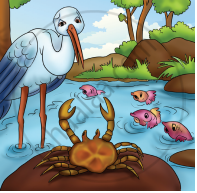 |
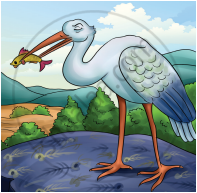 |
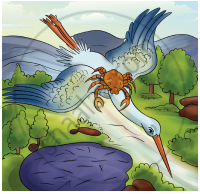 |
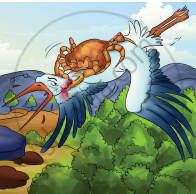 |
The Government of Tamil Nadu has imposed a ban on the use of plastic. Effective implementation of this ban depends on public awareness and individual responsibility.
Write an article of 150 words for your school magazine to create an awareness of the dangers posed by indiscriminate use of plastic. Expand the ideas given below as notes.
Notes:
a. Introduction
(i) Plastic – synthetic material – doesn’t decompose in soil
(ii) Inevitable role of plastic – man’s day-to-day life
b. Human Health Hazard
(i) Leeching of plastic into food – micro plastic entering food chain
(ii) Human body’s inability to deal with this unnatural substance
(iii) Reaction of microplastic in human body and ill effects
c. Adverse Effects on Plants and Animals
(i) Plastic particles choking waterways – affect aquatic animals
(ii) Ingestion by aquatic and terrestrial animals–blocking of intestines and respiratory passages
d. Environmental Degradation
(i) Manufacturing process and burning of plastics–pollute atmosphere
(ii) Plastic–non-biodegradable – interferes with soil microorganisms – affects soil fertility
e. Conclusion
(i) Suggestions for restricted use – alternatives for one-time use of plastics
(ii) Segregation of plastic waste – for recycling
______ was Portia’s; faithful servant.
Divide the students into groups of five. They sit in a circle. They choose one object of daily use such as a bag, wallet, box, etc. The group leader writes four sentences about it.
- I have found a ______
- It’s (colour)
- It’s (shape)
- It has a ______
- I found it (place where it was found)
Others, too, write four sentences each.
- • I’ve lost a ______
- It’s (colour)
- It’s (shape)
- It has a ______
- • I lost it (place where it was lost)
They all open read their lines, beginning with the group leader. The player whose description matches the group leader’s the most gets the object.
